
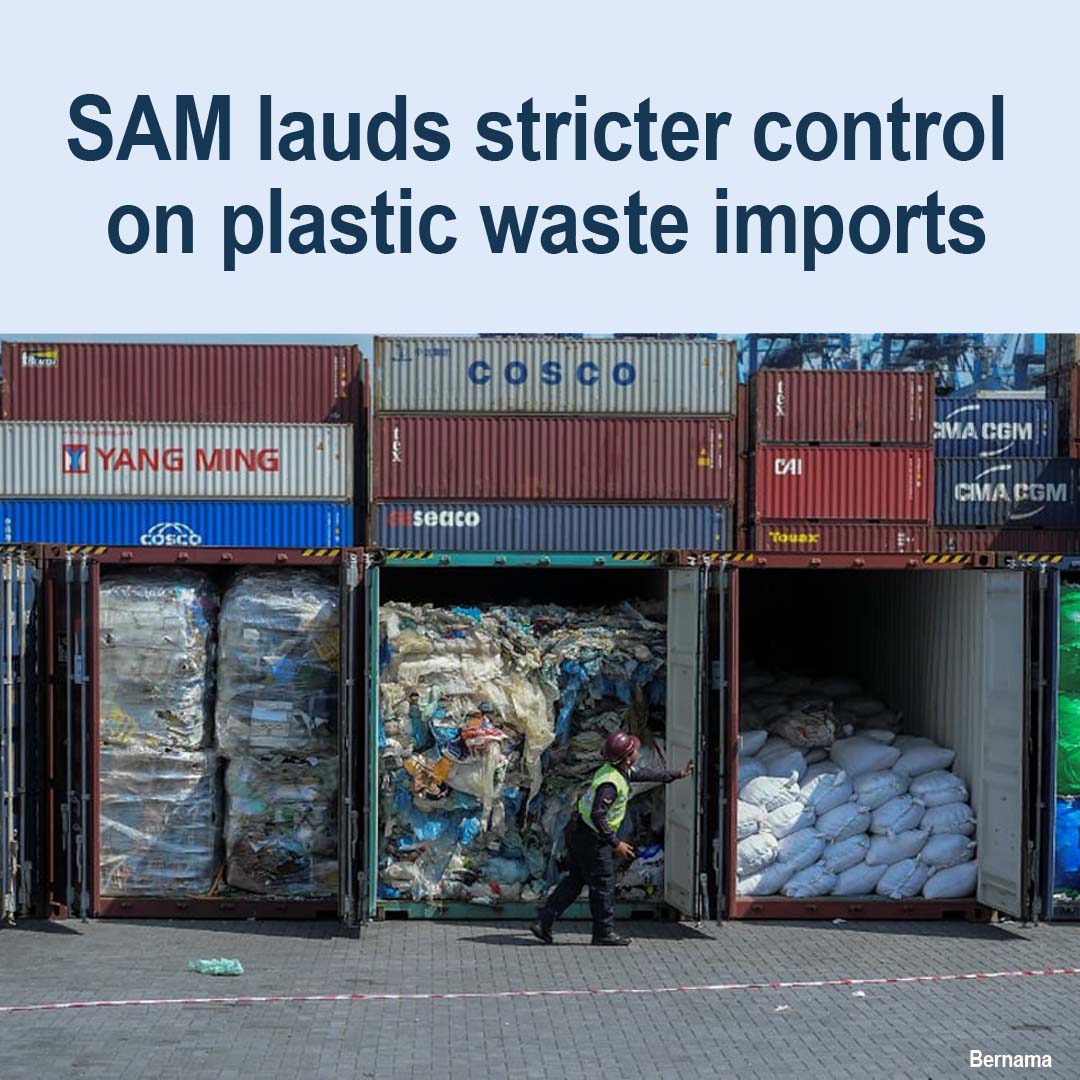
SAM lauds stricter control on plastic waste imports

Sahabat Alam Malaysia (SAM) welcomes the stricter control on plastic waste imports imposed by the Malaysian government under the amended Customs Order. We appreciate that Malaysia is taking measures against the environmental injustices associated with the global waste trade. We hope that with stringent enforcement, it will help put an end to the environmental and human health harm caused by waste trade and toxic recycling.
The Customs (Prohibition of Imports) (Amendment) Order 2025 which comes into force on 1st July 2025 requires that the import of waste, parings and scrap of plastics under the tariff code 39.15 for all countries is accompanied by a Certificate of Approval (COA) by or on behalf of SIRIM Berhad as defined under the Guidelines for Importation and Inspection of Waste Plastic.
The COA is a permit to import waste plastic, issued upon successful compliance with all requirements outlined in the Guideline, which covers the regulatory framework of the importation of waste plastic into Malaysia for manufacturing purposes, where the waste is used to produce finished products or goods across various industries.
The Guideline further states that the importation of waste plastic is ONLY allowed from:
(i) Parties that have ratified the Basel Convention on the Control of Transboundary Movements of Hazardous Wastes and their Disposal; or
(ii) Countries that have entered bilateral, multilateral, or regional agreements or arrangements regarding transboundary movement of waste plastic with Malaysia, that such agreements or arrangements do not derogate from the environmentally sound management of waste plastic as required by the Basel Convention.
This means that countries that have not ratified the Basel Convention such as the United States of America, Fiji and Haiti can no longer export their waste to Malaysia. According to data gathered by the Basel Action Network, in 2024, the USA exported 35,316 tonnes of plastic waste to Malaysia.
The USA and other developed nations should be responsible for their waste management, improve domestic recycling, and ensure that the waste management systems are environmentally and socially sound. These countries should not be looking for new destinations to export their waste. This will serve as an incentive to prioritise waste minimisation and take upstream measures to reduce plastics.
Now that we have strict import rules, Malaysia needs to ensure enforcement with robust customs procedures, implement rigorous inspection, crack down on corruption, impose effective penalties for violations and ensure swift and transparent prosecution of offenders. Waste smugglers have no qualms about violating the law or looking into possible loopholes. We have to be vigilant in protecting our environment and public health from the harms of waste trade.
Meenakshi Raman
President
Sahabat Alam Malaysia
Press Statement, 30 June 2025