
BROKEN BUT BEAUTIFUL
Don’t Hide Imperfections, Display Them with Pride
Feeling broken? There are many teachings, practices and philosophies that can help you deal with disappointment, embrace imperfection and remain optimistic.
One such practice is the Japanese art form of Kintsugi, which means joining with gold. It has attracted a great deal of attention in recent years as both an art technique, a worldview and metaphor for how we can live life.
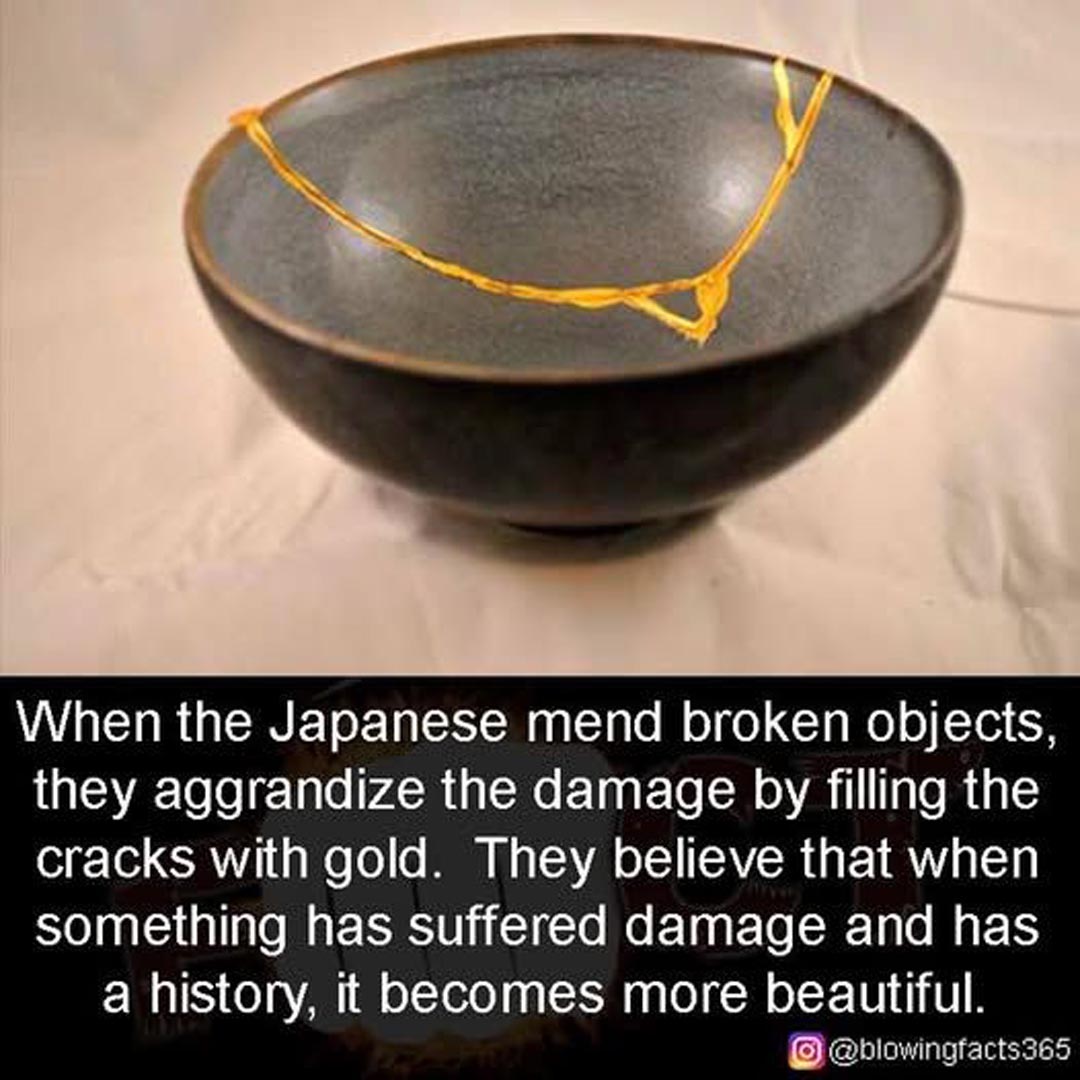
Kintsugi is the Japanese art of repairing broken pottery. If a bowl is broken, rather than discarding the pieces, the fragments are put back together with a glue-like tree sap and the cracks are adorned with gold. There are no attempts to hide the damage, instead, it is highlighted.
The practice has come to represent the idea that beauty can be found in imperfection. The breakage is an opportunity and applying this kind of thinking to instances of failure in our own lives can be helpful.
Finding the Beauty in Imperfection
Kintsugi makes something new from a broken object, which is transformed to possess a different sort of beauty. The imperfection, the golden cracks, are what make the new object unique. They are there every time you look at it and they welcome contemplation of the object’s past and of the moment of “failure” that it, and its owner has overcome.
The Japanese art encourages us to the see potential for beauty in reconstructing the broken pieces. Putting broken pottery pieces back together with gold is built on the idea that in embracing flaws and imperfections, you can create an even stronger, more beautiful piece of art.
Every break is unique and instead of repairing an item like new, the 400-year-old technique actually highlights the “scars” as a part of the design. The bowl may seem broken, the pieces scattered, but this is an opportunity to put it back together with seams of gold. It will be something new, unique and strong.
That new thing might not be perfect or be how you had envisioned it would be, but it is beautiful. And as time passes, we may be able to appreciate the beauty of those imperfections.
Using this as a metaphor for healing ourselves teaches us an important lesson: Sometimes in the process of repairing things that have broken, we actually create something more unique, beautiful and resilient.
References: The Conversation; NBC News