
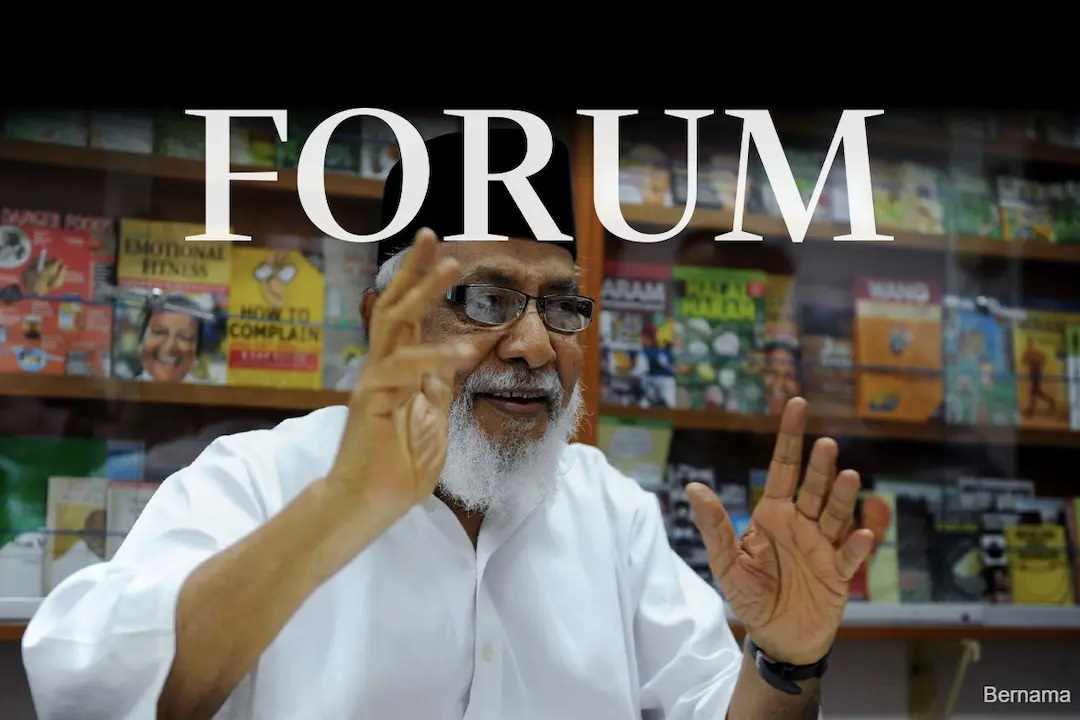
The Policy Edge: FOLLOWING THE LEGACY OF S M MOHAMED IDRIS
Why Business Needs More Moral Courage
By Datuk Dr Anis Yusal Yusoff
In an era increasingly defined by rhetoric, political polarisation and episodic activism, The Man Who Could Move Mountains: Reflections on the Social Activism of S M Mohamed Idris reminds us that genuine and lasting change is never built on slogans. It is built on conviction, integrity and the quiet persistence of individuals who dedicate their lives to causes greater than themselves.
Edited by Claude Alvares, Shahridan Faiez and Lim Jee Yuan, this remarkable volume is far more than a tribute to the late S M Mohamed Idris. It is a compelling account of how one individual transformed society through moral leadership, intellectual courage and unwavering commitment. Drawing on reflections from colleagues, friends and fellow activists who knew him personally, the book paints a rich and multidimensional portrait of a man whose influence extended well beyond Malaysia’s shores.
Affectionately known as Uncle Idris, S M Mohamed Idris was widely recognised as one of the country’s foremost consumer advocates, environmental defenders and champions of social justice. For more than five decades, he tirelessly campaigned on issues ranging from food safety, public health and education to environmental sustainability, consumer rights and global equity.
What distinguished him was not simply the breadth of causes he embraced, but the fact that his activism was never driven by political ambition or personal recognition. His work was anchored in a deeply held belief that a just society can only be built when ordinary citizens are prepared to stand up for what is right, regardless of the personal cost.
Perhaps the book’s greatest strength lies in its portrayal of Uncle Idris’ remarkable consistency. At a time when many public figures shift positions according to political expediency or changing public sentiment, he remained steadfast in defending the principles he believed in. His credibility did not come from office or authority, but from moral legitimacy earned over decades of service.
The “mountains” referred to in the book’s title are, of course, not physical mountains. They represent entrenched interests, institutional inertia and complex societal problems that often appear impossible to overcome. Uncle Idris possessed neither political power nor extraordinary wealth. Yet through knowledge, patience, integrity and his extraordinary ability to mobilise people, he influenced public policy, shaped national conversations and inspired grassroots movements that eventually reached international platforms.
I was fortunate to know Uncle Idris personally. Whenever I returned to Penang, Uma, his personal assistant, would invariably call and arrange for me to meet him at the Consumers’ Association of Penang (CAP). Every conversation left me both inspired and humbled. No matter what initiatives I was involved in, I always came away feeling that I could — and should — do more. That was the extraordinary influence of Uncle Idris.
He cared deeply about people. Whenever he came across an article in a newspaper or magazine that he thought deserved my attention, he would carefully cut it out and send it to me. These were simple gestures, but they reflected his lifelong commitment to nurturing others, sharing knowledge and encouraging people to think critically about the issues shaping our society.
This is precisely why this book deserves to be widely read. It allows readers to encounter Uncle Idris in much the same way as those of us who knew him or experienced him — not merely as an outspoken activist, but as a mentor, educator and trusted friend who invested generously in developing future generations.
He firmly believed that meaningful change could never be achieved in isolation. It required dialogue, collaboration and networks that transcended disciplines, institutions, religions and cultures. That philosophy continues to define his legacy long after his passing.
For Malaysia today, the book could not be more timely. We continue to grapple with governance challenges, climate change, consumer protection, widening inequalities and declining public trust in institutions. Yet these challenges also present opportunities for businesses to redefine their role in nation-building.
Increasingly, companies are expected to go beyond profitability. Investors, consumers and employees now evaluate businesses not only by their financial performance but also by how responsibly they conduct themselves. Environmental, social and governance considerations are no longer peripheral concerns but strategic imperatives. Corporate purpose has become inseparable from corporate performance.
This is where Uncle Idris’ legacy offers important lessons for the business community.
He consistently reminded us that economic development cannot come at the expense of consumers, communities or the environment. Markets function best when trust exists, and trust depends on transparency, accountability and ethical conduct. Businesses that neglect these principles may generate short-term profits, but they inevitably erode the social licence upon which long-term success depends.
The private sector should therefore view activists such as Uncle Idris not as adversaries but as important stakeholders who help strengthen governance ecosystems. Constructive engagement with civil society often leads to better products, more responsible business practices and greater public confidence. Many of the world’s most respected corporations have become industry leaders precisely because they embraced scrutiny, listened to stakeholders and continuously improved their governance standards.
As Malaysia aspires to become a high-income, innovation-driven economy, the country will require more than technological advancement or financial investment. It will require principled leadership across government, business and civil society. Sustainable competitiveness ultimately rests on public trust, institutional integrity and responsible corporate citizenship.
This book is therefore highly recommended not only for students, academics, policymakers and civil servants, but equally for corporate directors, business executives, entrepreneurs and young professionals. They will discover that authentic leadership is not measured by titles or market capitalisation, but by the courage to uphold values, listen to diverse voices and place the long-term interests of society above short-term personal gain.
Above all, the book invites every reader to reflect on a simple but profound question: What contribution are we making to the society we live in? Are we merely observers of change, or are we prepared to become participants in shaping a better future?
That question applies equally to citizens, public servants and corporate leaders.
Ultimately, The Man Who Could Move Mountains is not merely the story of one extraordinary individual. It is a powerful reminder that integrity, moral courage and civic responsibility remain the foundations of a just, sustainable and prosperous nation. At a time when principled leadership is increasingly scarce, this collection deserves to be read by everyone who believes that meaningful transformation always begins with one ordinary person having the courage to do extraordinary things.
May Uncle Idris continue to be remembered not only for the mountains he moved, but for the countless people he inspired to begin moving their own.
(Datuk Dr Anis Yusal Yusoff is principal fellow at The Institute of Ethnic Studies [KITA], Universiti Kebangsaan Malaysia. He is a former president and CEO of the Malaysian Institute of Integrity.)
Source: The Edge Malaysia (3 Sep 2026)
(This article first appeared in Forum, The Edge Malaysia Weekly on 31 August 2026 – 6 September 2026)