
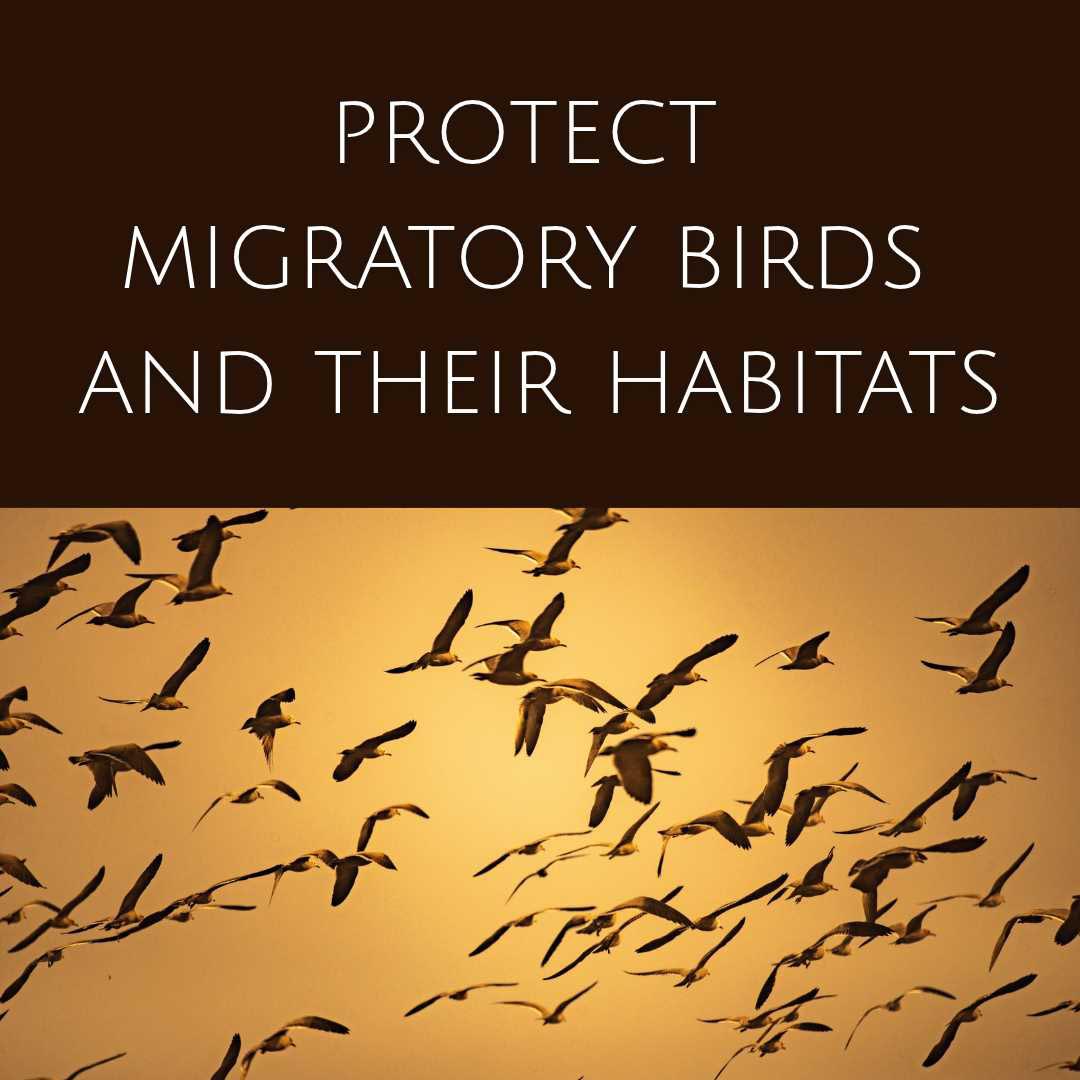
Protect Migratory Birds and their Habitats
Once again the Consumers Association of Penang (CAP) draws attention to the World Migratory Bird Day which is celebrated on the second Saturday of every May and October. This year it falls on 9 May and 10 October. This year’s theme, ‘Every Bird Counts – Your Observations Matter,’ acknowledges citizens’ efforts in conserving migratory birds, monitoring and raising awareness of the challenges faced by migratory birds.
Migratory birds fly long-distance journeys, connecting ecosystems and people throughout their travels. Since migratory birds play a critical role in connecting ecosystems across the planet, their conservation is of utmost importance to other species and humanity. It is therefore essential to monitor and conserve them to ensure sustainability and promote coexistence.
However, migratory birds are under serious threat due primarily to various reasons, such as the degradation and loss of their natural habitats due to deforestation, urban development and agricultural expansion fragmenting the environment needed by birds for breeding, feeding and resting along their migratory routes. As a result, birds are finding it more challenging to locate suitable nesting locations and sufficient food sources due to the increasing scarcity of essential resources.
In addition to habitat loss, migratory birds are particularly vulnerable to collisions with man-made structures like high rise buildings, wind turbines and power lines. During migration, when birds pass through unfamiliar territory, these barriers are particularly hazardous because windows reflect the surrounding trees, bushes, and the sky, creating the illusion of safe open spaces or suitable perches. Birds flying straight into the barriers may suffer from serious injury or trauma. In urban settings, artificial lighting can further confuse night time migratory bird species, increasing the risk of deadly collisions.
Pollution and artificial lights have also affected their nesting sites and migratory routes, adding to the list of reasons why they are becoming extinct rapidly. Invasive species such as weeds and the release of alien species into the environment have also competed with native species for food and nesting space, affecting the survival of many avian species.
Another threat facing migratory birds is climate change. Changes in climate have affected food supplies, disrupted migratory patterns, and make it difficult for the birds to know when is the best time to breed or nest. In addition, the overfishing of commercial species has decreased food supplies for seabirds and other birds that rely on aquatic resources. As a result migratory birds, especially seabirds, may experience long periods of food deprivation during migration or when they arrive on their breeding grounds.
Key research paper Bauer, S. & Hoye, B. J. (2014) Migratory animals couple biodiversity and ecosystem functioning worldwide explain that migratory animals connect distant ecosystems through their movements across national and continental boundaries. They can have a global impact on environmental processes and human well-being by moving nutrients, seeds, and other species, altering food webs, and potentially carrying pathogens across large geographic areas. Since birds are vital markers of environmental health, monitoring their populations gives valuable insights into the overall condition of ecosystems.
In response to these growing challenges, this year’s theme serves as a powerful call to action. CAP emphasizes on the importance of public participation in building the knowledge needed to protect migratory birds. This will enable individuals to contribute valuable observations on bird sightings, behaviour, and habitats which will later contribute to research, informed conservation strategies, and aid policy decisions. Through shared responsibility and collaborative efforts, we can play a role in ensuring the continuation of migratory bird journeys for generations to come.
Mohideen Abdul Kader
President
Consumers’ Association of Penang
Letter to Editor, 11 October 2026