
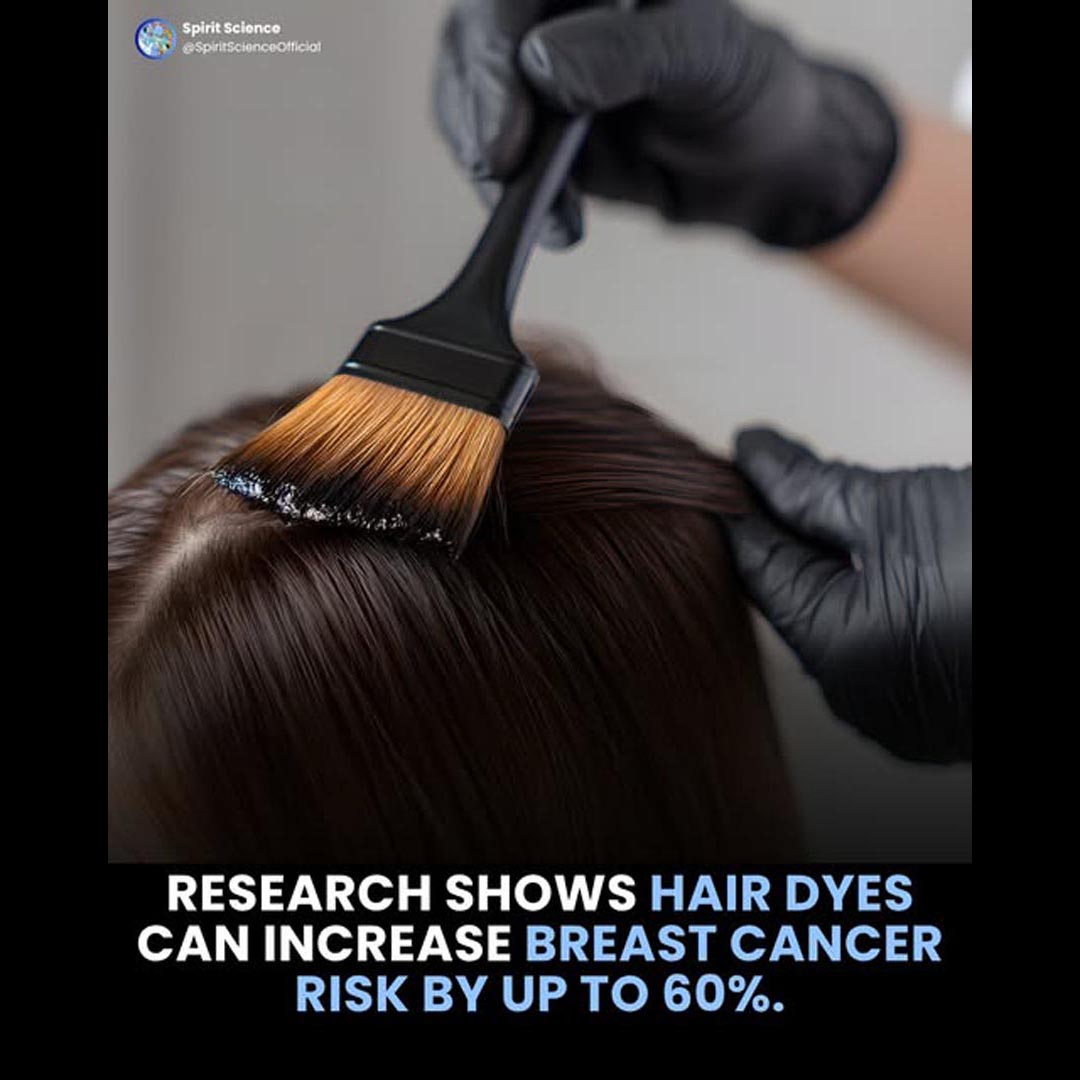
Frequent Hair Dye Use Can Increase Breast Cancer Risk

For centuries, human beings have altered their appearance to reflect identity, culture, or creativity. From ancient henna to modern hair dyes, we’ve sought ways to express who we are. Yet science is revealing that some of these practices may come with risks we cannot ignore – such as the increased likelihood of developing breast cancer linked to certain chemical dyes.
A large US study led by the National Institute of Environmental Health Sciences analysed long-term data from over 46,000 women and found a possible link between permanent hair dye and breast cancer risk. The study showed that women who used permanent hair dye had a higher risk of developing breast cancer compared with those who never used it.
In the study, those who regularly used permanent hair dye had a 9% higher risk of developing breast cancer. But among African American women who dyed their hair every 5 to 8 weeks, that risk jumped to 60%.
The study also revealed a strong link between chemical hair straighteners and breast cancer. Women who used straighteners at least every 5 to 8 weeks were about 30% more likely to develop the disease.
These numbers don’t mean hair dye causes breast cancer. The studies are observational, meaning they show correlations, not direct cause-and-effect. And many factors – like genetics, lifestyle, and product type – influence cancer risk.
Still, the findings are concerning. Permanent dyes may contain more than 5,000 chemicals, some of which are known to interfere with hormone activity or damage DNA. And many hair products used today haven’t been thoroughly evaluated for long-term safety.
Experts say occasional use likely carries lower risk, but those who dye their hair frequently – particularly women with a family history of breast cancer – may want to consider reducing use or seeking safer alternatives.
The long-term health impacts of cosmetic products are still being studied, but the risks linked to regular dye use are now too significant to ignore.
In the study, scientists focussed on the chemicals in permanent and semi-permanent hair dyes. Some compounds commonly found in these products can interact with the body over time, potentially increasing the likelihood of cellular changes that lead to cancer. The study found that the more frequently someone used hair dye, and the darker the colour, the higher the associated risk appeared to be.
This discovery does not mean everyone who dyes their hair will develop breast cancer, but it signals the importance of awareness and caution. It also encourages the development of safer, non-toxic hair dye alternatives and more transparent ingredient labelling in beauty products.
While hair colouring is a popular way to express style and confidence, this research highlights a potential hidden health concern many people may not be aware of.
For those concerned, experts suggest limiting the frequency of dyeing, opting for natural or low-chemical options, and maintaining regular health screenings. Small lifestyle adjustments, combined with scientific innovation, can help reduce risk while still allowing personal expression.
This discovery calls us to pause and ask: how often do we sacrifice long-term well-being for short-term aesthetics? True beauty has always been more than the surface. It radiates from vitality, from the energy we carry, and from the light within us. When we care for the temple of the body, we allow that inner light to shine more brightly.
Spiritually, the hair has long been seen as an extension of energy and consciousness – an antenna of the soul. Ancient cultures honoured the sacredness of hair, believing it to be connected to intuition and spiritual awareness. By applying harsh chemicals, we may be unknowingly diminishing this subtle connection.
Science and spirituality both remind us of a simple truth: what we place on and in our bodies shapes the health of our entire system. Natural alternatives and conscious beauty practices can help us honour both self-expression and health. When we align our choices with awareness, we discover that authenticity and vitality are the most radiant forms of beauty.
References: Spirit Science; Discover the Universe; From Quarks to Quasars