
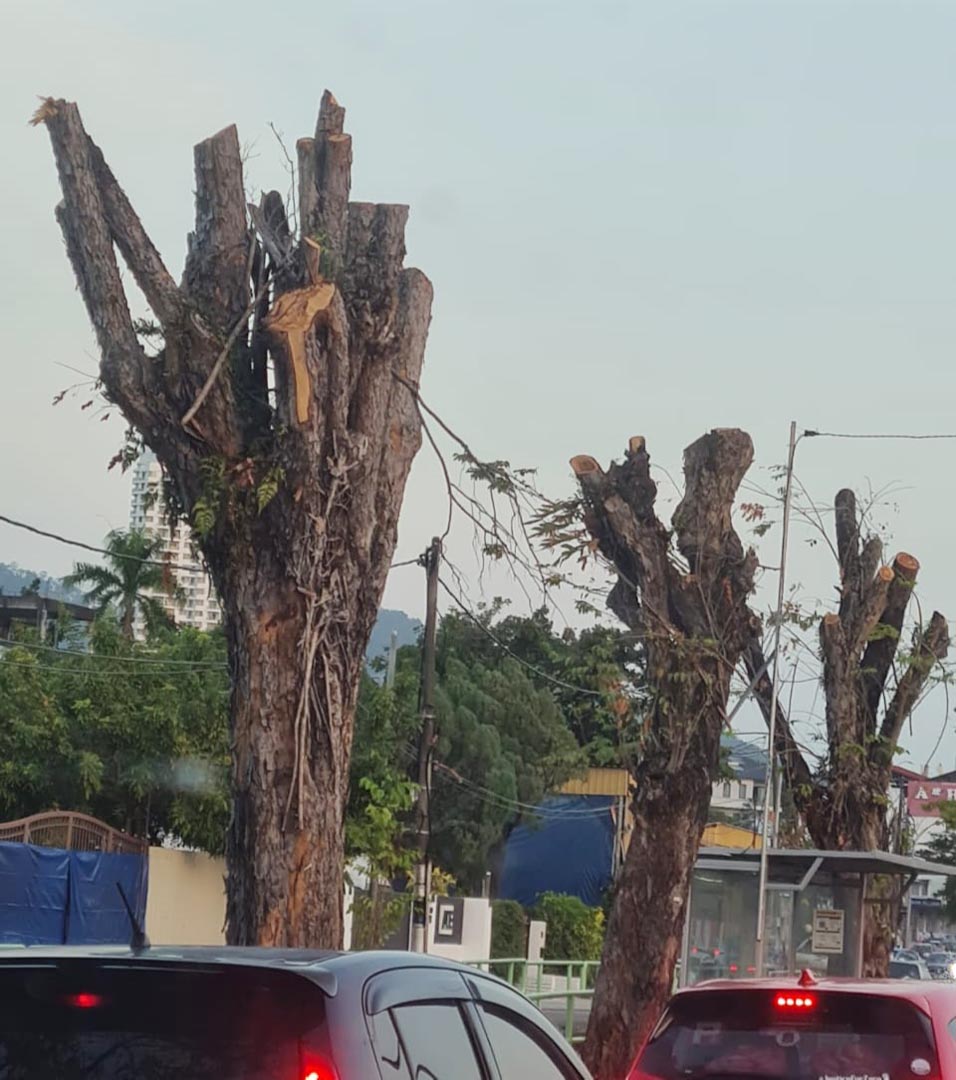
Rethink tree felling in all Mega Projects
The Consumers’ Association of Penang (CAP) expresses grave concern over the accelerating rate of tree felling carried out for large-scale development projects across the state.
Of particular concern is the ongoing Penang Mutiara Light Rail Transit (LRT) project, where extensive tree clearing had been reported along Jalan Sultan Azlan Shah near Sungai Tiram and Gelugor, as well as other locations that are part of the LRT route alignment.
Expanding public transportation must not be achieved at the cost of Penang’s rapidly diminishing green cover. The destruction of mature trees in the name of development is neither sustainable nor environmentally responsible.
Trees play a vital role in maintaining ecological balance. They regulate urban temperatures, improve air quality, reduce flood risks, conserve water, prevent soil erosion, and provide critical habitats for birds, squirrels, insects and other fauna. The sudden felling of trees destroys nesting sites and shelters, displacing birds and other small animals, threatening their survival. Large-scale tree removal disrupts biodiversity and exacerbates climate change, contributing to rising temperatures, erratic rainfall, urban flooding, and worsening air pollution.
Urban residents are already bearing the consequences. The loss of mature trees intensifies the urban heat island effect, increases health risks—particularly respiratory illnesses — and diminishes overall quality of life.
Beyond their environmental value, trees are essential to urban biodiversity. While compensatory planting is often cited as mitigation, saplings cannot replace the ecological functions and climate-regulating benefits of decades-old trees.

Local conservationists have long warned against treating mature trees as obstacles to development. Mohd Afendi Hussin, Senior Assistant Research Officer from the Urban Forestry Branch of the Forest Research Institute of Malaysia (FRIM), has emphasised that urban trees are far more than decorative features. Their canopies provide essential shade, reduce urban temperatures, and protect residents from extreme heat—making them indispensable to a healthy and liveable city.
Penang is already grappling with rising temperatures, deteriorating air quality, and increasingly frequent waterlogging. Continued tree felling for infrastructure projects such as the LRT will only exacerbate these problems — ironically undermining the very environmental objectives that public transport initiatives claim to advance.
The consequences of another mega large-scale development project are already visible in Bandar Baru Air Itam. Once a leafy, liveable neighbourhood, it has been transformed into an overheated construction zone following extensive tree clearing for the Air Itam–Tun Dr Lim Chong Eu Expressway bypass. Residents now report oppressive heat, persistent noise, and heightened air pollution linked directly to ongoing construction activities.
CAP urges the authorities to immediately halt further tree clearing and to urgently review project designs, explore alternative alignments, and prioritise tree transplantation wherever feasible. No additional clearing should be allowed without a transparent, comprehensive assessment that fully accounts for cumulative and long-term impacts.
Protecting trees and urban green spaces is a shared responsibility. It requires decisive action and genuine collaboration from all stakeholders— urban planners, engineers, architects, property developers, arborists, the private sector, and the public—not token gestures or after-the-fact mitigation.
Safeguarding mature trees is not optional or cosmetic; it is a critical investment in public health, climate resilience, and the quality of life of present and future generations.
Mohideen Abdul Kader
President
Consumers’ Association of Penang
Press Release, 30 January 2026