
TOWARDS A HEALTHIER LIFESTYLE AND ZERO WASTE
On 26 December 2025, in conjunction with the International Zero Waste Month in January, thirty secondary school students and three teachers from Bidor, Perak visited the office of Consumers’ Association of Penang’s (CAP). The visit aimed to expose students to practical environmental education, particularly on zero waste principles, sustainable food production, no-plastic usage and responsible consumer behaviour, through real-life examples.

The programme began with a sharing session by one of the teachers, Mr. Periasamy Perumalu, who spoke about his long-standing connection with CAP. He shared that since the age of 13, he had been reading CAP’s newsletter Utusan Konsumer, which greatly influenced him to change his lifestyle and adopt healthier living practices.
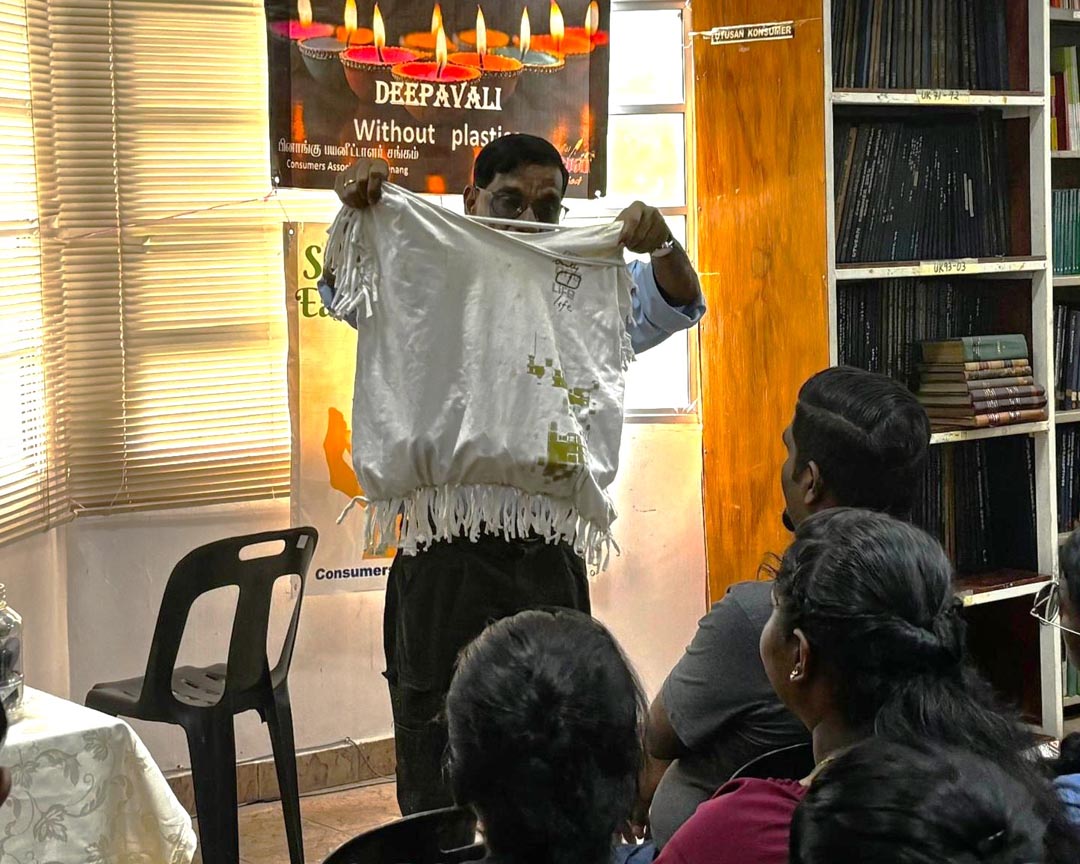
The session then continued with a presentation by Mr. Subbarow, the Senior Education Officer of CAP. He explained CAP’s international network, its global reach, and how the organisation is recognised worldwide for its strong vision in consumer and environmental protection. Mr. Subbarow encouraged students to reconnect with nature, particularly through natural farming practices. He explained that pesticides are harmful as they kill not only pests but also beneficial insects, and stressed that non-poisonous insects should be protected naturally. He further highlighted that consuming pesticide-sprayed produce can lead to long-term health issues and even fatal poisoning.

Mr. Subbarow also shared information about upcoming CAP programmes related to natural farming and zero waste initiatives. He advised students to reduce plastic usage, explaining that microplastics are now found almost everywhere, including in food. He provided tips on how to break free from plastic.

He emphasised avoiding excessive consumption of white ingredients such as salt, sugar, and flour, as overuse can cause diseases. In addition, he displayed various smoking-related items, vapes, and inappropriate-shaped sweets and toys found in the market, stressing that such products should be banned due to their danger to human health and the environment. He also spoke on the benefits of herbs and encouraged incorporating them into daily meals.
An interactive session followed, where Mr. Subbarow introduced earthworms and invited students to touch them. The interaction session generated strong interest among the students, encouraging curiosity, active participation, and a deeper understanding of ecological balance, soil health, and natural waste cycles. He also demonstrated how to prepare good fertilisers, ways to revive dying plants, and methods to make natural pest repellents. Kitchen waste can be composted and used in the garden rather than disposing the general waste bin. Through this effort, besides getting natural fertiliser we are also diverting at least 40 percent of waste from getting into the landfill.

Books on natural farming, healthy lifestyles, zero waste and related topics were then distributed to the students to further spark their interest and encourage them to lead healthier and greener lives. The talk today served as a timely reminder that zero waste is not merely a concept for one month, but a long-term commitment that begins with individual choices and shared accountability.
Zero Waste is ambitious but achievable. The era of throwaway culture must end. We are calling on governments and investors to stop subsidizing single-use production systems and prioritize building the reuse infrastructure our planet desperately needs.
#IZWM2026 #InvestInZeroWaste #ChooseReuse #RefuseSingleUse