

EXERCISE WORKS BETTER THAN PILLS FOR DEPRESSION
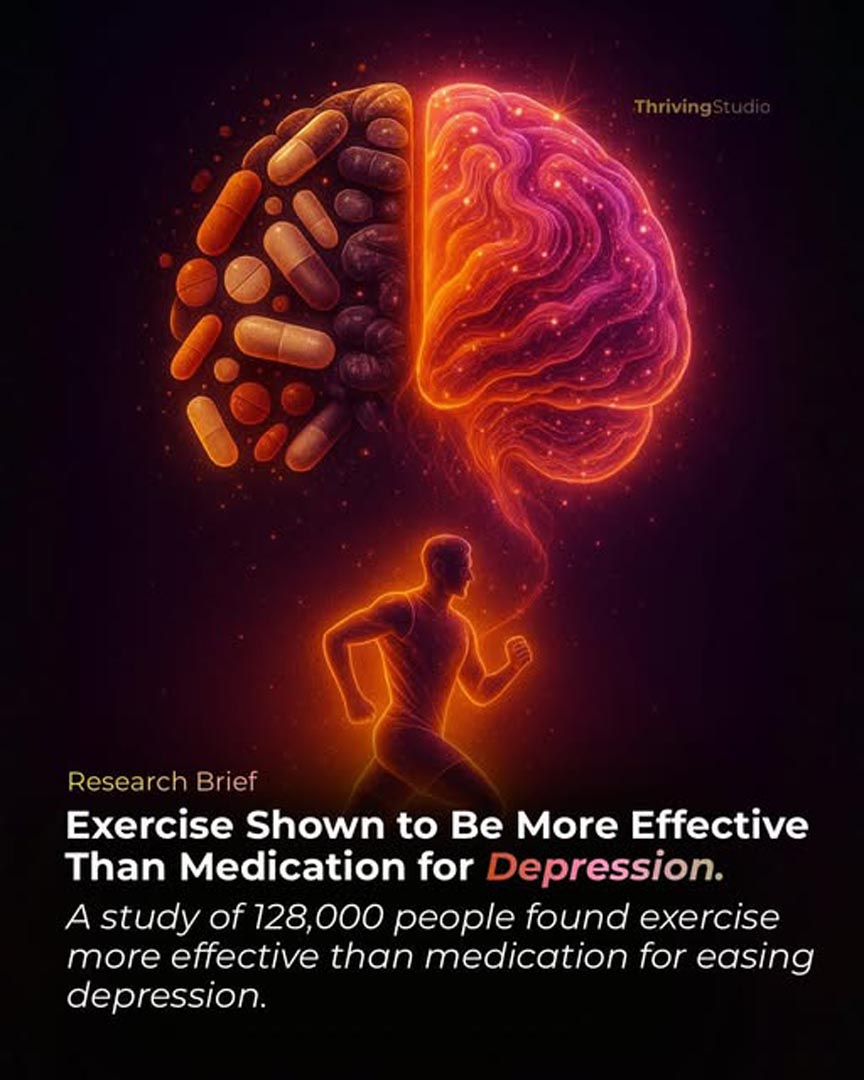
A landmark review published in the British Journal of Sports Medicine examined 128,119 participants across 97 meta-reviews and 1,039 trials, and found that physical activity was up to 1.5 times more effective than standard medication or counselling in reducing symptoms of depression and anxiety.
Participants who engaged in moderate activities, such as walking, jogging, cycling, or yoga, for at least 150 minutes a week showed the strongest improvements. What’s more, exercise provided benefits without the side effects often linked to medication.
While antidepressants and therapy remain essential for many, this study shows that the most under-used antidepressant might be right under your feet. Movement is medicine, and in some cases, it may be the most accessible and effective prescription of all, one that is free and inside your control every single day.
What makes this even more powerful is how simple the activity can be. A fast walk. A few minutes of jogging. Dancing in your room. Anything that raises your heart rate sends a message to your brain that you are still fighting, still present, still capable of healing.
Even a short daily walk can help rewire your brain toward resilience. Exercise also improves sleep quality, energy levels, and social engagement, all of which are critical factors in managing depression.
Your body does something remarkable when you move. It releases natural chemicals that lift your mood, calm your mind, and help your brain grow new neural connections. Movement can reshape emotional pathways in the brain just like therapy or medication, experts say. It helps regulate stress, improves sleep, and quiets the thoughts that make you feel trapped inside your own head.
The study reinforces the idea that lifestyle interventions can be a first-line or complementary approach to conventional therapies for depression. Experts encourage combining exercise with therapy, mindfulness practices, and healthy nutrition to maximise benefits.
The findings serve as a reminder that the body and mind are deeply connected – what strengthens one can profoundly enhance the other.
References: Mind’s Canvas; Tech Time; Explaining The World; Thriving Studio