

Awareness Raising Programme on Plastics and Composting for Trainee Teachers from IPG Kampus Tuanku Bainun at CAP on 5 March 2026
On 5 March 2026, a group of 14 trainee teachers (9 females & 5 males) and 5 lecturers from IPG Kampus Tuanku Bainun, Bukit Mertajam, Penang visited the Consumers’ Association of Penang (CAP).
The visit was organised as an educational visit to create awareness among trainee teachers about the impacts of single-use plastic usage, as well as to help them understand the benefits and ways to do organic composting.
The programme began with a welcoming speech and introduction about the agenda for the session by CAP’s education officer, Ms Saraswathy Devi. Following this, Ms Kumuthasshri, CAP’s research officer conducted a group activity.
The participants were divided into three groups, and each group received a title and a book related to plastic awareness. The three topics assigned were:
1. Toxic chemicals in plastic and the ineffectiveness of plastic recycling
2. Plastic decomposition in the ocean and how microplastics enter the human body
3. The impact of plastic on the environment
The trainee teachers were required to discuss among their groups for 15 minutes on how to creatively deliver the content to students in the future, ensuring that the students could both understand and become aware of the impacts of plastics on human health and the environment.
After the discussion, each group presented their ideas. Most of the trainee teachers demonstrated innovative approaches, connecting their presentations to real-life experiences. One of the most creative ideas involved demonstrating the decomposition of natural products versus plastic products in soil. By observing the condition of the items after several months, students would clearly understand that plastic does not decompose easily and can cause significant harm to both the environment and human health.
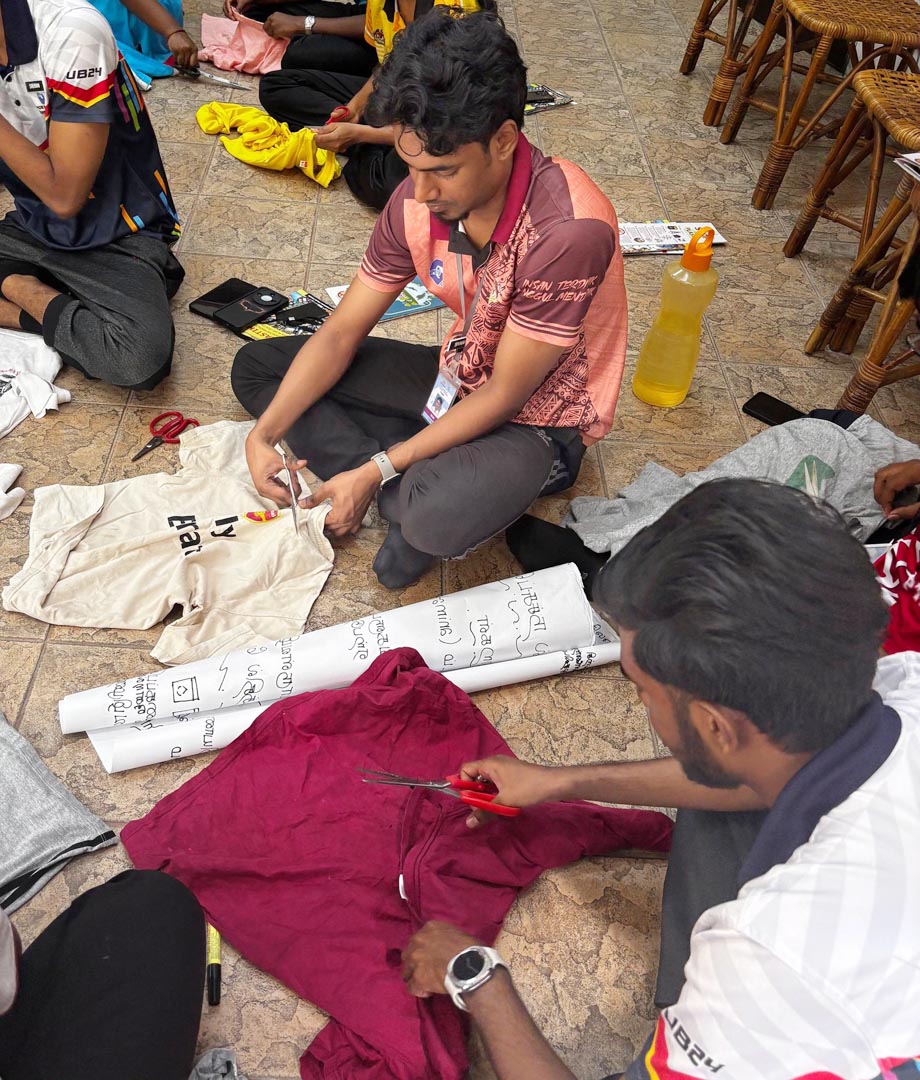
Following the presentations, a hands-on activity was conducted by Mr Theeban, CAP’s education officer. He taught the trainee teachers how to create carry bags from old t-shirts as an alternative to plastic bags. The trainee teachers were highly engaged and successfully produced functional and aesthetically pleasing carry bags from the materials they brought.
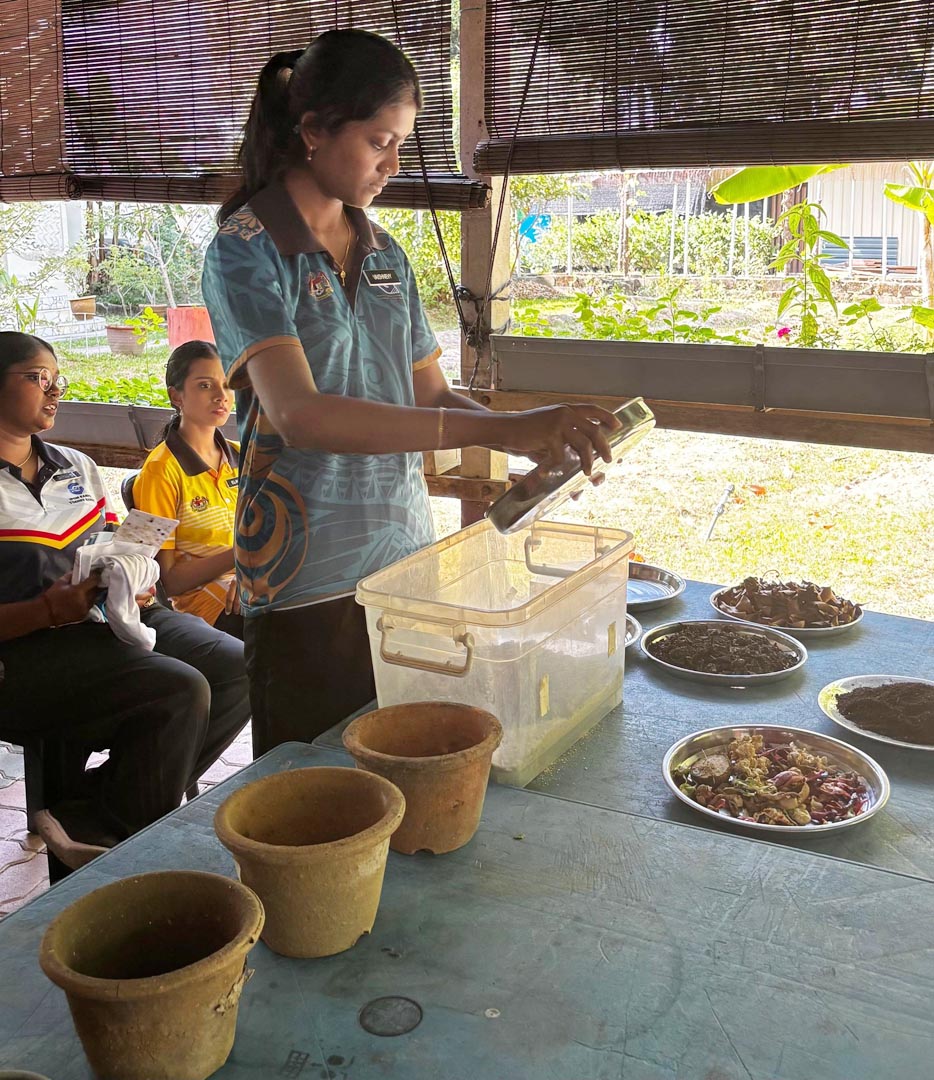
The programme continued with a visit to CAP’s urban garden, where the trainee teachers learned about organic composting and natural farming. Mr Theeban and Ms Saraswathi Devi demonstrated simple methods for home composting and explained its benefits. Trainee teachers actively participated in the hands-on demonstration of the composting.
Additionally, upon a lecturer’s request, Mr Theeban provided a brief explanation of “Panchakavya,” an organic liquid fertiliser, and its application in sustainable farming practices.
This programme provided trainee teachers with practical knowledge and creative approaches to teach students about impacts of plastics, sustainability, and environmentally friendly practices.
The session successfully combined theoretical knowledge, interactive discussion, and hands-on learning, leaving the participants motivated to apply these techniques in their future teaching.