
Malaysians Ingesting Up to 2,016 Microplastic Particles a Year through Fish
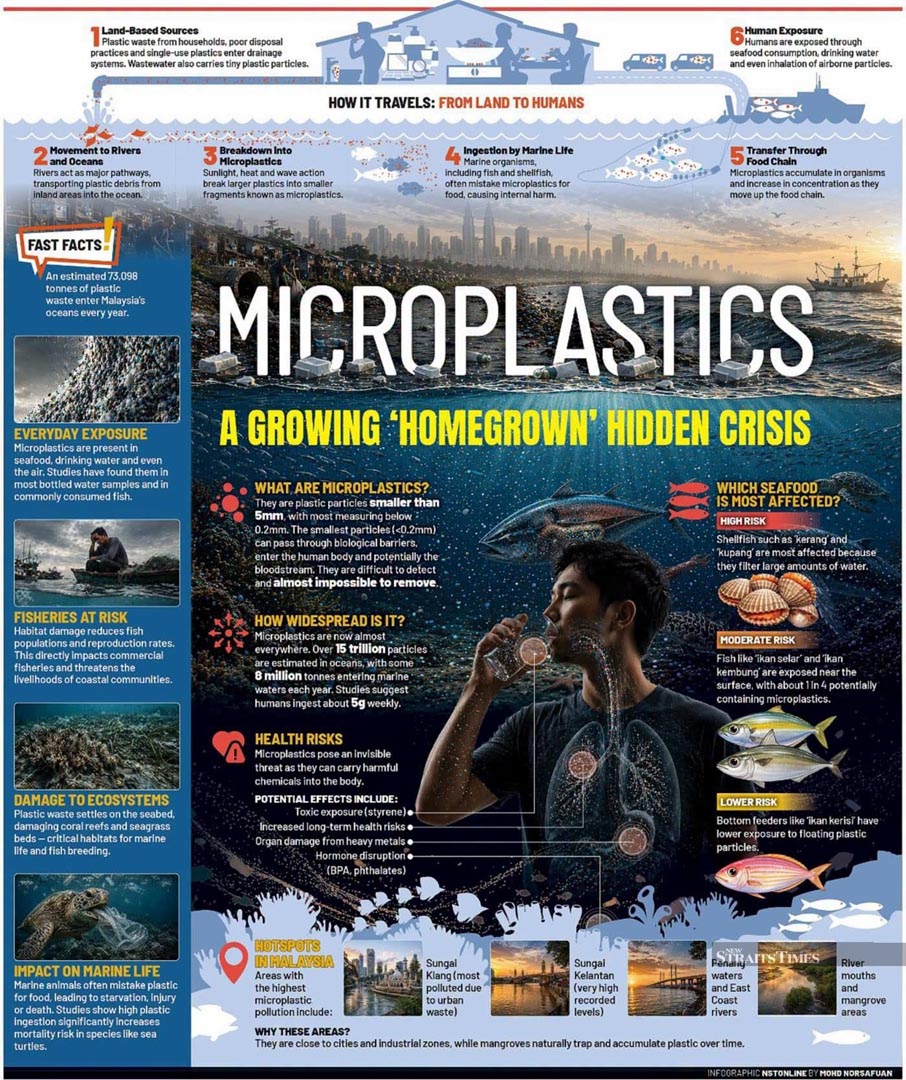
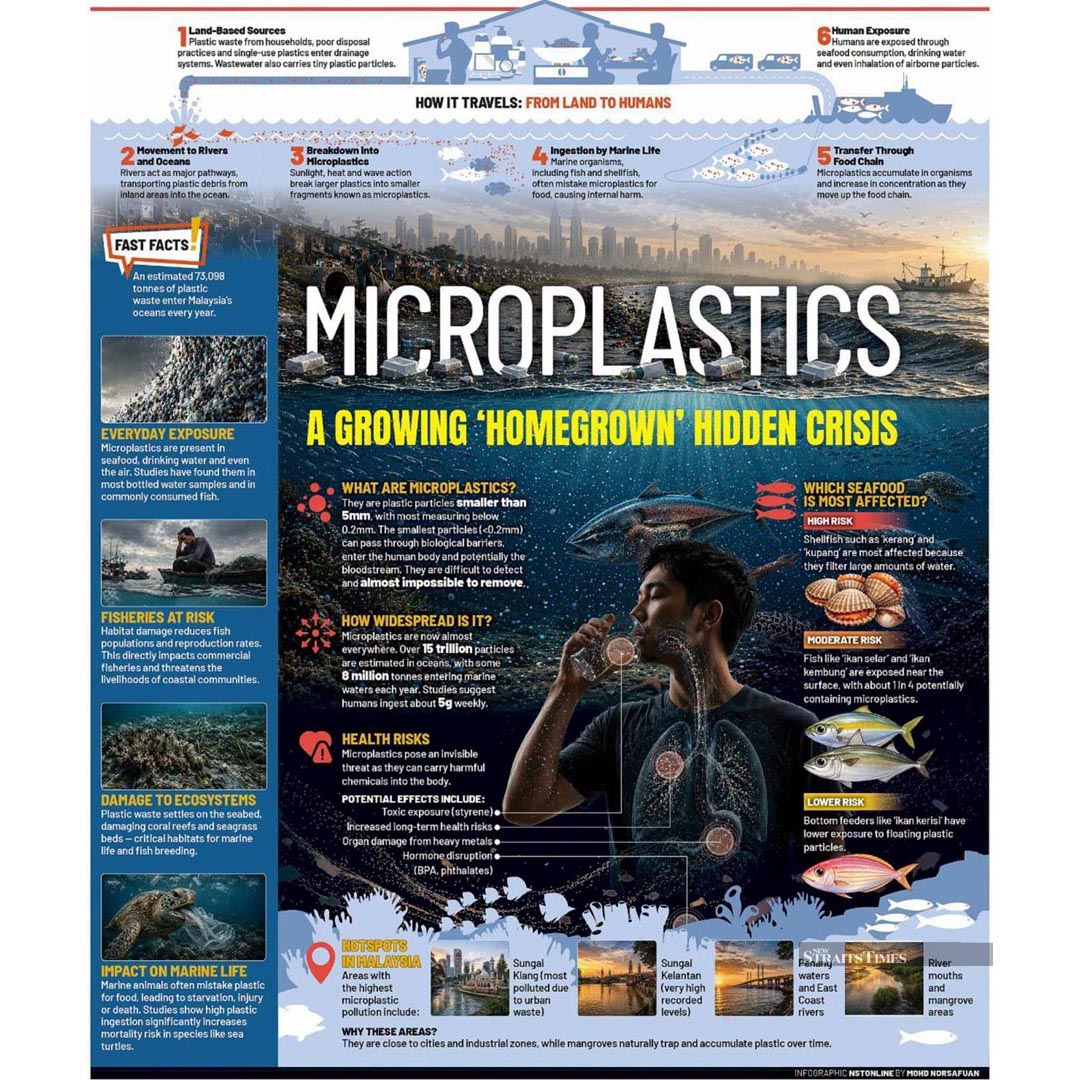
Malaysians are in danger of ingesting up to 2,016 microplastic particles a year through fish consumption, with higher exposure among coastal communities, said the Fisheries Department.
Fish is a key pathway for human exposure to microplastics, particularly in countries with high seafood intake such as Malaysia, where they are an important source of protein.
Fisheries Department director-general Datuk Adnan Hussain said the estimate was based on studies done in Malaysia that analysed microplastic concentrations in commonly consumed fish species such as the mackerel (ikan kembong), and national consumption patterns.
Microplastics — plastic particles smaller than 5mm — have entered Malaysia’s marine food chain, with contamination detected from zooplankton to commercially important fish.
“Studies in Malaysian waters show that zooplankton ingest microplastics, raising concerns about transfer through the food chain,” said Adnan.
Studies also point to widespread contamination in fish consumed by Malaysians.
“About 93.3 per cent of mackerel sampled nationwide contained microplastics in their gastrointestinal tracts. Some 28.89 per cent also had microplastics in edible tissues, although at low concentrations.”
Most particles detected were smaller than 0.2mm, a size researchers said could enter the human bloodstream.
Malaysia is among the world’s highest consumers of fish, with per capita intake estimated at 48.3kg a year, underscoring the need for continued monitoring.
Adnan said the department was addressing the issue through research by the Fisheries Research Institute, including monitoring microplastics in water, sediment and marine species.
Marine debris surveys and monitoring of abandoned or discarded fishing gear are also underway to better understand sources of plastic pollution.
Measures have been introduced in marine parks to restrict plastic use, alongside public awareness efforts to reduce waste.
At the policy level, the government has rolled out frameworks like the Roadmap Towards Zero Single-Use Plastics 2018-2030 and the National Marine Litter Policy and Action Plan 2021-2030.
But, Adnan said, microplastic pollution remains a long-term challenge.
“Continued plastic accumulation may affect fish stock, contaminate the food chain and reduce consumer confidence.
“But the impact can be mitigated through sustained efforts by the government, industry and public,” he added.
Source: New Straits Times (18 April 2026)