
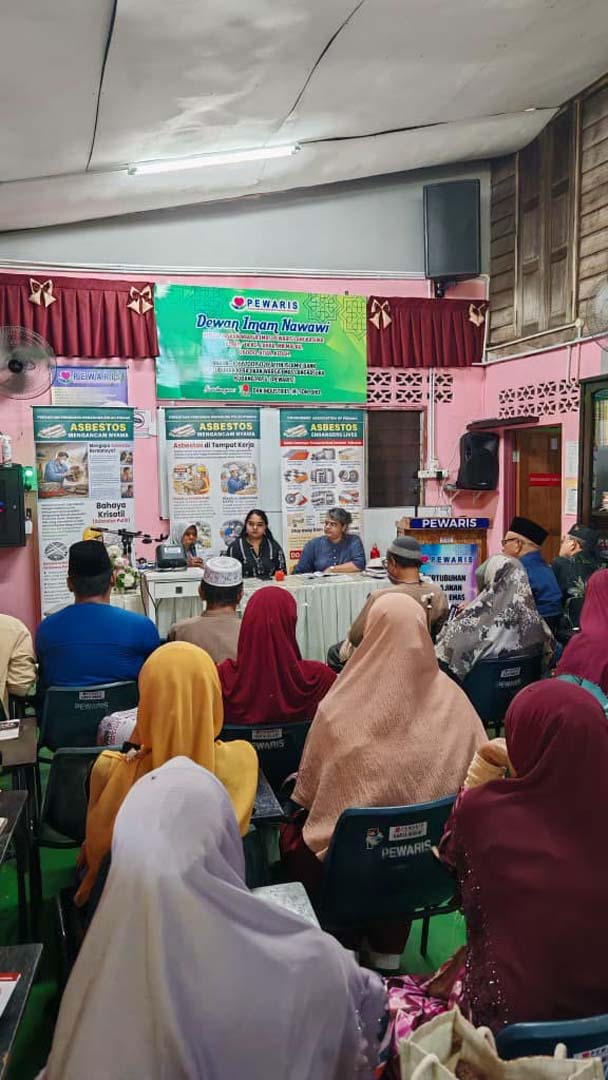
CAP’s Asbestos Awareness Raising Programme in Jitra, Kedah
On 19th June 2026, the Consumer’s Association of Penang (CAP) held a forum to impart asbestos awareness at Pusat Jagaan Warga Emas Pewaris Langkasuka (PEWARIS), an old folks’ home located in the outskirts of Jitra, Kedah. A total of 41 participants from the vicinity, notably one youth and two persons with disabilities (PWD), attended this programme, which included five CAP staff and two interns who assisted in the forum. Total attendance was 25 female and 16 male participants. Among the participants were soldiers from a nearby regiment.
The programme started with the distribution of CAP leaflet “Asbestos Mengancam Nyawa, Haramkan Krisotil Sekarang” to the participants. Streamers and posters which provided concise information on the dangers of asbestos, pathways of exposure and asbestos-related diseases were put up around the hall.
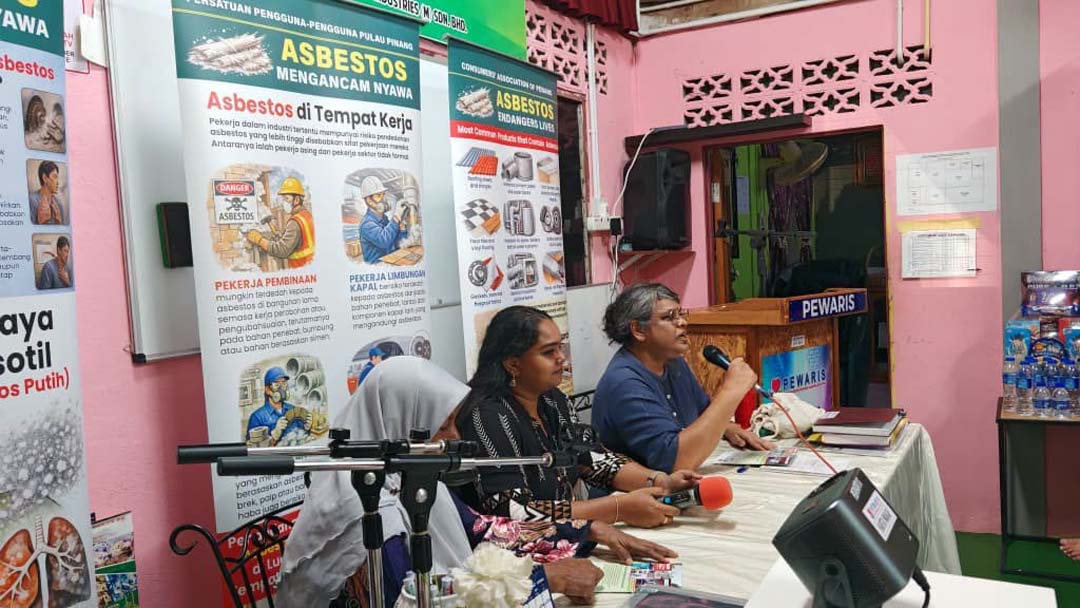
The emcee, Tuan Haji Ahmad Fuad Ashari, kicked off the programme by welcoming the guests and introducing the forum’s topic. He then invited the president of Rumah Pewaris Jitra, Tuan Haji Othman Awang, to deliver the introductory speech. He touched on the care home’s background, future plans, as well as the importance of raising consumer awareness about asbestos.
The forum was moderated by CAP research officer Ms Kumuthasshri, who gave a brief introduction on the matter at hand. She then presented the key speakers of the event, Ms Mageswari Sangaralingam, chief executive of CAP and Ms Hatijah Hashim, CAP research officer. Ms Kumuthasshri posed several questions to the panellists.
Ms Mageswari began by relaying information on where asbestos can be found. She pointed out the common products that are either made out of asbestos or contaminated by it, such as roof tiles, electric insulators, cement pipes and even children’s toys like kinetic sand. She further explained the prevalence of asbestos, especially in construction materials in the 60’s and 70’s due to its durability, anti-rust properties and cost-effectiveness, which inevitably led to old houses containing harmful asbestos. Most consumers are not aware of the asbestos-containing materials in their homes and surroundings.
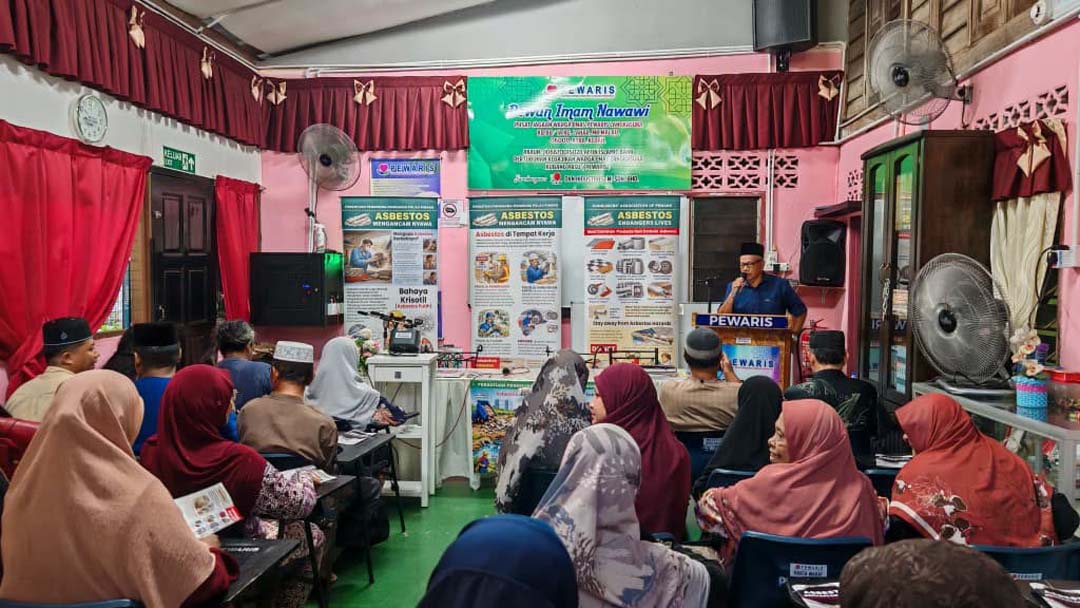
She also shared the prohibition of asbestos building materials in government schools, clinics, and hospitals since 1999, and since 2005, extended to all government buildings. However, chrysotile remains legal under ‘controlled use’ in manufacturing and private construction. No acts or regulations prohibit asbestos use in private buildings. Asbestos building materials are still sold, and thus these asbestos products must be labelled in accordance with consumers’ right to be informed and to choose safe products.
The floor was then given to Ms Hatijah, where she emphasised the health impacts of asbestos. The fibres are minuscule enough to be breathed in and to cause irreparable damage to our health, such as lung cancer. She further explained how even everyday items like talcum powder may contain asbestos due to cross-contamination. Ms Mages then highlighted real-life stories of workers and their families affected by asbestos-related diseases and shared CAP’s call for a ban on chrysotile, as other types of asbestos have been prohibited in Malaysia.
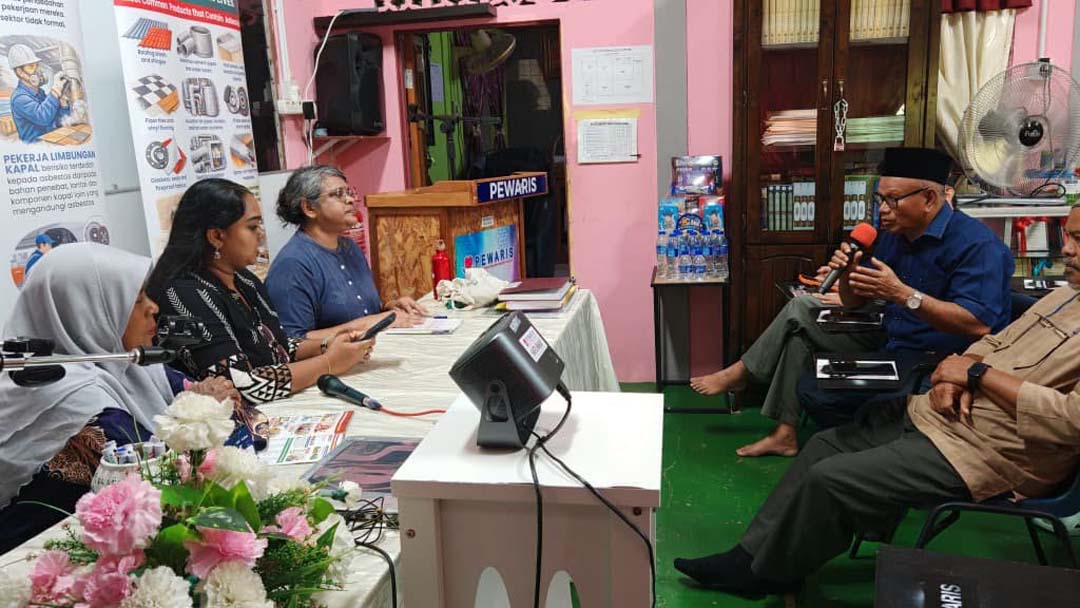
The audience participated actively in the Q&A session that followed. Questions were directed to Ms Mageswari on the crux of the responsibility of this issue. She noted on our responsibility as consumers, but placed higher pressure on the government and the manufacturers, as the asbestos industry should not only prioritise profits, but also needs to look out for the well-being of the public. She further pointed out that 70 countries have already banned asbestos and urged our government to follow suit. She shared that the government is committed to this effort, which can be seen through their plans to phase out the manufacturing of asbestos products and their proposal to ban the import of raw asbestos fibres.
The statistics and research on asbestos were inquired by the audience next, for which Ms Mageswari mentioned significant proof can be found for diseases that correlated directly to asbestos, such as mesothelioma, but there is difficulty in getting proper data on mesothelioma cases or other asbestos-related diseases due to underreporting, including a lack of full patient history taking in Malaysia.
Lastly, a participant asked for an alternative to talcum powder as it is the preferred cosmetic item, especially for older individuals, as well as their possible contribution to this mission. Ms Hatijah answered on the importance of reading the labels and choosing products that are talc-free, such as cornstarch-based or rice-based powder. For senior citizens who are using talcum powder to manage dry skin or itchiness, they can opt for coconut oil. She also highlighted that the audience can spread the word on the dangers of asbestos to their contacts so that more people are aware and take precautionary measures.
In short, this forum on asbestos was a success in raising awareness on asbestos among the attendees, and CAP hopes this concern surpasses this hall and spreads among other consumers.