
CAP’s Asbes-Stop Now Campaign at UUM Sintok, Kedah
On 18 June 2026, the Consumers’ Association of Penang (CAP) was the key speaker in the “Asbes-Stop Now” campaign at Universiti Utara Malaysia (UUM) in Sintok, Kedah. The event drew an enthusiastic crowd consisting of 19 male and 16 female Year 5 students and four female teachers from SK Batu 8 Changlun, Kedah, alongside 20 male and 60 female committee members of the campaign comprising of second year undergraduates of the School of Multimedia Technology and Communications, several staff and students of the university. In total, there were 119 participants at the half-day event.
The primary objective of the campaign was to drive public awareness regarding the dangers of asbestos, shed light on its devastating side effects on both human health and the environment, and establish an open platform for accessible information regarding asbestos.
The programme commenced with participant registration, followed by a collective singing of the National Anthem and the University Anthem. Mr Shurendar Dev, the Campaign President, delivered the welcoming speech, expressing his sincere gratitude to everyone in attendance and emphasising the critical need to continually elevate community awareness on the issue of asbestos.
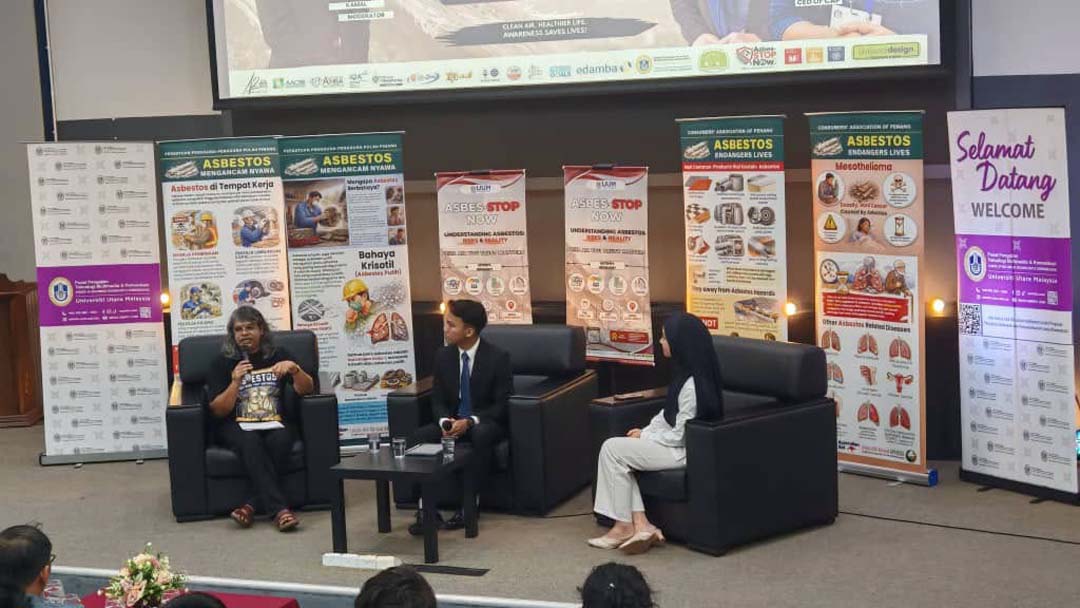
Opening remarks were then shared by Dr Hafifi Jamri, the Campaign Advisor, and Ms Hanani Sofia, the Secretary General of the Student Representative Council of UUM. Ms Mageswari Sangaralingam, representing CAP, then took the stage to introduce CAP’s background and long-standing focus on consumer safety and environmental health, including CAP’s campaign to ban asbestos.
The core of the programme featured an interactive panel forum moderated by Mr Kamal, which thoroughly dissected the complex realities of asbestos exposure. Ms Mageswari broke down the physical composition of asbestos, differentiated between the various types of fibres and their corresponding risk levels, and focused heavily on the severe long-term health consequences of inhalation, most notably mesothelioma, a fatal cancer of the lining of the lungs and abdomen.
Ms Mageswari also detailed the diverse structural uses of the material, outlined practical ways individuals can protect themselves from domestic or environmental exposure, and advocated for consumers/community Right to Know and safety, calling for product labelling and prohibition of asbestos, including the manufacturing and importing of asbestos raw fibre and asbestos-containing materials.
Contributing a vital youth perspective, Ms Hanani Sofia spoke on behalf of the student council regarding the effectiveness of media in educating the younger generation. She shared the collective stance of graduates and university students on the asbestos crisis, highlighting upcoming student-led programmes and initiatives designed to spread the “Start Now” awareness message directly to youth.
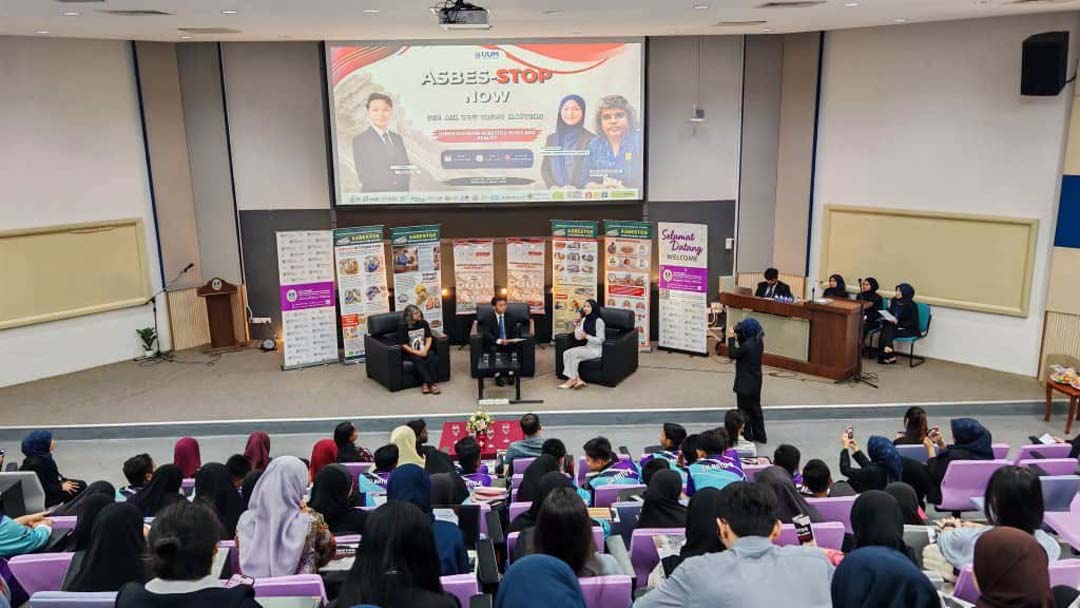
The forum transitioned into a lively Q&A session, addressing deep economic, legal, and environmental complexities raised by the audience. When asked why asbestos is still widely used in modern construction despite its known dangers, Ms Mages explained that it remains popular globally because it is low-cost and structurally highly durable. However, she countered that the long-term economic and healthcare costs heavily outweigh these short-term construction savings.
Addressing the status of law enforcement and legal guidelines in Malaysia, Ms Mageswari clarified that while official guidelines do exist on safe removal of asbestos, enforcement gaps persist. Crucially, the welfare of foreign construction workers is frequently neglected under current practices, underscoring an urgent need for institutionalised, long-term health monitoring for debilitating conditions like asbestos-related diseases.
The audience was also shocked by revelations regarding hidden household risks. Ms Mageswari explained that raw talc naturally co-occurs with asbestos during mining. This led to high-profile lawsuits in the United States of America against companies like Johnson & Johnson over contaminated talcum powder with asbestos, prompting advice for the public to swap talc-based cosmetics for safer alternatives.
Furthermore, she flagged recent consumer warnings regarding the trace presence of asbestos in certain imported kinetic sand toys. When discussing historical usage and advocacy, the panel noted that asbestos has been integrated into infrastructure for decades, which is why CAP urged relevant authorities to conduct safety inspections on older public buildings. CAP has been actively lobbying for a comprehensive ban on asbestos since the 1990s, having submitted several memoranda to the government.
Developing countries intending to ban asbestos have to navigate geopolitical pressures such as trade barriers imposed by asbestos-exporting countries. An example given is when Sri Lanka announced plans to phase out and completely ban asbestos imports, a direct response by the Russian government was suspending tea imports from Sri Lanka. Because tea is Sri Lanka’s largest and most lucrative export to Russia, the sudden trade barrier severely threatened the Sri Lankan economy, and subsequently reversed its policy to ban asbestos.
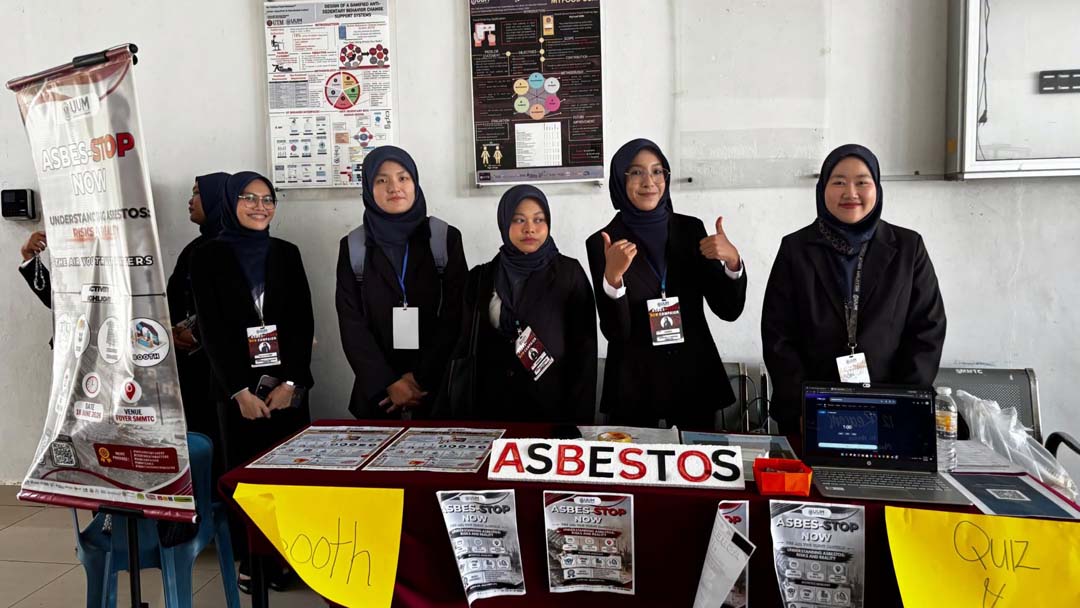
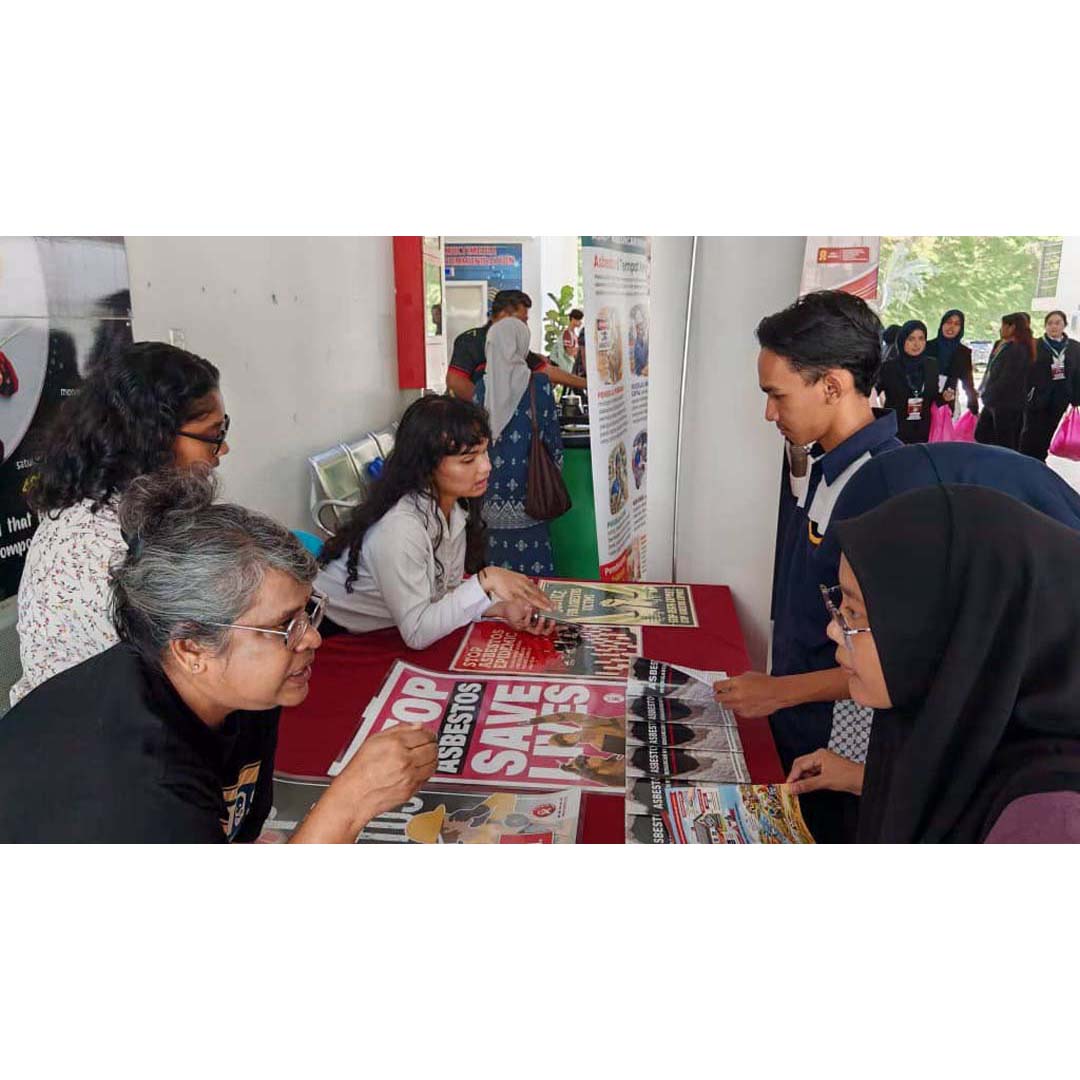
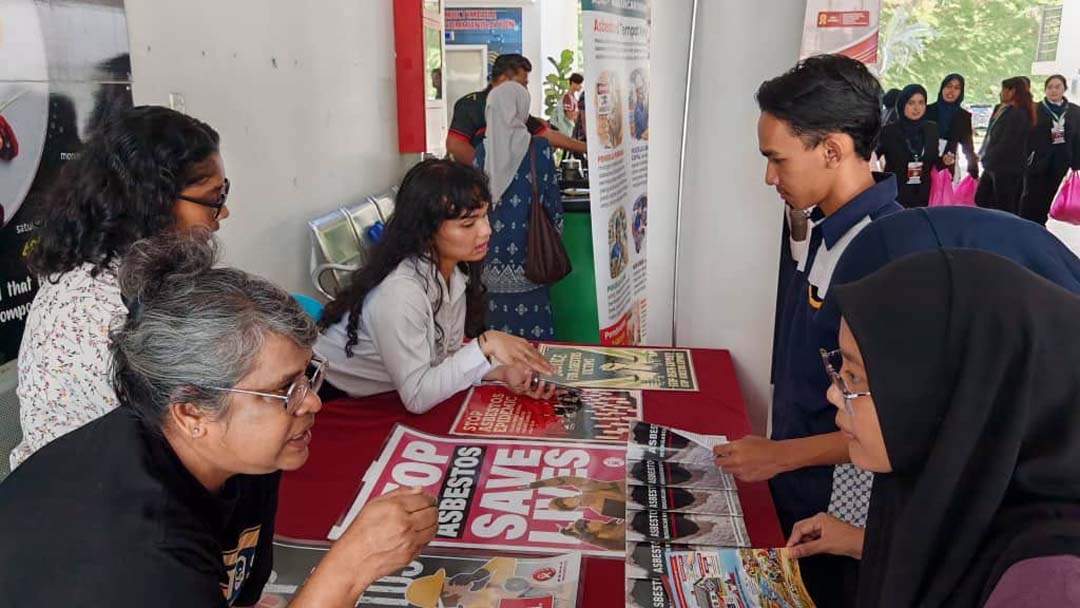
Following the event, an educational exhibition was held where CAP set up a dedicated awareness booth to engage directly with the university students and primary school students. The booth served as an interactive platform to distribute informative materials, including brochures and guides, detailing the severe health hazards associated with asbestos exposure and highlighting hidden risks commonly found in our daily lives and the environment.
The Department of Occupational Safety and Health of Kedah set up a booth to raise awareness regarding exposure to chemicals at work place and protective measures taken. The students of the School of Multimedia Technology and Communications put up a photo booth and had games such as identifying probable materials in a house or factory that will contain asbestos. The exhibition and games aimed to educate the younger generation on preventable health risks, answer student inquiries regarding safety inspections in buildings, and mobilise youth support for a total asbestos ban and minimising exposure to asbestos fibre.
In summary, the “Asbes-Stop Now” campaign highlighted that the profound health effects of asbestos must be continuously exposed to protect our loved ones from preventable harm. CAP remains fiercely committed to involving more consumers and youth in these initiatives to safeguard future generations and save lives.