
Restaurant of Mistaken Orders
In Tokyo, there is a restaurant where customers are happy to get bad service. You ask for dumplings, and you get miso soup. You order grilled fish, and maybe you get sushi.
It’s a regular thing here for the waiters and waitresses to mix things up, bring the wrong meal, misunderstand what a customer requests, or actually drink the glass of water they were meant to deliver to some table.
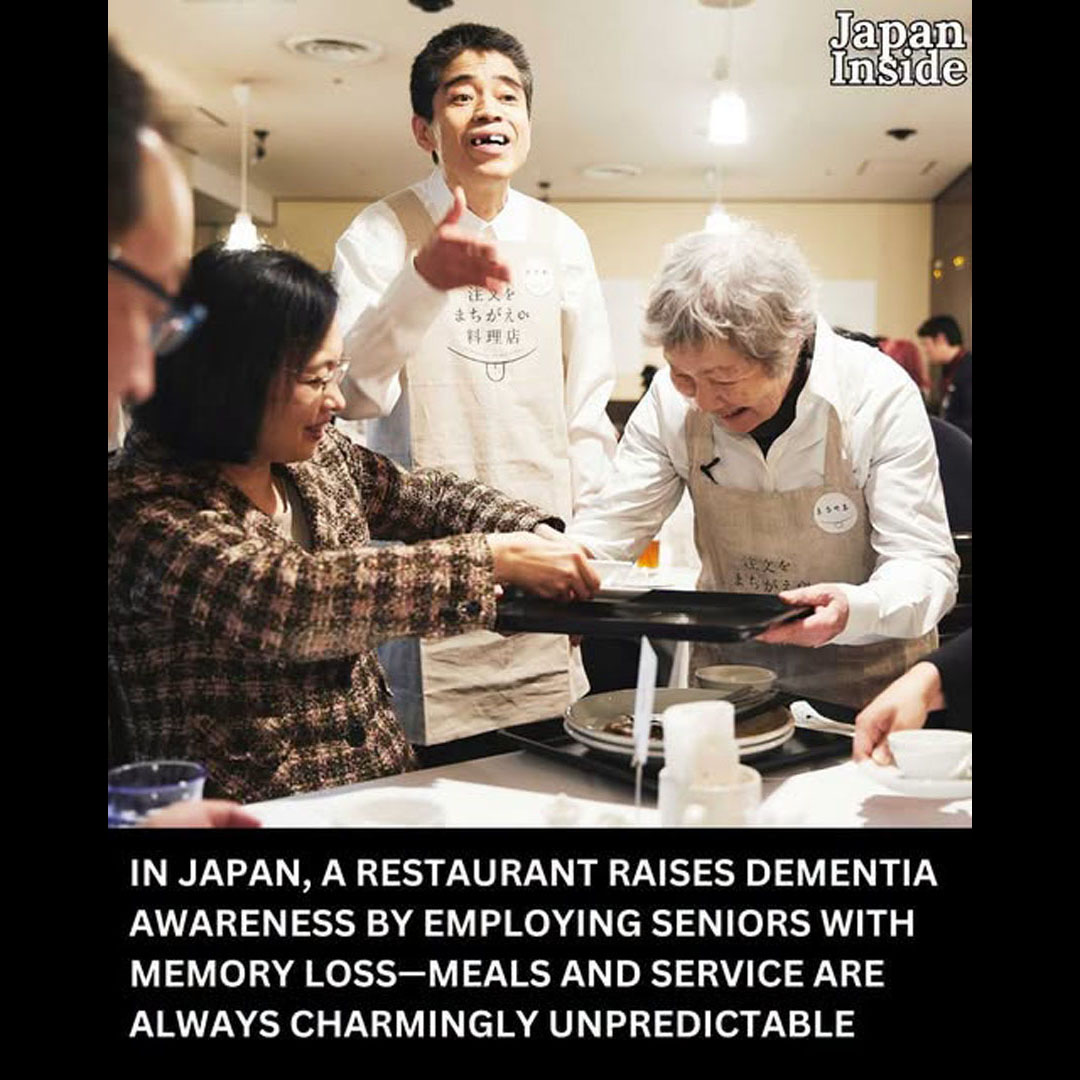
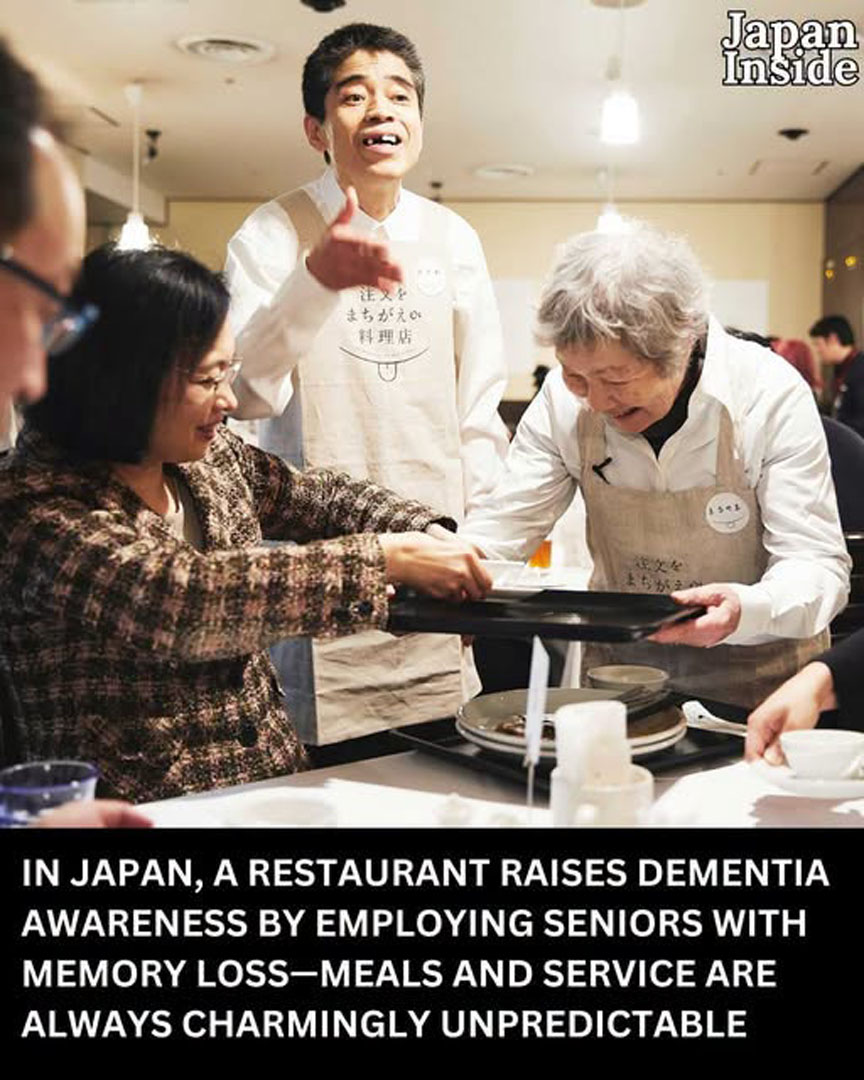
Called the “Restaurant of Mistaken Orders”, it offers a unique and heartwarming dining experience where all the servers have dementia. Guests are informed in advance that their orders may be mixed up – and that’s part of the charm.
Inspired by a simple mistake, Japan’s Restaurant of Mistaken Orders is changing how people view dementia. Founded by television director Shiro Oguni in 2017, the unique restaurant shows that memory loss does not define a person’s value or abilities.
The idea came after Oguni was accidentally served dumplings instead of the meal he ordered while visiting a care home. Rather than feeling frustrated, he noticed the warmth, joy, and humanity around him.
Today, the project encourages people to replace stigma with understanding, compassion, and respect for those living with dementia. It demonstrates that people with cognitive decline can still work, interact, and bring joy to others.
Instead of focusing on mistakes, the restaurant inculcates empathy, patience, and human connection. Receiving the wrong dish becomes a powerful reminder that everyone has value and can contribute meaningfully to society, regardless of age or condition.
Source: Forbes; Amazing Facts; Did you know?
Changing Society’s Negative Perception of Dementia
The concept for the Restaurant of Mistaken Orders was created by Japanese TV director and producer Shiro Oguni in 2017 to challenge stereotypes about ageing and memory loss.
It was organised as a recurring pop-up, held a number of times over several days, to broaden the public’s awareness of dementia. The gentle surprise of the inadvertent human mistakes has become, in a way, the actual product of the restaurant – more than the desired meal itself, Forbes reports.
Much of the laughter that fills the eatery arises from the pleasant shock of seeing what you are actually, unexpectedly being served. Sometimes you might even get your coffee with a straw.
Dementia is a general term describing decline in memory, learning and communication skills. It’s caused by a number of different conditions, one of them being Alzheimer’s, which is a specific disease.
“Dementia is so widely misunderstood. People believe you can’t do anything for yourself and the condition will often mean complete isolation from society. We want to change society to become more caring and easy-going, so dementia or no dementia, we can live together in harmony,” Oguni explains in a video promoting the project.
An article on JapanGov, the Government of Japan website, has more interesting details on the noble initiative behind this unique restaurant. According to the report, the impetus for starting this pop-up restaurant comes from an encounter between Oguni and a group home where people with dementia live.
“Like everybody else, my awareness of dementia at first tended towards negative images of people who were ‘radically forgetful’ and ‘aimlessly wandering about’. But actually, they can cook, clean, do laundry, go shopping and do other ‘normal’ things for themselves. Close-up, they might go a little off course now and then, but…”
Lunchtime. The order was for a Hamburger steak, but Oguni was served a plate of gyoza (dumplings) instead. “As everybody around me was eating with such gusto, I felt quite muddled and wondered if perhaps it was me who was in error.”
Oguni noted, “Why raise our eyebrows at the difference between sizzling steak and gyoza? ‘So it’s a mistake, well, fine.’ Given that kind of tolerance, the dining scene can become relaxed and delightful.”
Made possible by the help of many people, the “Restaurant of Mistaken Orders” is indeed a place where mistakes happen. One older woman shows her guests to a table and then sits down with them.
Another serves a hot coffee with a straw. Yet another older woman struggles to twist a large pepper mill, not entirely sure that the pepper will fall where it’s wanted. Everybody at the table pitches in to help, and with cries of “We did it!” all join in the laughter.
However, “The restaurant is not about whether orders are executed incorrectly or not,” notes Oguni. “The important thing is the interaction with people who have dementia.”
Although succeeding as a “restaurant of never-ending laughter,” Oguni was initially concerned about possible criticisms, such as, “Don’t treat dementia like a carnival sideshow!” and “Don’t make a laughingstock out of them!”
But actually, when guests see the smiles of the staffers with dementia, and the joy that motivates their work, some feel a spirit of courage, while others are moved to tears. And invariably, the servers say such things as “I’m still capable. This has given me confidence.”
The negative image of dementia was replaced by a fun, positive one. “Calling someone ‘The demented Mrs Whozit’ is completely different from ‘Mrs Whozit with dementia.’ Dementia is not what a person is, but just part of who they are. People are people. The change will not come from them, it must come from society,” observes Oguni. (Source: JapanGov)
Good Outcome
● The “mistake” rate: About 37% of orders are delivered incorrectly.
● Customer satisfaction: Despite the frequent mix-ups, surveys show that 99% of customers leave happy and fulfilled.
● Impact: The initiative provides a vital community space that helps patients feel productive, aiding in slowing the progression of dementia.
● International adaptation: The heartwarming concept of the Restaurant of Mistaken Orders has evolved into a global movement. The initiative has inspired similar inclusive dining and pop-up experiences internationally (in China, Korea, and the UK), shifting social focus from rigid perfection to authentic human connection.