
CAP’s “Asbestos Awareness” Programme in Island Glades, Penang
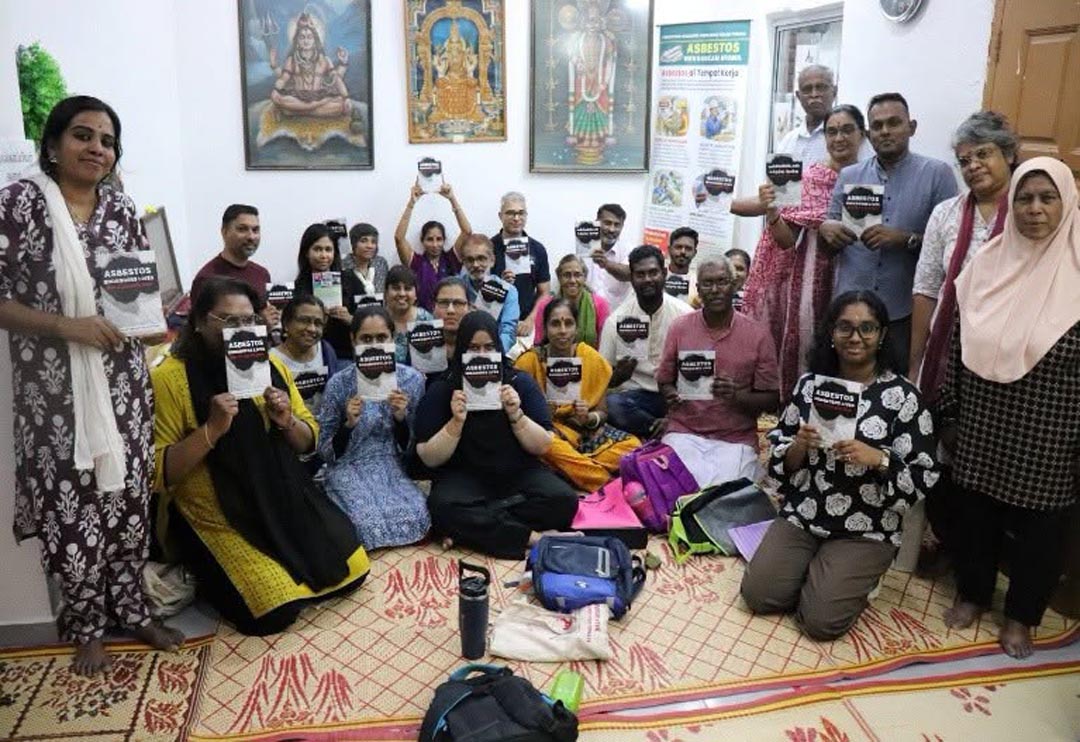
The Consumers’ Association of Penang (CAP) conducted an asbestos awareness programme in Island Glades, Penang on 19 July 2026. The programme was co-organised with Penang Suya MeiyArivagam, a local NGO. A total of 35 persons, comprising 20 females and 15 males, including nine youths, attended this programme. Four CAP staff and one intern were involved in the programme.
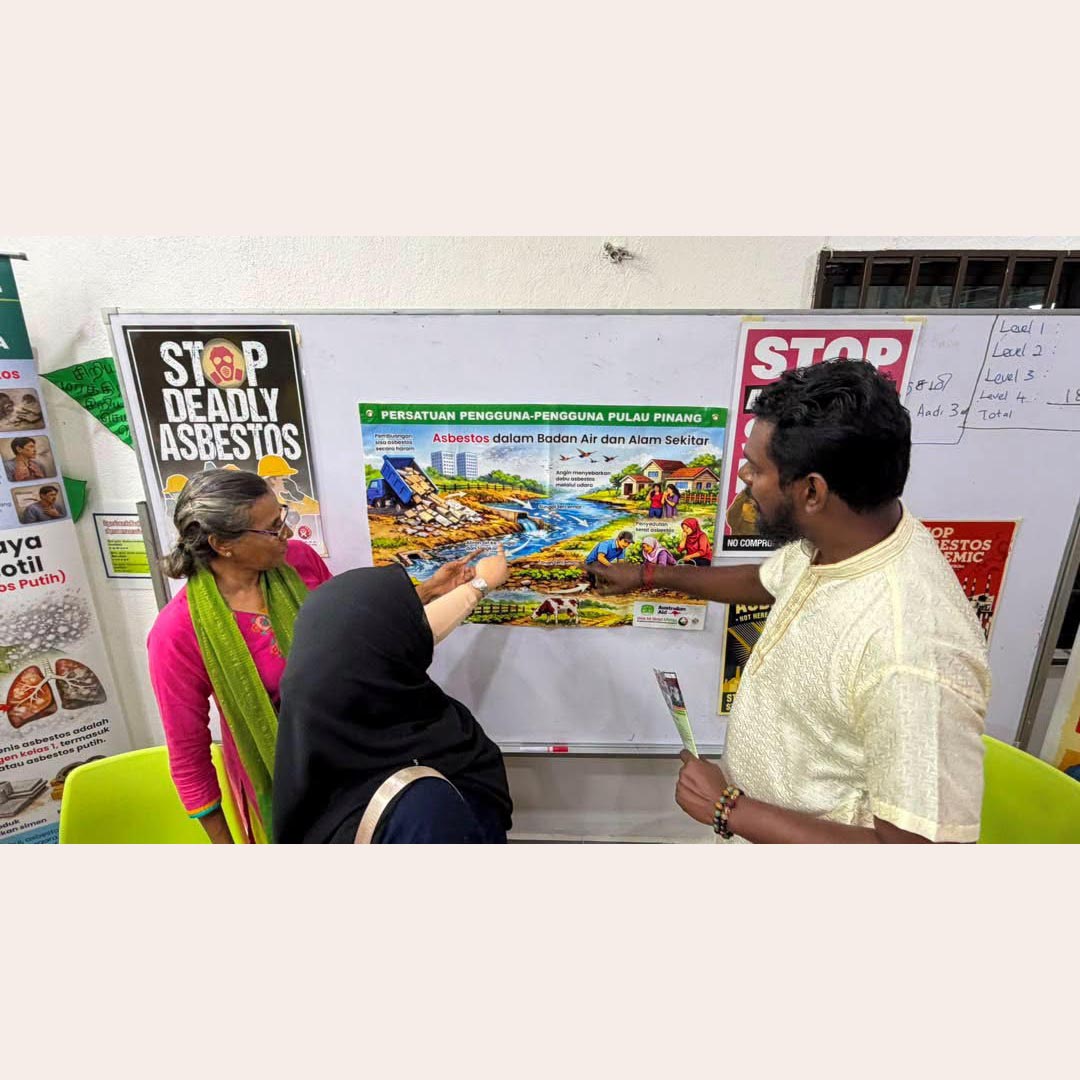
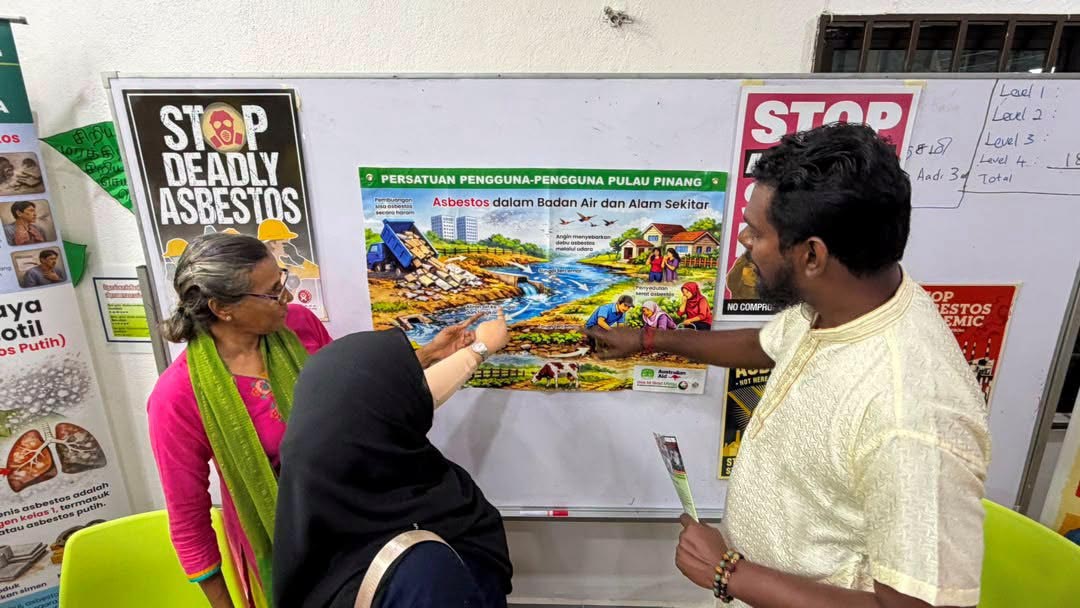
The programme started with the distribution of CAP’s leaflet “Asbestos Endangers Lives: Ban Chrysotile Now” to the participants. Streamers and posters, which provided concise information on the dangers of asbestos, pathways of exposure and asbestos-related diseases, were put up around the hall.
The emcee kicked off the programme by welcoming the participants and introducing the forum topic. The forum was moderated by Ms Vathsala, who gave a brief introduction on the matter at hand. She then presented the key speakers of the event, Ms Mageswari Sangaralingam and Ms Hatijah Hashim. Vathsala posed several questions to the panellists.
Mageswari began by relaying information on where asbestos can be found. She pointed out common products made from asbestos, such as roof tiles, electrical insulators, cement pipes, and brake pads. She further explained the prevalence of asbestos, for example, in construction materials due to its durability and heat-resistance. She remarked that most consumers are unaware of asbestos-containing materials in their homes and surroundings.
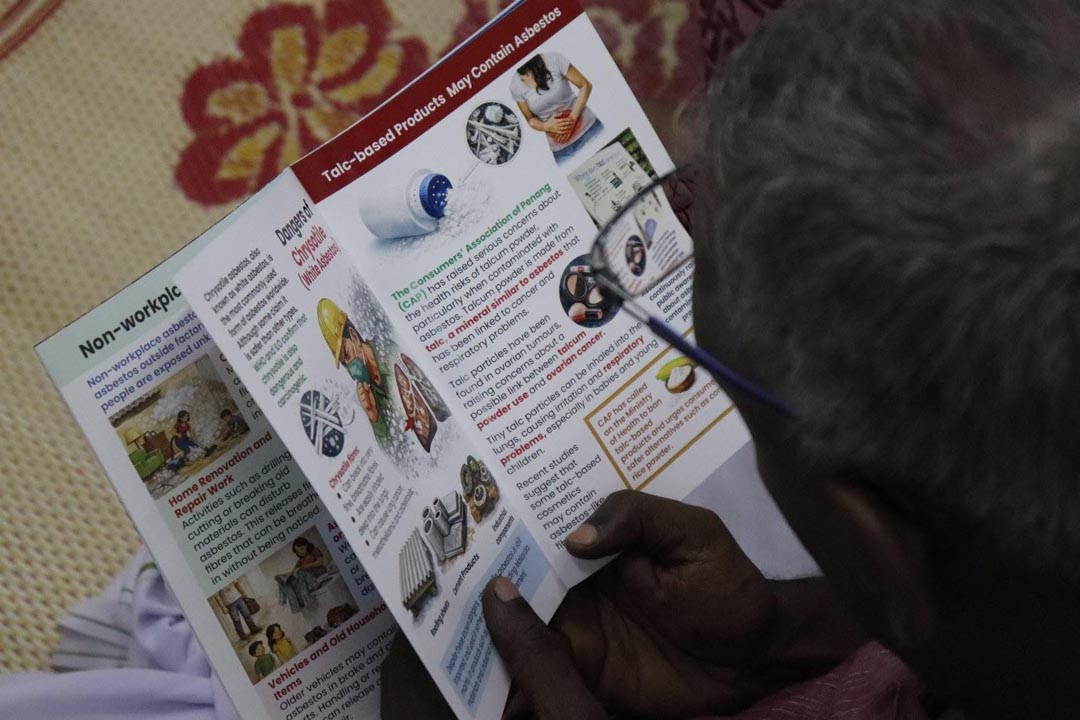
The floor was then given to Hatijah, where she stated the health impacts of asbestos. The fibres are minuscule enough to be breathed in and cause irreparable damage to our health, such as lung cancer. She mentioned how even everyday items like talcum powder and children’s toys, such as kinetic sand, may contain asbestos due to cross-contamination.
Mageswari then shared real-life stories of workers and their families affected by asbestos-related diseases and noted the lack of proper precautions in the workplace. She stressed that there is no safe level of asbestos exposure. She shared CAP’s call for a ban on chrysotile, as other types of asbestos have been prohibited in Malaysia.
Hatijah then shared alternatives to asbestos-contaminated products, especially in cosmetics. She advised the audience to use products labelled as asbestos-free or talc-free to prevent implications on their health. As for cosmetics, due to the scarcity and accessibility of alternatives to some talc-based products, she advised attendees to opt out of those.
Mageswari then divulged about our government’s stance on this issue and shared the previous measures taken, such as the prohibition of asbestos building materials in government schools, clinics, and hospitals since 1999, which extended to all government buildings since 2005. However, chrysotile remains legal under ‘controlled use’ in the manufacturing of certain products and private construction. No regulations prohibit asbestos use in private buildings. Asbestos building materials are still being sold, and thus, these products should be labelled in accordance with consumers’ right to be informed and to choose safe products.
She asserted that the government is committed to this effort, which can be seen through their plans to phase out the manufacturing of asbestos-containing products and their proposal to ban the import of raw asbestos fibres by 2028, but external economic pressures is acting as a barrier for these measures to be put in place promptly.
Lastly, Hatijah emphasised the importance of spreading awareness of the adverse effects of asbestos in their respective communities, so more individuals are aware of this issue and take precautionary measures.
The audience participated actively in the Q&A session that followed. A participant inquired about the statistics and research on asbestos, for which Mageswari indicated that significant proof can be found for diseases that correlate directly to asbestos, such as mesothelioma and asbestosis, but there is difficulty in getting proper data on mesothelioma cases or other asbestos-related diseases due to underreporting, including a lack of full patient history taking in Malaysia.
The question was then directed to Ms Mageswari on the responsible bodies to detect the presence of asbestos at homes, particularly during a house renovation and on how to detect if one’s health is compromised by it. She stated that the Department of Occupational Safety and Health (DOSH) has a list of inspectors. She further pointed out that under the Occupational Safety and Health Act (OSHA 1994), employees who work directly with asbestos are mandatorily required to get an annual medical check-up to monitor their health.
In short, this forum was successful in raising awareness on asbestos among the participants, notably the youth. CAP is committed to educating communities on this issue, and if anyone is interested in an awareness-raising programme regarding asbestos, please feel free to contact the Consumers’ Association of Penang at 04-8299511 or send us an email at info@consumer.org.my.