
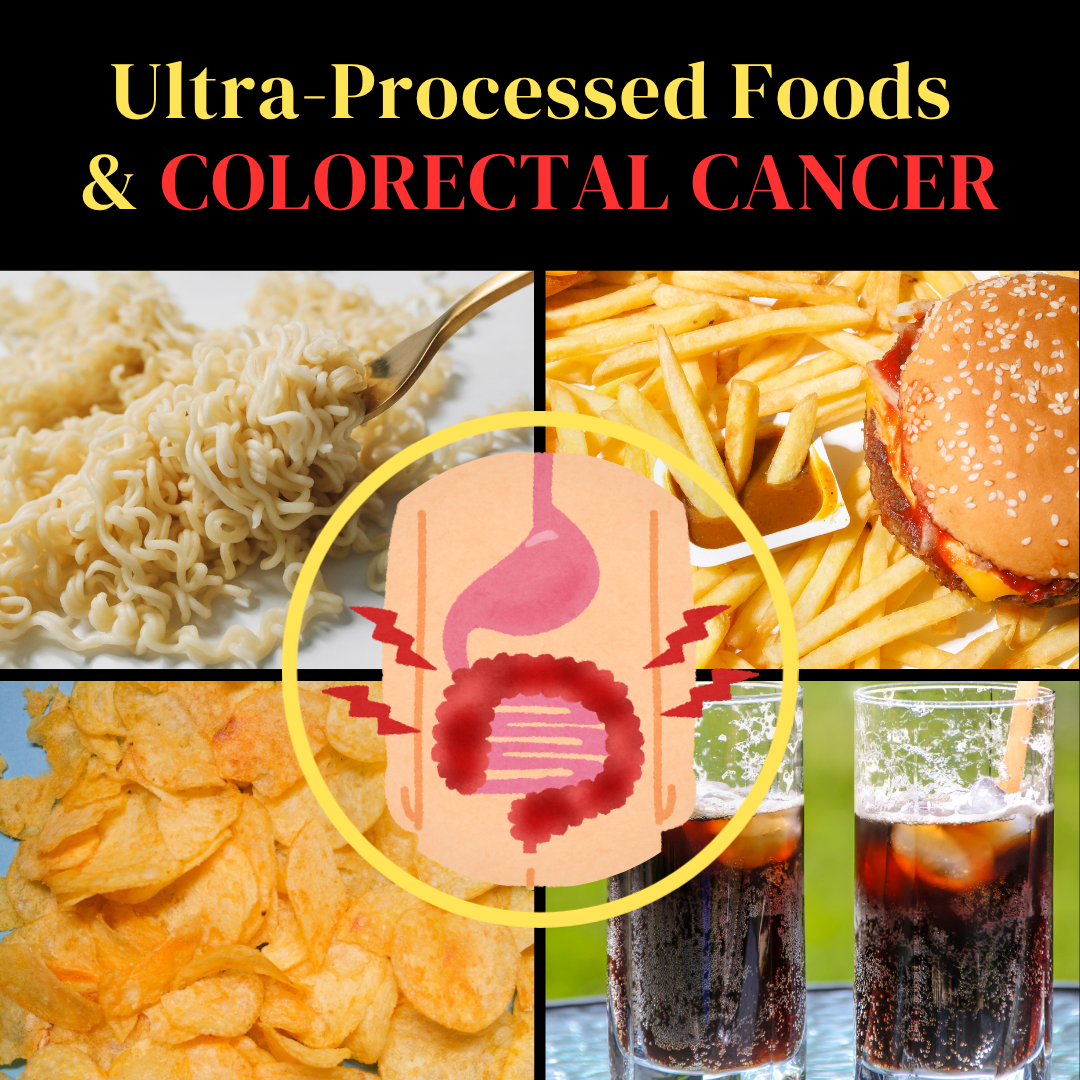
The Link between Colorectal Cancer and Ultra-Processed Food
The Consumers’ Association of Penang (CAP) calls upon consumers to avoid consuming ultra-processed food (UPFs) as there is strong evidence to suggest a relationship between consuming UPFs and colorectal cancer.
Ultra-processed foods are high in energy, added sugar, sodium, and unhealthy fats, while being low in fibre, protein, and micronutrients. One of the most popular UPFs in Malaysia is instant noodles, which are cheap, available in various flavours and forms, and cook within minutes. In 2024, Malaysia ranked 13th in the world for the consumption of instant noodles with 1,692 million servings consumed.
In Malaysia, according to a report by the National Cancer Registry Department, colorectal cancer is the most common cancer in men and the second most common in women, making it one of the biggest health threats facing Malaysians today. Colorectal cancer now makes up nearly 10 percent of all cancer cases worldwide, and in Malaysia, its incidence is highest among the Chinese population, followed by Malays and Indians.
While colorectal cancer has traditionally been more prevalent among older people, recent global data show the disease is increasingly affecting younger and middle-aged adults, and Malaysia is no exception to this trend as cases are now increasingly appearing among younger Malaysians in their 20s to 50s, a trend that experts describe as “deeply concerning and a sign of lifestyle and dietary shifts.”
According to the Malaysia National Cancer Registry Report 2017-2021 about 70 per cent of colorectal cancer cases are only diagnosed when the disease has already reached stage three or four, by then treatment becomes tougher and survival drops sharply.
A study led by Mass General Brigham researchers, as part of the Cancer Grand Challenges PROSPECT team, suggests an important link between ultra-processed foods and colorectal cancer that merits closer investigation. By analysing the diets and endoscopy results from almost 30,000 women, the team found that the participants who reported consuming the highest levels of ultra-processed foods had a 45% higher risk of developing adenomas, which can be precursors of early-onset colorectal cancer, compared to participants who reported consuming the lowest levels. Their results are published in JAMA Oncology (Journal of American Medical Association).
According to Andrew Chan, MD, MPH, chief of the Clinical and Translational Epidemiology Unit and a gastroenterologist in the Mass General Brigham Cancer Institute, the findings support the importance of reducing the intake of ultra-processed foods as a strategy to mitigate the rising burden of early-onset colorectal cancer. It was found that the increased risk seems to be fairly linear, meaning that the more ultra-processed food taken, the more potential that it could lead to colon polyps.
The consumption of ultra-processed ready-to-eat foods that often contain high levels of sugar, salt, saturated fat and food additives has risen in parallel to the rise of early-onset colorectal cancer (EOCRC). Dr. Chan’s research group previously found an association between ultra-processed foods and colorectal cancer more broadly, but this is the first study to link ultra-processed foods with EOCRC.
The researchers analysed data from the Nurses’ Health Study II, a long-term prospective study of female nurses who were born between 1947 and 1964, a generation that is known to be at elevated risk for EOCRC. They analysed 24 years’ worth of data from 29,105 female nurses who received at least two lower endoscopies before they turned 50 to screen for colorectal cancer precursors. The participants also completed dietary surveys every four years, from which the researchers estimated their average daily intake of ultra-processed food. On average, participants consumed 5.7 servings of ultra-processed foods per day, which amounted to 35% of their total daily calories.
From the endoscopy results, the researchers identified 2,787 participants who developed precursor polyps for colorectal cancer. Women who consumed the highest amounts of ultra-processed foods (10 servings per day on average), had a 45% higher risk of developing conventional adenomas, the colorectal cancer precursor most associated with EOCRC, compared to individuals who consumed the lowest amounts (3 servings per day on average).
Over the past few decades, there has been a significant shift from consuming whole or minimally processed foods to UPFs. This shift has been driven by changes in food manufacturing and distribution systems, increased marketing of UPFs, lifestyle changes leading to higher demand for convenience foods, and economic factors making UPFs more affordable and accessible.
In view of the above situation the relevant authorities should implement taxes on unhealthy food as a measure to curb obesity and related health issues such as colorectal cancer. At the same time the authorities should warn the public and school children on the dangers of consuming UPFs.
Consumers are advised to avoid foods that have been stripped of fibre and contain high amounts of calories, fat, sugar and salt, as well as products with long lists of ingredients, including colourings, preservatives and other additives.
Mohideen Abdul Kader
President
Consumers’ Association of Penang (CAP)
Letter to the Editor, 6 August 2026