
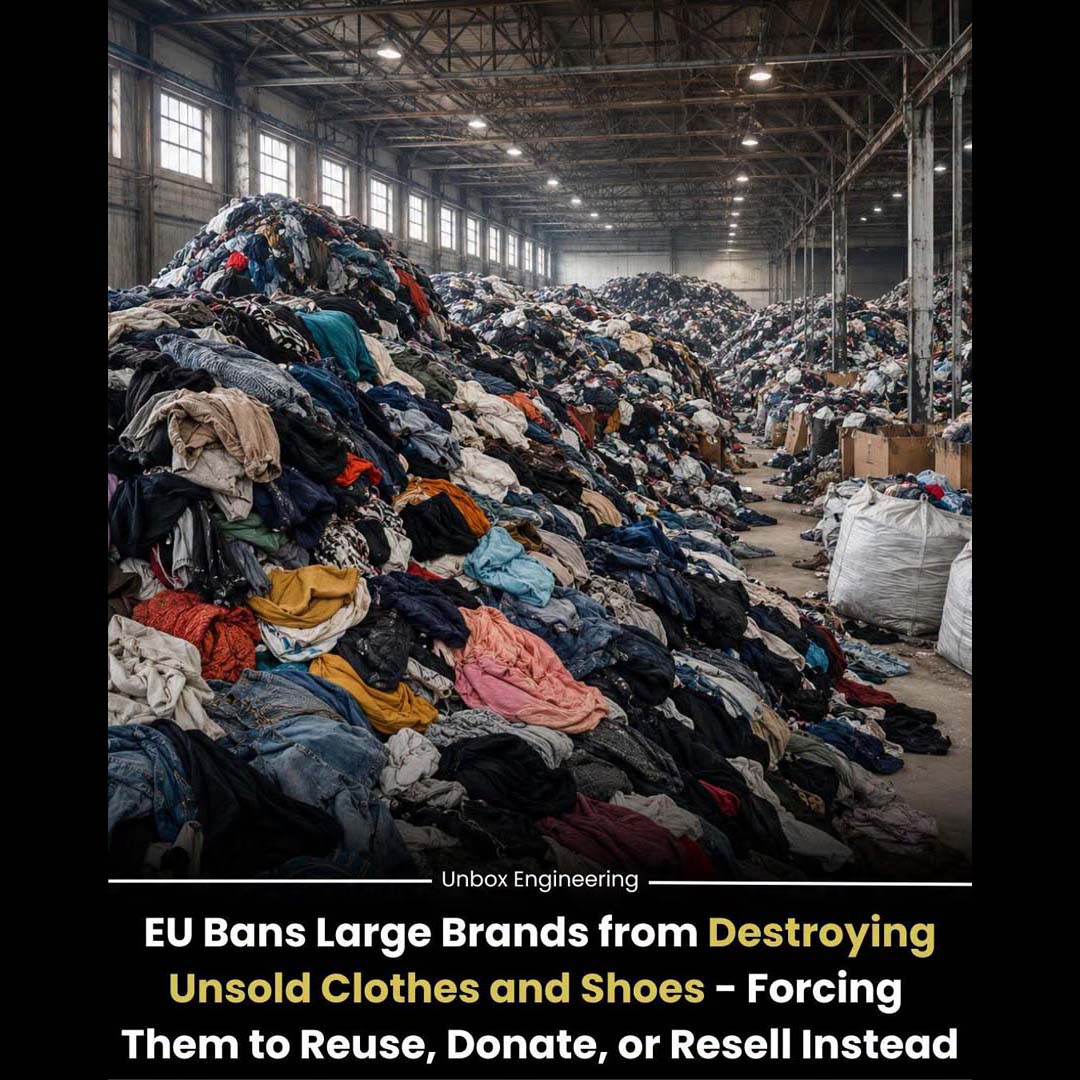
Europe Makes It Illegal to Destroy Unsold Clothes
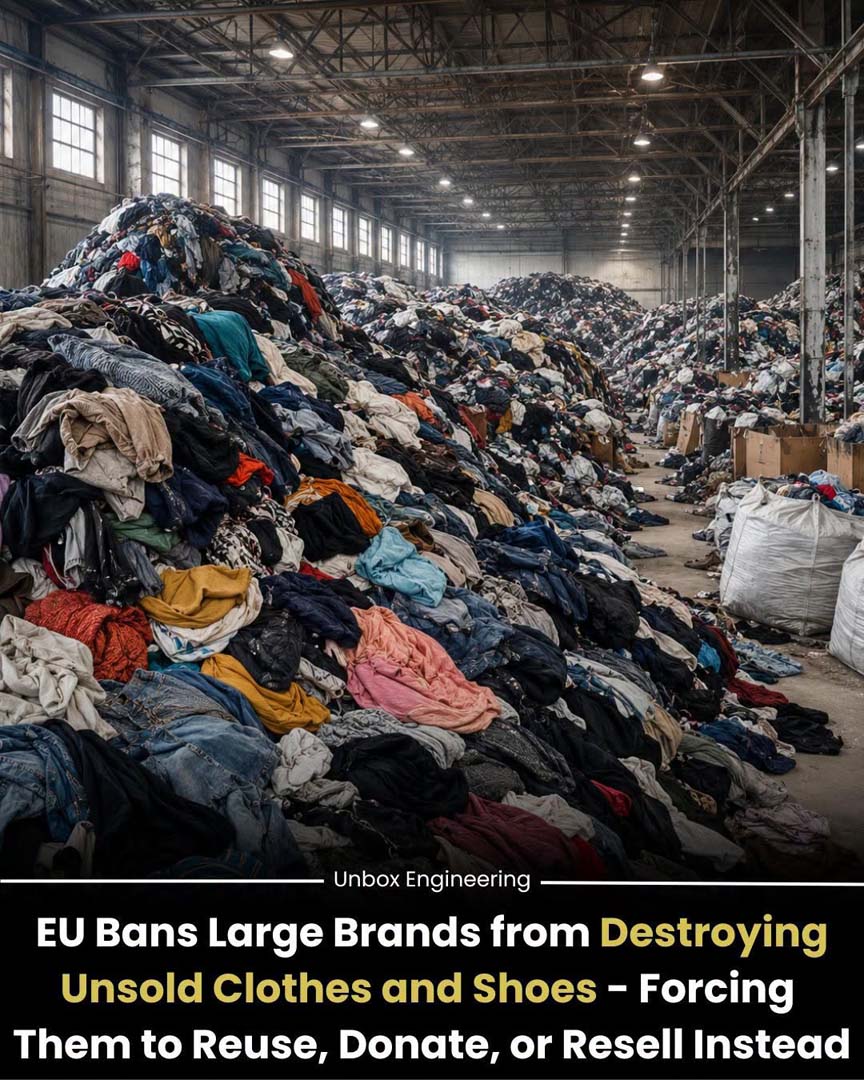
Europe is tightening restrictions on one of fashion’s most controversial practices: destroying unsold clothing and footwear.
The European Union (EU) has banned the destruction of unsold clothing and footwear under its new Ecodesign for Sustainable Products Regulation. The law, which targets the long-standing practice of brands burning or shredding excess inventory to manage overproduction, will potentially reduce both textile waste and the environmental footprint of the fashion industry.
For decades, brands have routinely incinerated or shredded pristine, unsold inventory to protect brand exclusivity and manage overproduction. This new legislation ends that practice.
With the introduction of the new law, large companies can no longer intentionally destroy unsold clothing, accessories, and footwear from 19 July 2026. Medium-sized companies are expected to follow in 2030, while small and micro businesses are exempt. The rules encourage better stock management, resale, donation, reuse, refurbishment, and other circular alternatives.
This ban will prevent wasting valuable products, including the resources and raw materials used to make them, while also reducing their environmental and climate impact. The goal is to reduce textile waste and push the fashion industry toward a more circular economy, where products stay in use longer instead of ending up in landfills or incinerators.
Every year, 4-9% of unsold textiles in Europe are destroyed. Under the new regulation, companies will be required to disclose how much unsold stock they discard and why. By requiring companies to publicly disclose this, the regulation aims to tackle the staggering 12.8 billion pounds of textile waste generated annually in the EU, effectively making corporate transparency a mandatory environmental standard.
Instead of destroying unsold clothes, shoes, and clothing accessories, large companies will need to:
🛍️ Sell them, including through discounts or alternative markets
💚 Donate them to charities or social enterprises
🔄 Reuse them
♻️ Recycle them
This initiative compels global manufacturers to shift toward durable, repairable, and recyclable designs rather than disposable fast-fashion trends.
The regulation also introduces a Digital Product Passport, a scannable tag giving consumers access to information about a product’s sustainability and lifecycle.
Although the regulation originates in Europe, its impact will be global, as international retailers must overhaul their entire supply chains to maintain access to the EU market. This shift marks a significant move toward a circular economy where the planet no longer pays the price for unsold retail stock.
This landmark law designed to dismantle the destructive “take, make, and dispose” model of the modern textile industry, is set to change the future of the industry to a more sustainable one: “sell it, reuse it, donate it – but don’t destroy it”.
Source: EU Environment; European Council; Unbox Engineering