
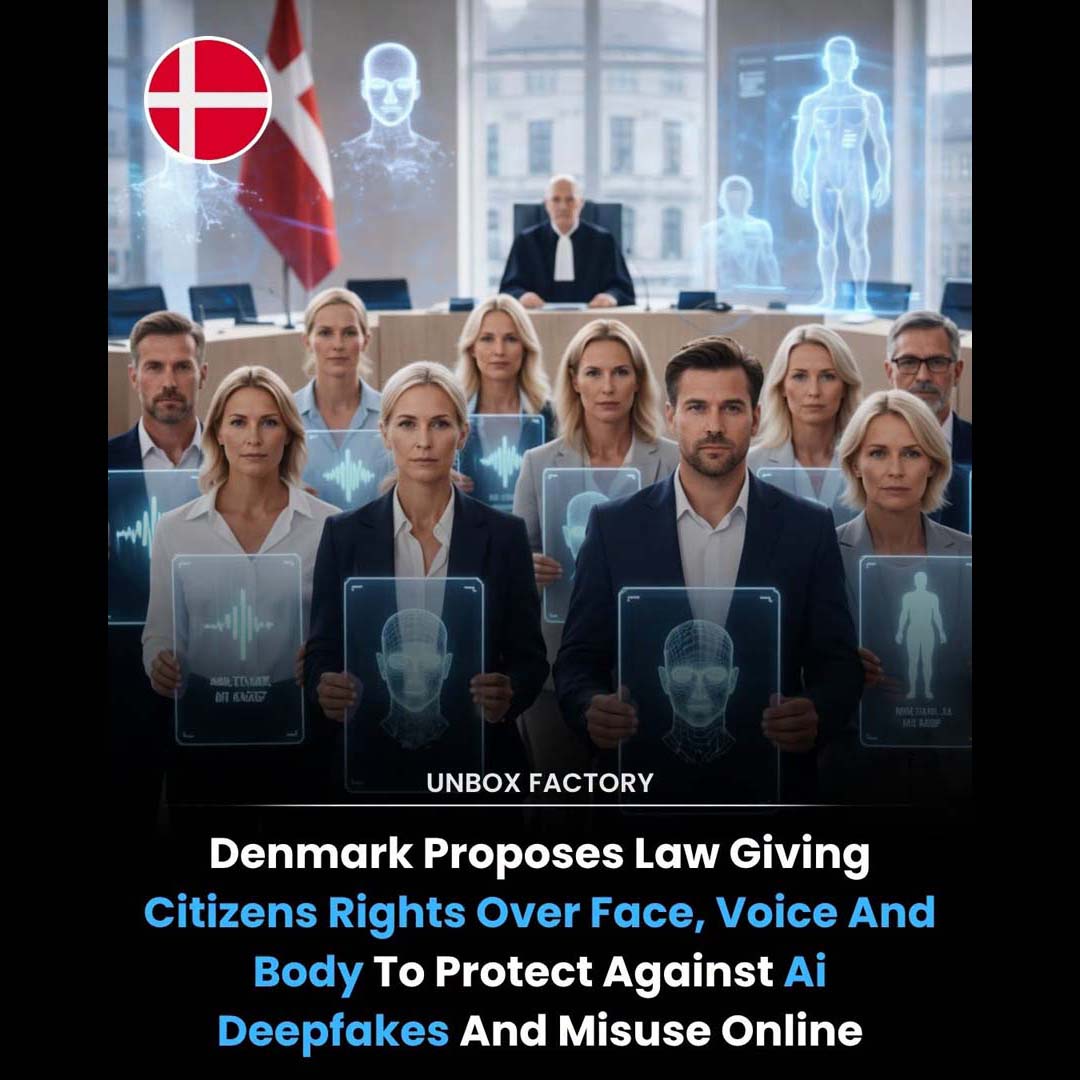
YOUR BODY, YOUR COPYRIGHT
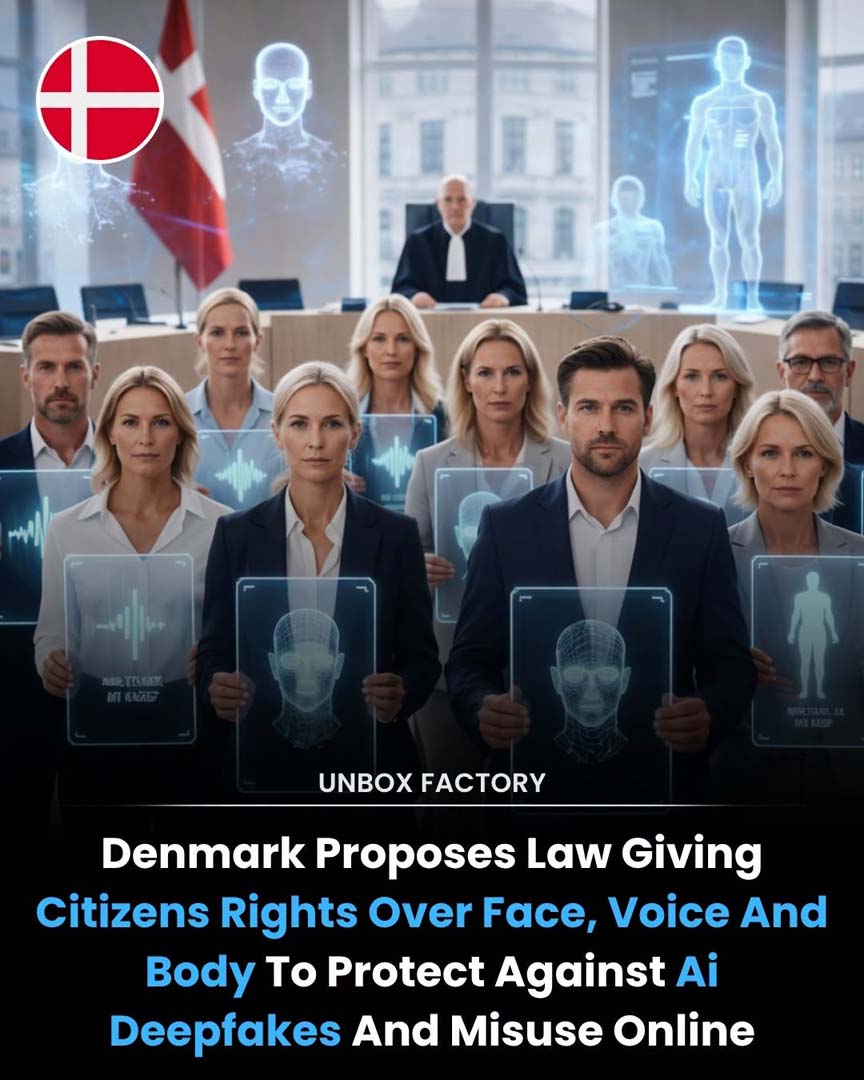
Denmark Proposes New Law to Allow Citizens to Copyright their Face, Voice & Body Against AI
As artificial intelligence (AI) becomes more powerful, a new problem is spreading across the internet: AI deepfakes. These tools can now create hyper-realistic videos and audio that perfectly imitate real people – their faces, voices, and movements – often without their knowledge or permission.
In a groundbreaking move, Danish lawmakers are moving to protect individuals from digital impersonation and misuse. Denmark is clamping down on AI-generated deepfakes by changing copyright law to give its citizens legal ownership over their face, body and voice.
The idea is simple but powerful: your identity should belong to you. The proposal would allow people to take legal action if their likeness or voice is used without permission in AI-generated content. That includes manipulated videos, cloned voices, or fabricated public statements.
The law gives citizens the right to demand immediate removal of deepfakes, regardless of intended use. Furthermore, those affected can claim damages for unauthorised use of their image, even without proof of reputational harm. These protections extend 50 years after the person’s death.
The legislation builds on copyright tradition by treating personal identity characteristics as protected assets. Platforms like Meta and X face substantial fines if they fail to respond to deepfake reports within specified timeframes.
In the past, copyright laws mainly protected things like music, films, books, and artwork. But this proposal would extend similar protection to something even more personal – human identity itself.
Supporters say the law could help protect people from digital impersonation, identity theft, and misinformation in a world where technology can clone a person in seconds. Critics, however, question how enforcement would work across borders and whether it could clash with freedom of expression laws.
This move places Denmark at the front of a growing global debate about AI regulation. As deepfake technology becomes cheaper and more accessible, countries are being forced to decide who owns digital identity.
Denmark’s initiative is among the first to directly tackle the issue of digital identity ownership.
If passed, Denmark’s approach could become a global model for digital human rights, showing how countries might protect citizens in an era where technology can recreate a person almost perfectly.
Because in the age of AI, protecting data may no longer be enough.
What are Deepfakes?
Deepfakes use AI technology to create highly realistic fake images, videos and audio recordings. The term comes from “deep learning” and “fake” and describes both the AI technology used and the resulting content.
Deepfakes either alter existing content – like replacing Michael J. Fox’s face with Tom Holland’s in clips from Back to the Future – or generate new content showing someone saying or doing something they didn’t.
While it has legitimate uses in entertainment and media, it also raises serious concerns about privacy, misinformation, and identity theft.
Deepfakes can range from being funny and absurd to being manipulative and dangerous. In some cases, deepfakes have been used for scams, fake news, political manipulation, or misleading content online.
Source: TechTimes; The Investigative; WeForum; Unbox Factory; 5 Unknown Facts