
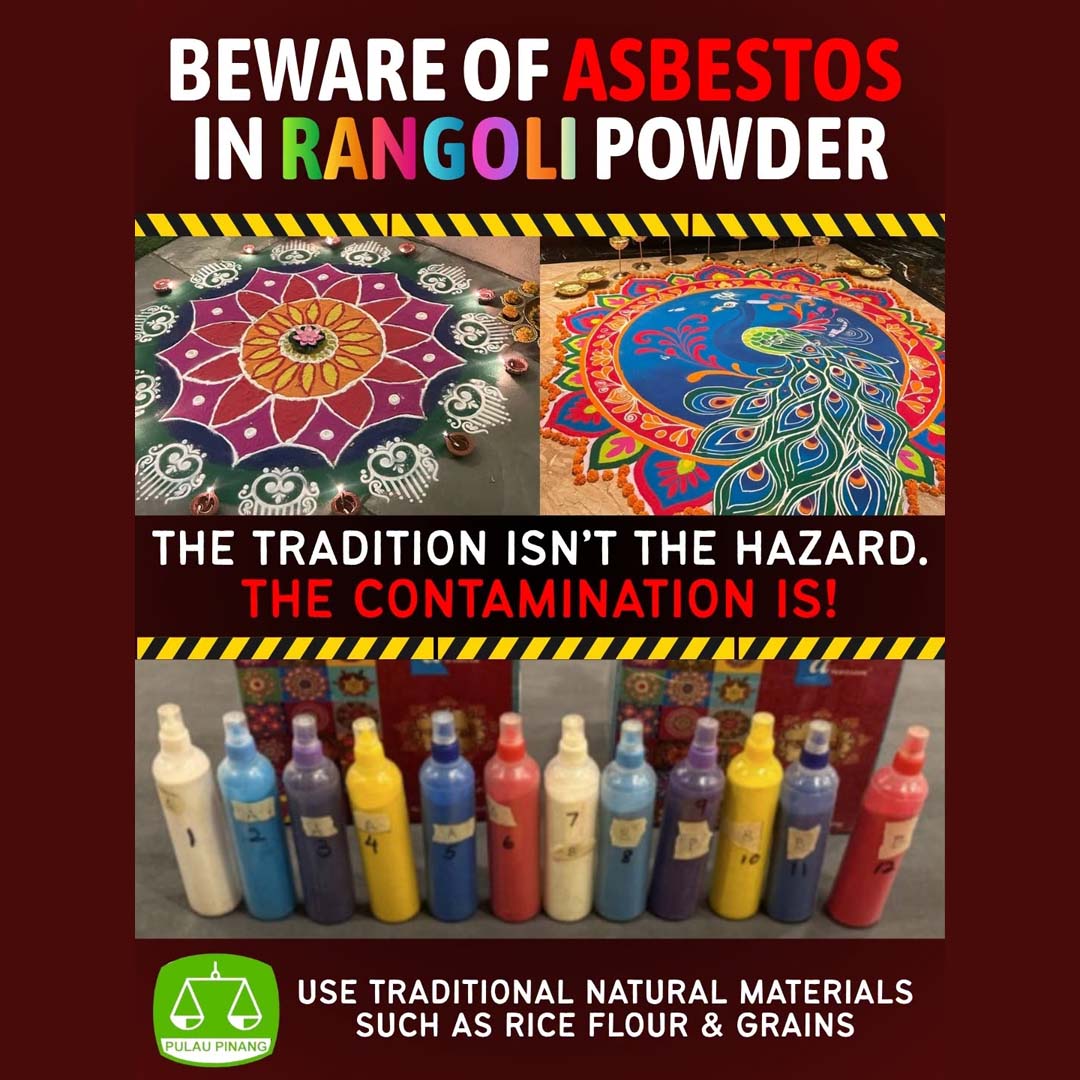
Asbestos In Rangoli Powder: Where the Line Between Convenience and Safety Blurs
Warning bells are ringing after asbestos, a known carcinogen, was detected in Rangoli powder. While the dust of the Deepavali celebration had just settled down, an alarming finding revealed that Rangoli powder, commercially sold packets of coloured powder for Rangoli Kolam (an Indian decorative art form for festivities drawn on the floor), has been found to contain asbestos.
A press release titled “Safe Festivals: Beware Asbestos Exposure” revealed the presence of asbestos in the majority of samples of Rangoli powder tested by ISAA Engineering, an asbestos analysis laboratory in Seoul, South Korea, accredited by South Korea’s Ministry of Employment and Labour and the Ministry of Climate, Energy and Environment. This research was done in the wake of the recall of five Rangoli products in New Zealand due to asbestos contamination in June 2026.
The organisations involved in the research include the Asian Citizens’ Center for Environment and Health (Eco-Health), South Korea; the Asian Ban Asbestos Network (ABAN); the Ban Asbestos Network Korea (BANKO); the Occupational and Environmental Health Network of India (OEHNI); the Health and Safety Advisory Centre, Malaysia; and the Asbestos-Free Malaysia Network.
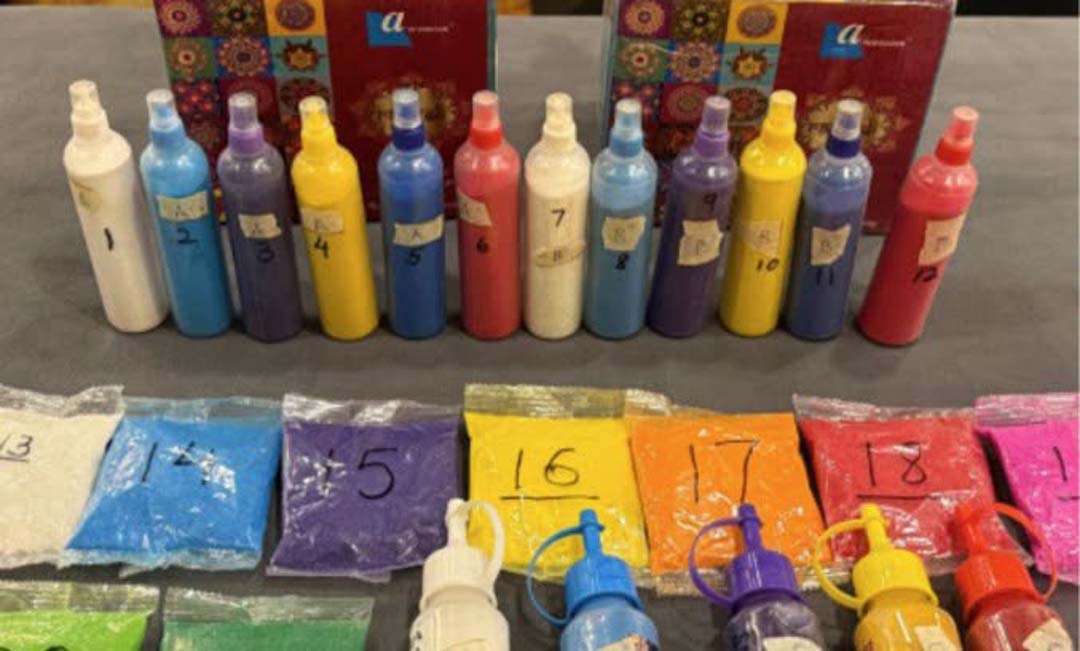
Mr Yeyong Choi, Director of the Asian Citizens’ Center for Environmental Health (Eco-Health), disclosed the staggering results at an online press briefing on 5 November 2026. Out of 50 samples of Rangoli, 60% of them were found to be contaminated with tremolite asbestos, a known Group 1 carcinogen. All these samples were obtained through online and physical shop retailers in India, Malaysia and England in October 2026. Rangoli samples from India sold under the brand name Ascension were found to be the worst offenders, with a detection rate up to 86.7%. The English brand “Food Factory” sold in an East London supermarket had a 67% detection rate for asbestos.
This high detection rate is worrying, as a steep price is being paid through the health of the consumers, particularly women, who make up the vast majority of the users. According to Product Safety, a specialised unit under the Ministry of Business, Innovation & Employment of the New Zealand Government, while there are no safe levels of asbestos exposure, it does not trigger any immediate health detriment; however, the chronic effects are shown over a period of 15 to 40 years.
The effects of asbestos exposure should not be taken lightly, as it brings forth an array of harm to human health, such as cancer and lung diseases, as these airborne particles may be inhaled during use. Alas, it is better to be safe than sorry. Consumers are advised to be vigilant and stop using artificial mineral-based Rangoli powders and opt for traditional natural alternatives such as rice flour and grains.
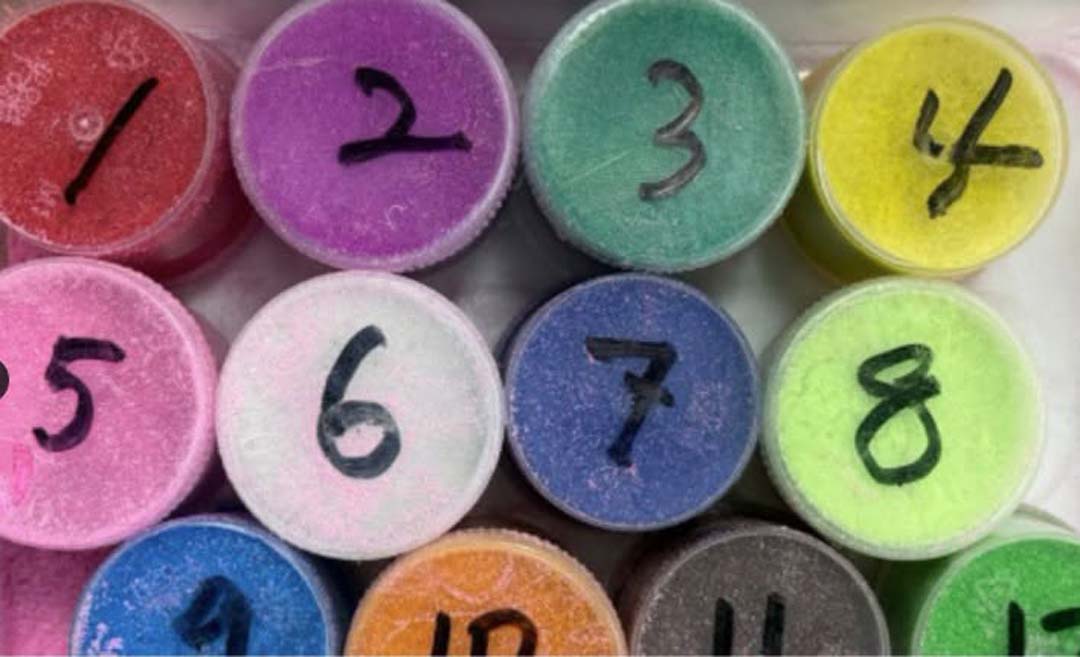
Government authorities need to proactively investigate these products as a matter of public health issue as tremolite is banned f for usage for all purposes except research and analysis from 15 October 2027 under the Occupational Safety and Health (Prohibition of Use of Substance) Order 2026.
The scope of exposure for consumers at home might be smaller, greater risks are borne by workers involved in the mining, processing, and manufacturing of these products. This raises important concerns about the adequacy of regulatory oversight, the ethics of sourcing and production practices, and the occupational hazards faced by workers throughout the supply chain.
Ensuring health and safety throughout the supply chain demands a collective effort from all stakeholders, backed by robust regulation, corporate accountability, and informed consumer choices.