
A SIMPLE WAY TO FIGHT URBAN HEAT
Dutch Cities Replace Concrete with Grass-Filled Paving Bricks
In the bustling urban landscapes of the Netherlands, a clever architectural shift is turning “concrete jungles” into living tapestries through the use of permeable grass pavers.
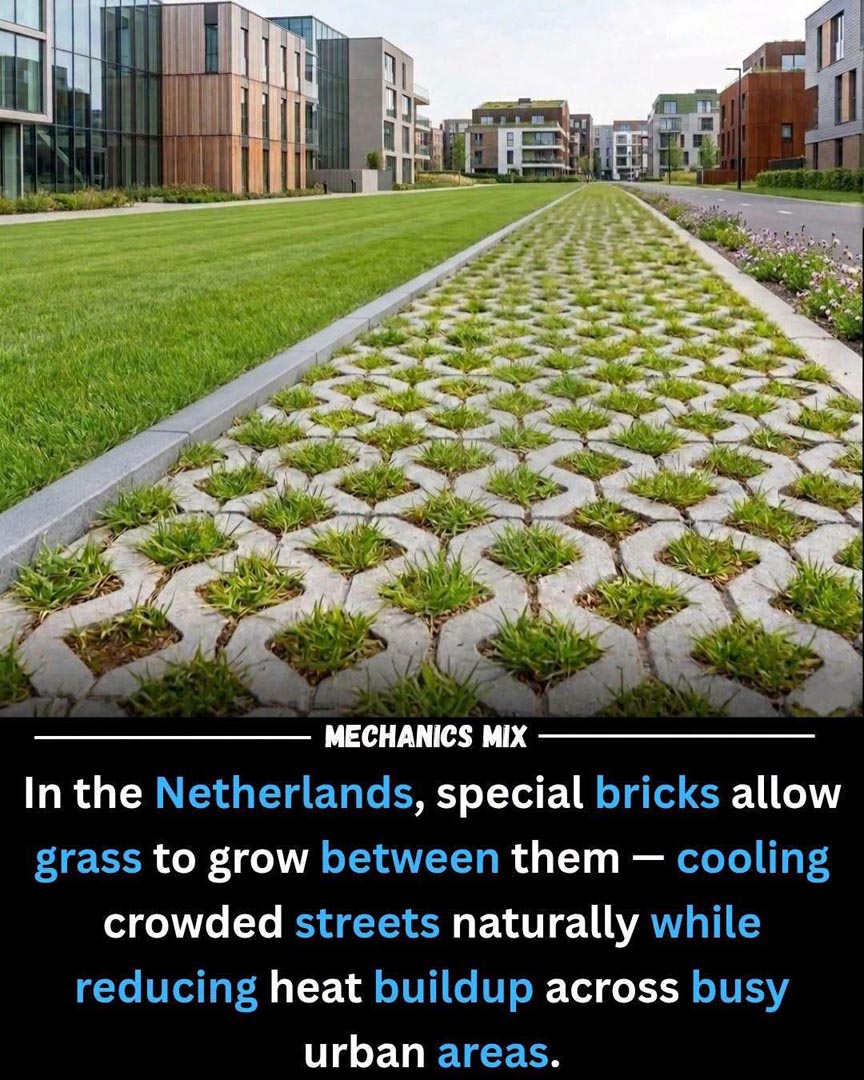
These are specially designed paving bricks with small openings that allow grass, moss, and other low-growing plants to grow naturally through the pavement.
Unlike traditional dark asphalt and concrete, which absorb and store large amounts of heat from the sun, the plants make the ground much cooler. They create a breathable surface that acts as a natural air conditioner for crowded city streets.
By replacing solid asphalt with this hybrid greenery, Dutch cities can lower local surface temperatures by as much as 5°C to 10°C during sweltering summer months, effectively dismantling the dangerous “urban heat island” effect that plagues modern metropolises.
Beyond just cooling the air, these innovative bricks serve as a vital defence against the increasing threat of flash flooding. While traditional sidewalks force rainwater into overtaxed sewer systems, these “living” pavements act like a giant sponge, allowing water to filter directly into the soil to replenish groundwater levels.
By replacing ordinary pavement with these green permeable bricks, Dutch cities are creating streets that are not only cooler, but also greener, more sustainable, and more resilient to extreme weather.
This simple yet profound design doesn’t just manage climate extremes; it also boosts urban biodiversity by providing micro-habitats for essential pollinators like bees and butterflies.
The permeable grass pavers that weave small patches of greenery directly into the pavement reduce the harshness of paved surroundings and soften the look of the street, creating a comfortable feel.
It’s a simple change in urban design, yet it delivers multiple benefits at once – reducing heat, improving drainage, supporting plant life, and creating healthier, more pleasant neighbourhoods for everyone.
It is a stunning example of “nature-inclusive” design, proving that the path to a sustainable future isn’t paved with more stone, but with a thoughtful blend of engineering and ecology.
Source: Mechanics Mix; Mind Vault