
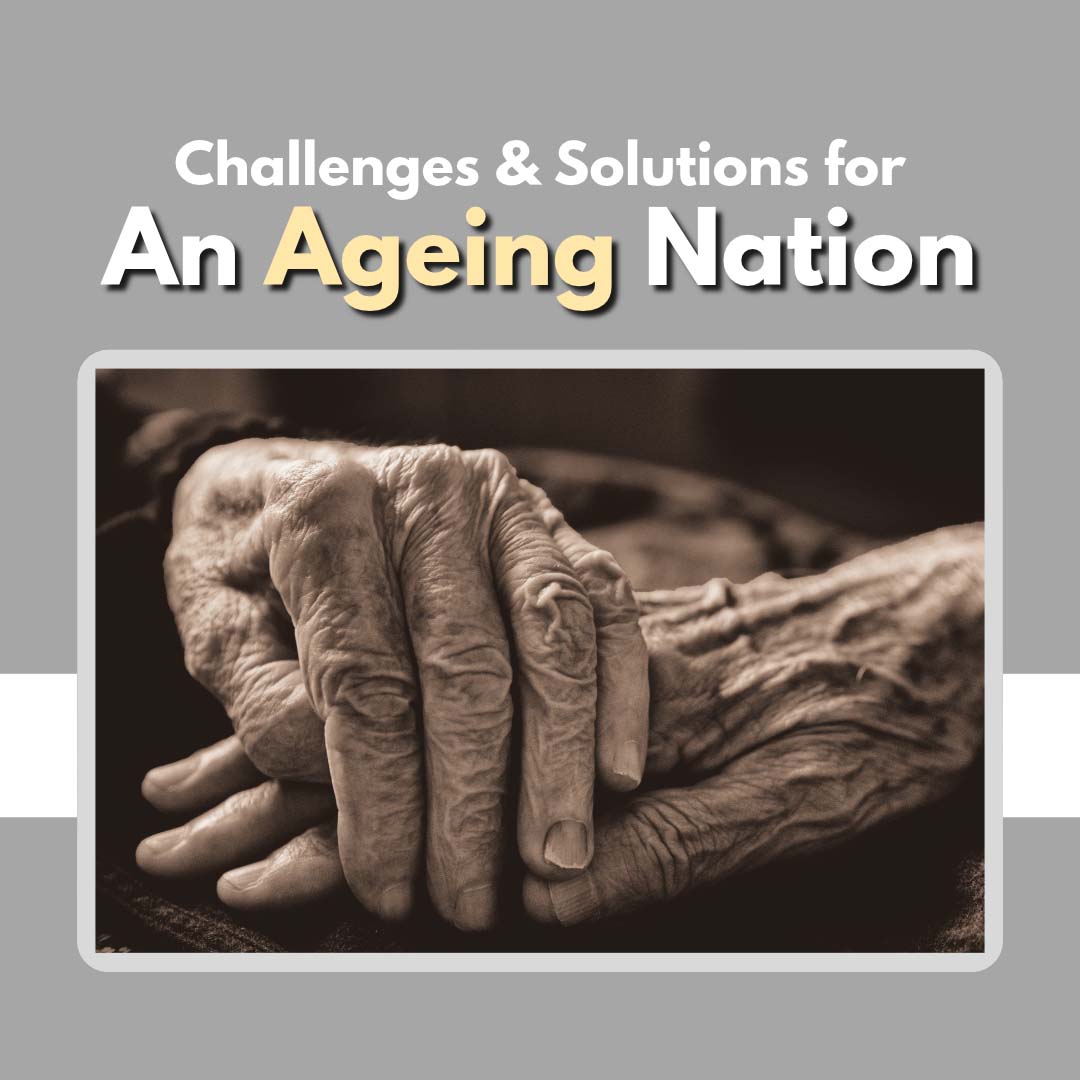
Addressing the Challenges of an Ageing Nation
While the definition of an ageing society varies between countries, it is generally accepted that a nation has an ageing population when 7% or more of its people are aged 65 and above. Malaysia crossed this threshold in 2021 and is projected to become an ‘aged nation’ by 2048, when the proportion of citizens aged 65 and above reaches 14 per cent of the total population.
The Consumers’ Association of Penang (CAP) is concerned that Malaysia has entered a new demographic phase as an ageing nation. Advances in healthcare, improved nutrition, and higher living standards have contributed to longer life expectancy, while declining fertility rates have reduced the proportion of younger people entering the workforce. As a result, the number of Malaysians aged 65 and above is steadily rising, bringing significant social, economic and healthcare implications. While population ageing is often regarded as a sign of progress and development, it also presents challenges that require proactive urgent attention from policymakers, employers, and society as a whole.
One of the most pressing concerns is retirement adequacy. Many Malaysians who entered the workforce in the 1980s are now reaching, or have already reached, retirement age. During their working years, wages were relatively low, although generally sufficient to meet the cost of living at the time. Because Employees Provident Fund (EPF) contributions are linked to earnings, lower salaries resulted in smaller retirement savings. In addition, many workers withdrew portions of their EPF savings to purchase homes, finance their children’s education, or meet other essential needs. While these decisions were reasonable and often necessary, they reduced the amount available for retirement.
Today, these retirees face a very different economic environment. Inflation has steadily increased the cost of food, utilities, transportation, and healthcare. At the same time, many older Malaysians suffer from chronic illnesses that require regular treatment and medication. Consequently, a significant number of retirees may find their EPF savings insufficient to sustain them throughout retirement. Some may become dependent on their children, while others may increasingly rely on government assistance and public healthcare services.
This situation poses challenges not only for retirees but also for the government. An ageing population increases public expenditure on healthcare, social protection, and long-term care services. Government hospitals and clinics are likely to experience greater demand, while the need for elderly care facilities and community support programmes will continue to grow. At the same, a shrinking workforce may contribute to slower economic growth and reduced tax revenues, making it more difficult to finance these expanding social and healthcare obligations.
Another consequence is the growing burden on the so-called “sandwich generation”. Many middle-aged Malaysians are simultaneously supporting their children and their ageing parents. This dual responsibility can limit their ability to save for their own retirement, potentially creating a cycle of inadequate retirement preparation that extends to future generations.
Addressing these challenges requires a comprehensive and forward-looking strategy. First, efforts should be made to increase labour productivity and wage growth. Retirement savings ultimately depend on lifetime earnings, and workers who earn higher incomes are better positioned to accumulate adequate EPF balances.
Second, opportunities for healthy older persons to remain economically active should be expanded through flexible work arrangements and part-time employment. To facilitate this, the government could establish a dedicated one-stop employment and skills-matching centre for retirees. Such a platform would enable businesses to identify and engage retired professionals and skilled workers according to their experience, qualifications, and expertise. Many retirees possess valuable knowledge accumulated over decades in the workforce, and their continued participation could help address labour shortages while providing them with supplementary income. This approach would allow retirees to maintain their financial independence, remain socially engaged, and continue contributing meaningfully to society.
Third, healthcare policies should place greater emphasis on preventive care and healthy ageing. Reducing the incidence of chronic diseases can improve the quality of life of older Malaysians while lowering long-term healthcare costs.
Fourth, Malaysia may need to strengthen social protection mechanisms for elderly individuals with inadequate retirement savings. Targeted assistance can help reduce poverty among senior citizens without imposing excessive fiscal burdens.
CAP welcomes the passage of the National Trust Fund (KWAN) Bill 2026 by the Dewan Rakyat in July 2026. The legislation strengthens the legal framework governing the fund by ensuring more consistent inflows, stricter disbursement controls, and clearer standards of governance and accountability. These amendments are crucial in safeguarding KWAN as a long-term savings fund for future generations. By limiting withdrawals and enhancing governance, the fund can continue to grow through investment returns rather than being eroded by short-term spending needs. This will help ensure that future Malaysians share in the benefits derived from the nation’s wealth.
Ultimately, the challenge of population ageing cannot be viewed solely as a retirement issue. It is closely linked to wages, healthcare, housing, productivity, and social policy. The generation now entering retirement cannot realistically rebuild decades of insufficient savings. Therefore, practical measures must be taken to support them while ensuring younger generations are better prepared for old age. If addressed proactively, Malaysia can transform the challenge of ageing into an opportunity to build a more resilient, inclusive, and age-friendly society.
Mohideen Abdul Kader
President
Consumers’ Association of Penang
Letter to the Editor, 17 November 2026