
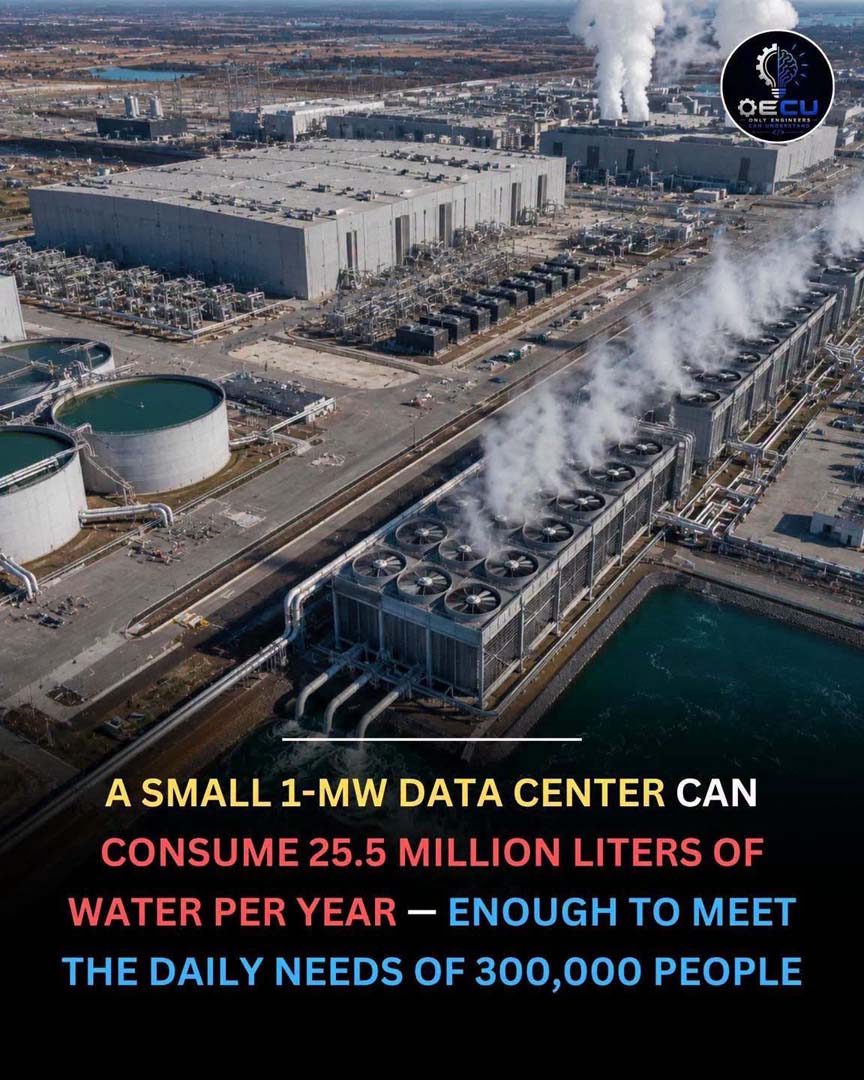
AI Data Centres are Big Water Guzzlers
A small data centre may seem modest compared to massive AI facilities, but its resource demands can still be enormous – especially when it comes to water. Cooling systems in data centres require vast amounts of water to prevent servers from overheating, and even a 1-megawatt facility can consume tens of millions of litres annually depending on the cooling method and climate.
As AI infrastructure expands, water usage is becoming one of the most overlooked environmental concerns in the tech industry. Many people focus on electricity demand, but water is just as critical because cooling large server operations generates significant thermal stress that must be managed continuously.
The growing issue is especially concerning in drought-prone or water-stressed regions, where local communities, agriculture, and industry are already competing for limited supplies. In such areas, rising data centre demand can intensify pressure on groundwater reserves, reservoirs, and municipal water systems.
Supporters argue that data centres are essential for powering AI, cloud computing, and digital services, and that companies are investing in more efficient cooling technologies such as liquid cooling, recycled water systems, and alternative designs. Still, critics question whether infrastructure growth is happening faster than sustainability planning.
This issue reflects a larger challenge of the AI era: technological progress comes with real physical costs – land, energy, and water. As demand for computing power grows, balancing innovation with responsible resource management will become increasingly important.
As AI infrastructure expands worldwide, should companies be required to disclose and limit their water consumption in water-stressed regions?
Source: Only Engineers Can Understand