
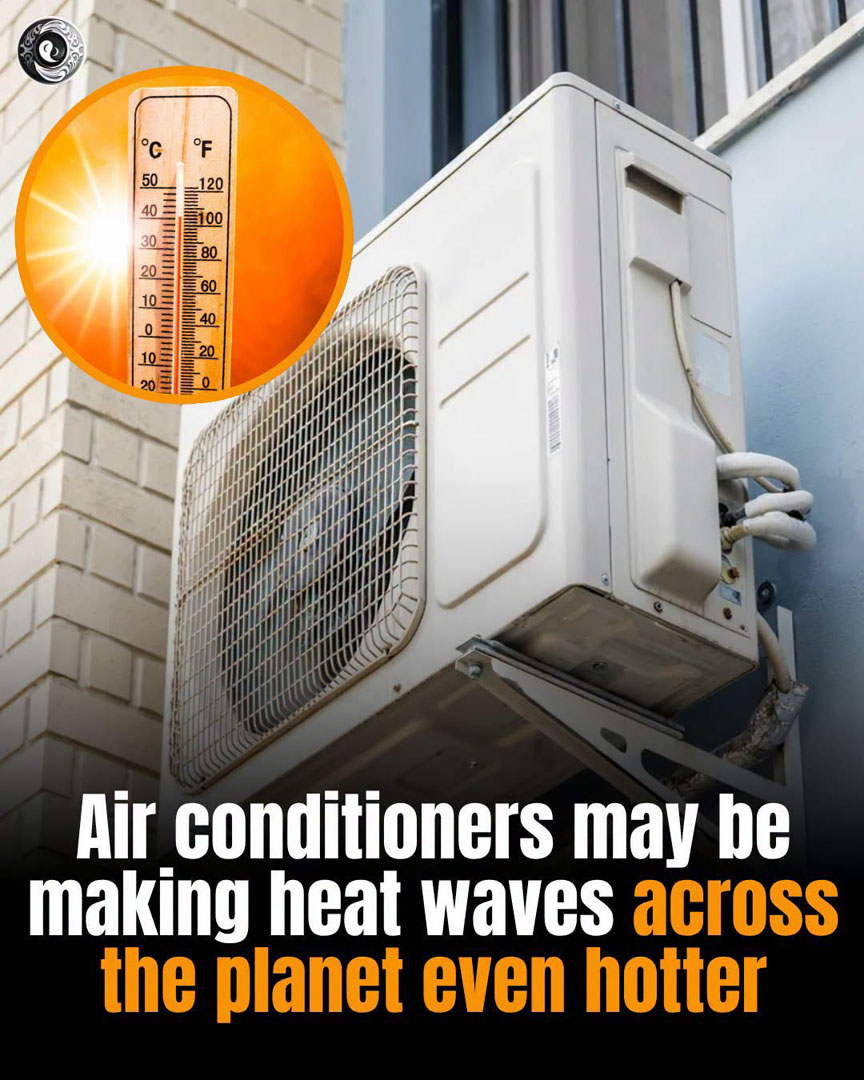
Air Conditioners May Be Making Heatwaves Worse
Your air conditioner might be quietly making heatwaves worse. Air conditioners (AC) have become essential during extreme heat, but new research suggests they may also contribute to the rising temperatures they are helping people escape.
Studies have found that during extreme heat events, widespread air conditioning use can increase local outdoor temperatures by 1-2°C (up to 3-4°F), with even higher increases in certain city neighbourhoods.
When AC units cool indoor spaces, they release waste heat outdoors and consume large amounts of electricity. If that electricity comes from fossil fuels, it increases greenhouse gas emissions, creating a cycle where hotter weather drives more cooling demand, and more cooling demand can contribute to further warming.
The World Health Organization warned on 30 June 2026 that heatwaves are going to be more frequent, more intense and last longer. This was following days of record-breaking temperatures that claimed dozens of lives across Europe.
Air conditioning is a common shield against extreme heat. During intense heat waves, millions of air conditioners running at the same time can put enormous pressure on electricity grids. Cities can experience a feedback loop: rising temperatures increase AC use, while the heat released from cooling systems and energy production adds to urban warming.
Scientists at the University of Birmingham found air conditioning could add up to 0.07°C of additional global warming by 2050. In the worst-case scenario emissions from cooling alone could surpass the entire current annual emissions of the United States. (Source: Zhang et al., Nature Communications, 2026, University of Birmingham)
Air conditioning, the technology driving our indoor comfort, carries a heavy environmental price tag, accounting for 3.2% of global greenhouse gas emissions and consuming 7% of the world’s electricity.
Global air conditioner ownership is expected to more than triple by 2050, according to the International Energy Agency, making cooling one of the fastest-growing sources of electricity demand worldwide.
The irony of our widespread use of air conditioning is painful. Machines built to protect us from deadly heat are quietly fuelling the same crisis. Researchers call it a climate arms race humanity cannot afford to lose.
It’s important to balance immediate needs with long term sustainability. Experts say improving building design, planting more urban trees, developing cities that stay cooler naturally, efficient cooling technologies, and cleaner electricity can reduce both indoor temperatures and the heat released back into cities.
Source: Techworm; Factsy; Unbox Factory; Futurism