
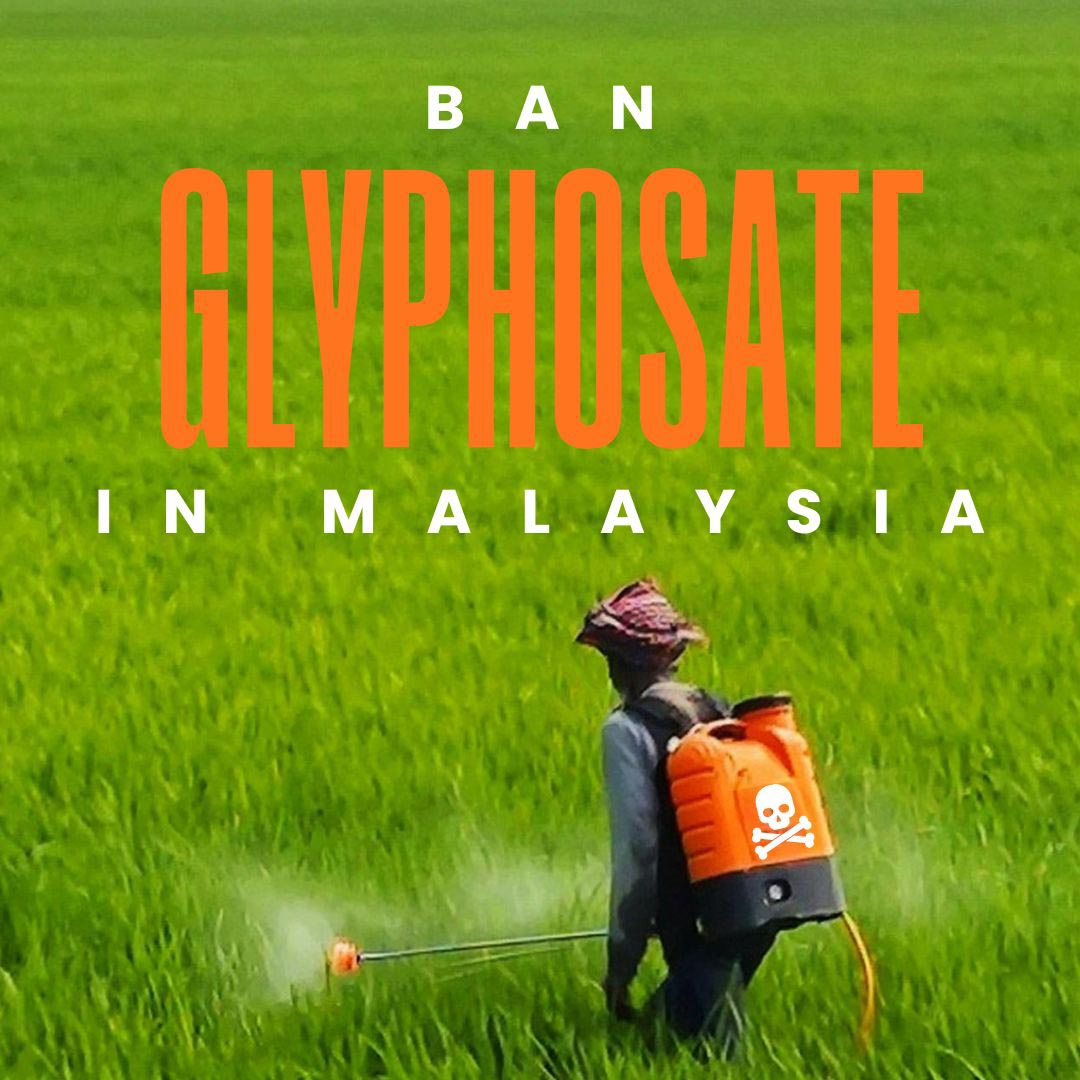
CAP Calls for Ban on Glyphosate in Malaysia
The Consumers’ Association of Penang (CAP) submitted a memorandum on 14th January 2026 to the Prime Minister, Ministry of Agriculture and Food Security, Ministry of Natural Resources and Environmental Sustainability, Department of Biosafety Malaysia, and members of the Pesticides Board, urgently calling for a ban on glyphosate and glyphosate-based herbicides in Malaysia.
This submission is not new alarmism. CAP had submitted a memorandum in 2020 calling for a ban on glyphosate arising from the risks posed by this herbicide. Yet for the past six years, glyphosate continued to be used in Malaysia, largely because the authorities relied on safety assessments that were presented as conclusive evidence.
At the centre of this reliance was a paper, which regulators worldwide, including in Malaysia, used to defend glyphosate’s claimed “safety.” This paper has since been exposed as fundamentally compromised, ghost-written by industry insiders, shaped by undisclosed conflicts of interest, and marked by the manipulation and selective presentation of scientific data, including key carcinogenicity studies either misrepresented or omitted.
The report was retracted in December 2025, undermining the credibility of the approvals that were based on it. Had the study’s ethical and scientific issues been identified earlier, glyphosate could have faced stricter regulations or an outright ban much sooner. This false sense of safety delayed proper scrutiny and allowed widespread use of the herbicide.
Independent studies increasingly link glyphosate exposure to serious health risks, including probable cancer, particularly Non-Hodgkin Lymphoma as well as genotoxicity, endocrine disruption, oxidative stress, gut microbiome damage, and liver and kidney toxicity. Documented cases of poisoning have affected agricultural workers and, in some instances, children. The International Agency for Research on Cancer (IARC) classified glyphosate as a probable human carcinogen in 2015.
Equally concerning is Malaysia’s approval of more than 20 glyphosate-tolerant genetically modified (GM) foods for import and consumption, which allows glyphosate residues to enter the national food supply directly. International evidence shows that current regulatory frameworks seriously underestimate real-world exposure, cumulative effects, and the long-term health risks posed to consumers.
Testing of soybean products sold in Sarawak found GM contamination of tofu, tempeh, animal feed and raw soybeans (two samples of which were labelled as GMO-free). A total of 57 out of 65 samples including 17 soybean, 12 animal feeds, 7 tofu and 20 tempeh samples tested positive for the glyphosate herbicide-resistance gene, which confers the most common GMO trait.
The threat of glyphosate extends beyond human health. Glyphosate has been shown to damage soil fertility, harm pollinators and amphibians, contaminate water sources, and erode biodiversity.
Given the scientific evidence of the harm that glyphosate and glyphosate-based herbicides pose to human and environmental health and the retraction of the ghost-written paper, CAP calls on the Malaysian government to impose a total ban on glyphosate and glyphosate-based herbicides. We also urge the National Biosafety Board to revoke all approvals for glyphosate-tolerant GM foods imported for food, feed and processing purposes.
With mounting international bans and restrictions, clear ethical breaches, and compelling scientific proof of danger, the continued reliance on glyphosate is unjustifiable. Immediate regulatory action is necessary to protect public health, safeguard the environment, and ensure the safety of future generations. The agriculture sector should move away from the use of toxic herbicides and instead focus on the use of safer organic production methods.
Click here for the PDF version:
https://consumer.org.my/wp-content/uploads/2026/01/260114-CAP-Memorandum_Ban-glyphosate.pdf
Mohideen Abdul Kader
President
Consumers’ Association of Penang
Press Statement, 27 January 2026