
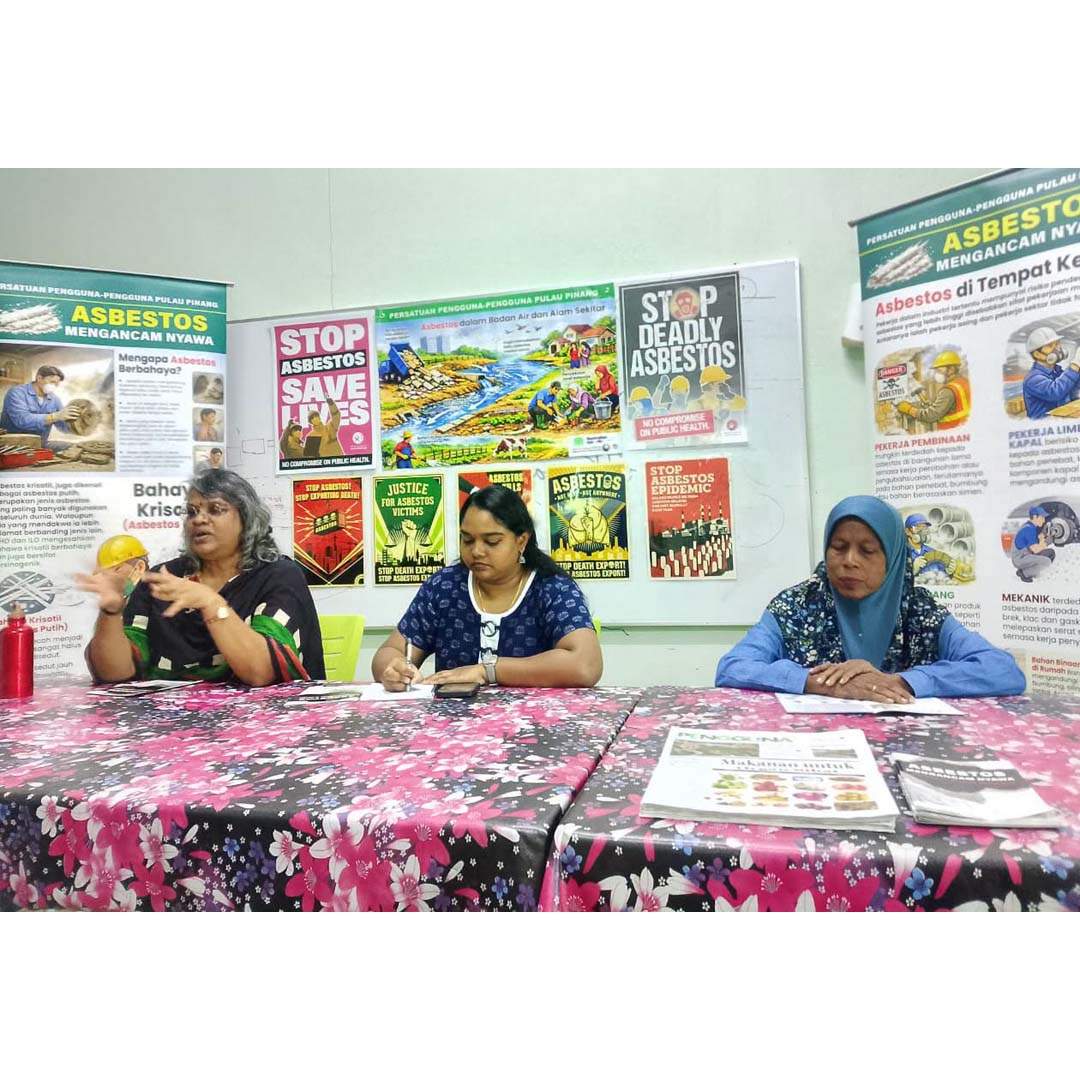
CAP’s Asbestos Awareness Raising Programme in Kampung Mata Ayer, Perlis

On 10th October 2026, in collaboration with the State Assemblywoman (ADUN) of Mata Ayer, YB Puan Wan Badariah binti Wan Saad, the Consumer’s Association of Penang (CAP) held an asbestos awareness raising programme at Pusat Khidmat Wakil Rakyat in Kampung Mata Ayer, Perlis. The programme aimed to raise awareness among rural communities and educate them about the risks of asbestos exposure.
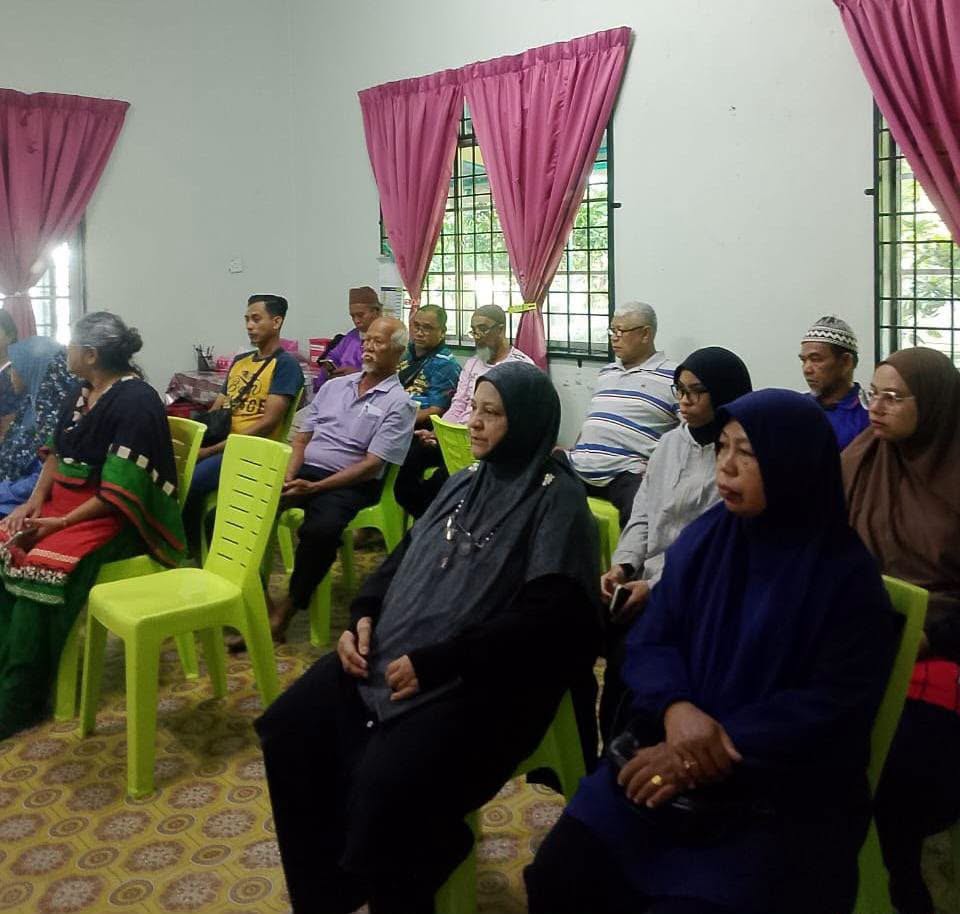
A total of 36 participants attended the programme, comprising 22 men and 14 women, including five CAP officers. Notably, the participants included four youths, one person with a disability, one retired soldier, several retirees and homemakers, reflecting the diversity of the local community.
The programme commenced with a welcoming address by Mr Zulkifli Yusuf, CAP’s Field Officer, who delivered an introductory briefing on the importance of adopting a healthy lifestyle and maintaining a clean environment. His remarks emphasised key aspects of community well-being, including healthy eating habits, public health, food safety, and the need for a safe and clean environment.
Following the opening remarks, a panel discussion was conducted, featuring Ms Mageswari Sangaralingam, CAP’s chief executive and Ms Hatijah Hashim, CAP’s research officer as panellists and with Ms Kumuthasshri Ponniah, CAP’s research officer serving as the moderator. Before the panel discussion started, CAP’s leaflets “Asbestos Mengancam Nyawa, Haramkan Krisotil Sekarang” were distributed to the participants by Mr Mohamad Ridzuan, CAP Publications Officer.
Mageswari began by highlighting several environmental and public health concerns that CAP has been working on for a few years. She briefly explained about genetically modified organisms (GMO), especially MR219 rice and their potential implications for agricultural systems and human health. She then addressed concerns surrounding highly hazardous pesticides and per- and polyfluoroalkyl substances (PFAS), particularly their continued use and presence in Malaysia, despite growing international efforts to restrict it.
The discussion subsequently focused on asbestos, with Mageswari providing an overview of its presence in commonly used products and materials such as roofing tiles, electrical insulation materials, asbestos cement pipes and even children’s toys. She highlighted that asbestos roofing remains in several older buildings in Kampung Mata Ayer, including the local clinic, pre-school, and kampung houses, as observed during CAP’s field visit.
She explained that asbestos was widely used in the past due to its durability, resistance to heat and corrosion, and relatively low cost. However, these same properties that once made asbestos attractive now pose serious health risks, particularly for communities living in close proximity to aging structures that still contain asbestos materials.
The floor was then given to Hatijah, where she emphasised the health impacts due to asbestos exposure. The fibres are minuscule enough to be breathed in and to cause irreparable damage to our health, such as lung cancer, and to be more precise, mesothelioma, a rare, life-threatening lung cancer that will develop in the long-term. She further explained how even everyday items like talcum powder and cosmetic items may contain asbestos due to cross-contamination during production.
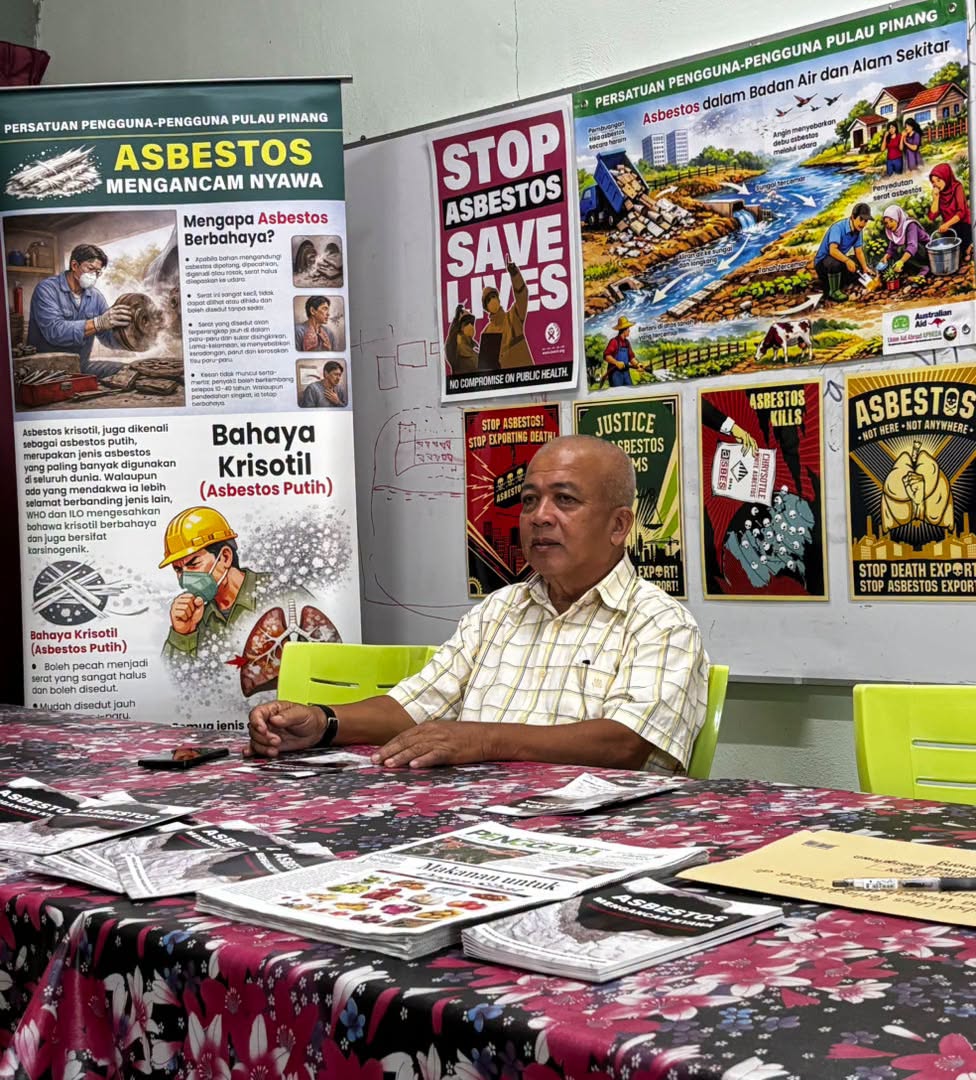
Hatijah also provided a brief explanation on how to identify asbestos-containing roofs and underscored the wider environmental impacts of asbestos exposure. She noted that asbestos fibres can enter the environment through various exposure pathways, contaminating soil, water, and air, thereby posing risks not only to human health but also to ecosystems and animal well-being.
Mageswari then shared real-life accounts of workers and their families affected by asbestos-related diseases, underscoring the human toll of exposure to asbestos. She also drew attention to the operation of an asbestos-containing materials factory in Tasek, Ipoh. Hatijah added that we must always be cautious when handling asbestos-containing products even within household settings and shared practical tips on safe handling practices, reinforcing the need for vigilance to protect individual, family and community health.
Before concluding the session, Mageswari addressed several key challenges in phasing out asbestos. These included reported pressure from major asbestos-producing countries, the continued availability of asbestos-related products through inadequately monitored online retail platforms, and the widespread use of asbestos-containing materials across Malaysia due to limited public awareness. She emphasized that these challenges have complicated efforts to eliminate asbestos exposure and strengthen consumer protection. Despite these obstacles, she emphasised that NGOs, such as CAP and workers unions remain committed to advocating for stronger government intervention, stricter regulations and comprehensive measures to phase out asbestos in Malaysia.
Following the panel discussion, a Q&A session was conducted. Among the questions raised were concerns about the presence of asbestos in household roofing materials and sought guidance on safe methods for removing and disposing of asbestos-containing materials. Participants also enquired about the availability of treatments for mesothelioma, a cancer associated with asbestos exposure. Other enquiries focused on the natural composition of asbestos and whether its fibres share similar characteristics with ordinary cement dust. At the end of the programme, CAP distributed copies of Utusan Konsumer featuring articles on healthy lifestyle.
Overall, the programme successfully raised awareness on asbestos among the rural community of Kampung Mata Ayer, Perlis. The active participation and questions raised by the participants reflected their interest in understanding asbestos-related hazards and preventive measures. CAP hopes awareness on asbestos surpasses the hall and spreads among other consumers in the rural areas.