
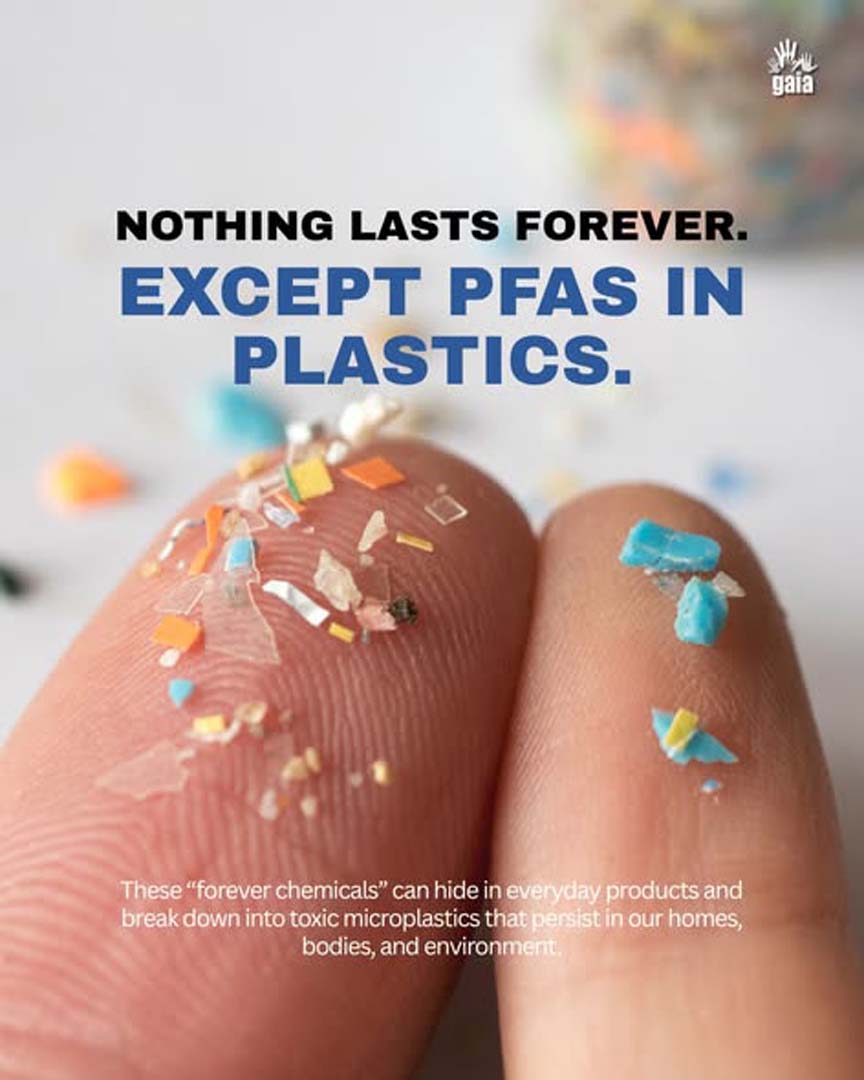
DOUBLE TROUBLE: PFAS Microplastics in Consumer Products
You thought PFAS, the “forever chemicals,” were bad. You thought microplastics were bad. Did you know we also have PFAS microplastics – a particularly persistent and toxic form of microplastics? Yet, industry wants to continue producing and using PFAS plastics regardless of the costs to our health and the environment.
PFAS (per- and polyfluoroalkyl substances) and microplastics are already harmful on their own. Together, they create a deeper toxic threat.
PFAS plastics are used in everyday products like nonstick cookware, cosmetics, textiles, rainwear, sportswear, and stain-resistant materials. As these products degrade through heat, friction, and wear, they can release persistent micro- and nanoplastics into our homes, bodies, and environment.
Both are toxic, can build up in living things, and can move quickly and last an incredibly long time in the environment. Both PFAS and microplastics have already polluted the entire planet, being found in nearly everyone and practically everywhere, including in remote jungles and the deep ocean. PFAS stick around for so long in the environment that they have earned the nickname “forever chemicals”.
Scientists are finding PFAS-based microplastics from sources such as Teflon across the planet and in people, including in our blood, placenta, urine, lungs, and semen. The continued use of PFAS plastics means that PFAS microplastics will continue to be created and released into the environment and our homes. Most of these uses of PFAS plastics are unnecessary, and safer alternatives are widely available.
Industry has been actively working to exempt PFAS plastics, such as Teflon, from regulations and legal phase outs, claiming that they’re safe. But no PFAS should get a free pass. It is time to phase out PFAS plastics and stop exposing people to “forever chemicals” through everyday products. All unnecessary uses of PFAS plastics must stop now to reduce further harm to people and the planet.
Source: NRDC; Zero Waste Asia
Read more – NRDC Factsheet on PFAS microplastics:
https://www.nrdc.org/…/Microplastics_are_PFAS_FS_26-04…