
DRINKING TEA OR PLASTIC?
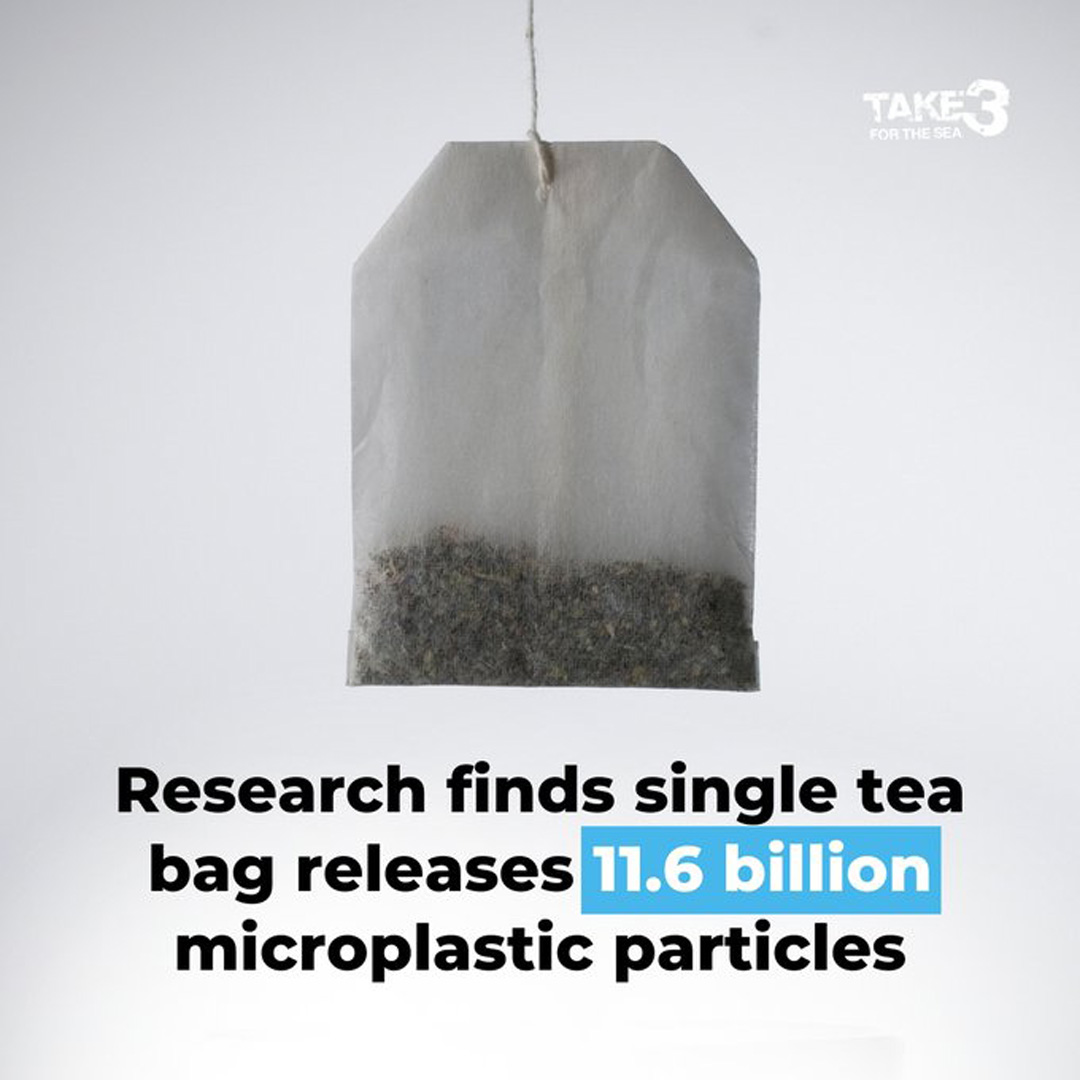
A 2019 study in McGill University in Montreal, Canada found that a single plastic teabag steeped in boiling water can release 11.6 billion microplastics (fragments of any type of plastic less than 5 mm in length) and 3.1 billion nanoplastics (extremely small pieces or particles of plastic).
People who drink tea could thus be repeatedly dosing themselves with billions of plastic particles, some small enough to potentially infiltrate our cells.
The particles come from the polypropylene that many manufacturers use to seal tea bags closed. These microplastics are found in a lot of foods and beverages (including water bottles), yet the study revealed that the levels released by the tea bags were thousands of times higher than other products.
There’s Plastic in Most Teabags
Tea bags are most commonly made of bleached paper, plastic, or nylon, and they are sealed with glue and other chemicals.
Regular paper teabags (those with crimped edges) use a sealant under heat to press shut their seams. The sealant can have plastic particles in them. The plastic melts to seal them together.
The string-and-tag variety, the type folded shut and secured with a knot or a staple, is not plastic-free either. Such paper teabags often have plastic fibres for added strength.
There’s plastic even in the “silken” type teabags. Bags that look like sheer silk or nylon mesh (often used for premium or whole-leaf teas) are almost always made entirely of woven nylon or PET plastics. Tea bags made with plastics are similarly heat-sealed shut (read: the plastics melt together) in a process called thermal bonding.
Other types of bags often rely upon toxic glues or PLAs (polylactic acids) or plant-based sealants, many of which are actually plant-based plastics, made from maize. Although they may sound organic, such teabags are not plastic-free; in fact, the majority of those contain plastic too.
The Chemicals You Don’t See
Paper tea bags can have plastic particles in their sealant, used to press their edges shut. One plastic called epichlorohydrin is used to strengthen traditional paper tea bags so they don’t tear apart while brewing. Epichlorohydrin leaches into hot water, and is a potential carcinogen (a substance that can cause cancer) and reproductive toxin.
Epichlorohydrin hydrolyses to 3-MCPD, which is also a known carcinogen when tested on rats in laboratory conditions. Additionally, the US Environmental Protection Agency lists epichlorohydrin as a likely carcinogen based on animal studies, which could cause health issues in humans when consumed over time.
Tea bags made with plastics are heat-sealed shut (read: the plastics melt together) in a process called thermal bonding. Other types of bags often rely upon toxic glues or PLAs (polylactic acids) or plant-based sealants, many of which are actually plant-based plastics, made from maize. Although they may sound organic, such teabags are not plastic-free; in fact, the majority of those contain plastic too.
Switch to Loose-Leaf Tea
To avoid microplastics and other toxins in your teacup, switch to loose-leaf tea. Loose leaf teas are not only better for our health, they are also more flavourful, and have a lower environmental footprint than their bagged cousins.
A CLOSER LOOK AT TEABAGS
In the article, “Is There Plastic in Your Teabag?” on the Treading My Own Path website, author Lindsay Miles discloses more about the various types of teabags out there.
● PRESSED (HEAT-SEALED) TEABAGS. These are the standard square, rectangular or occasionally round teabags that have crimped/pressed edges on all sides, and they always contain plastic. The two separate layers of paper need to stick together to keep the tea leaves in, and paper does not stick to paper by itself. Glue would dissolve in your tea!
Plastic (usually polypropylene, or less commonly a mix of polyethylene and a polyethylene co-polymer) is woven in between the paper fibres, and melts upon heating to seal the teabag shut. Typically, these teabags contain 20-30% polypropylene.
In addition, some companies choose to treat their paper teabags with a chemical called epichlorohydrin to help prevent tears. This chemical is deemed a probable human carcinogen. It is also known to react in water to form another chemical, 3-MCPD, another possible human carcinogen.
● SILKEN TEABAGS. Despite the name, silken teabags are made from plastic, not silk. Usually found in a pyramid shape, the fibres of silken teabags are woven to make them look like fabric. These teabags are either made from fossil-fuel based plastic (usually nylon or PET – the same plastic that drinks bottles are made from: plastic #1), or plant-based plastic (PLA or polylactic acid, usually derived from corn or other plant starch: plastic #7). When a company says their tea bags are made with cornstarch, they mean plant-based plastic.
Silken teabags are often touted as an eco-friendly choice, but teabags made from fossil-fuel based nylon or PET will last forever – clearly not eco-friendly at all. Plant-based plastic teabags are labelled “eco-friendly” as plants are a renewable resource.
Plant-based plastic is sometimes labelled biodegradable, or compostable. However, just because a silken teabag is made of plant-based plastic, that does not automatically mean it is biodegradable. It is more complicated than that.
Biodegradable means broken down by microorganisms over time. There is no stipulation for avoiding toxic residue, nor a requirement that the plastic breaks down into constituent parts, just that it is no longer visible.
Compostable means something different: that the product undergoes biological decomposition at a compost site, and breaks down into carbon dioxide, water, inorganic compounds, and biomass, leaving no toxic residue.
A product making either claim should quote the standards used in testing to determine this label. Without this, the claim is meaningless.
● STRING-AND-TAG TEABAGS. The filter paper used to produce teabags with a string and tag attached does not need to contain plastic polymer fibres: these teabags close by folding, and are secured by stitching or stapling, rather than by heat sealing.
However, many teabag producers (including organic brands) still choose to use paper with plastic (polypropylene) fibres to add strength to their teabags. And beware – a few companies crimp their teabags into this shape and attach the string. The crimping is the tell-tale sign that this bag contains plastic. The string is usually stuck on, rather than sewn in.
The string is usually made from cotton. If you do find a plastic-free variety, these teabags are completely compostable.
Teabags made entirely of paper will rip more easily, and will disintegrate if left to stew in a cuppa. If your teabag seems remarkably resilient, the likelihood is that it contains some plastic fibres.