
Empowering Kenaf Farmers Toward Value-Added Production
The National Kenaf and Tobacco Board Act 2009 (Act 692) came into force on 1 April 2010 with the purpose of modernising and strengthening the kenaf and tobacco industries. With the dissolution of the National Tobacco Board, the newly established National Kenaf and Tobacco Board (LKTN) assumed responsibility for developing a sustainable kenaf sector that covers everything from cultivation to downstream industrial applications.
According to LKTN, there were 623 kenaf growers in Malaysia in 2023, cultivating a total of 744 hectares. The Board aims to expand this to 2,500 hectares by 2026 with an estimated yield of 10 tonnes per hectare, amounting to a national harvest of about 25,000 tonnes. While expanding the cultivated area is important, the real opportunity for Malaysia lies in progressing towards the production of higher-value kenaf products that can significantly increase farmers’ earnings.
In 2023, the market value of kenaf products reached RM8.88 million, an increase of RM3.31 million or 59.32 per cent compared with RM5.57 million in 2022. As of the second quarter of 2024, the market value has already reached RM6.28 million, representing a rise of RM2.67 million or 74.09 per cent compared with RM3.61 million recorded during the same period in 2023. This demonstrates that kenaf is a viable crop, particularly as the world continues to move away from deforestation and towards green technology and more sustainable materials.
Farmers traditionally earn modest returns from selling raw kenaf stalks. However, when the same crop is processed into more valuable products such as fibre mats, biocomposites, pulp for papermaking or construction materials, the potential income rises considerably. Even basic primary processing, such as retting or separating fibres, allows farmers to earn far more than they would from selling unprocessed stalks. Moreover, there is an increasing demand for its fibres.
The kenaf plant also offers several marketable components: the bast fibre is strong and suitable for composites, while the lighter core fibre is ideal for fillers, absorbents and certain building materials. The leaves, which are rich in protein, can be sold as highly digestible animal feed—an advantage given the frequent complaints about the high cost of imported feed. By making use of parts of the plant that might otherwise be discarded, farmers can generate additional revenue streams while reducing waste.
Kenaf also opens the door to premium and niche markets. Although paper made from kenaf is often said to be more expensive to produce than paper made from wood pulp, it is already being manufactured in countries such as the United States, Thailand and Japan for various paper types including cardboard, newsprint, packaging material and writing paper. Kenaf paper has the advantage of being naturally acid-free, making it particularly attractive for archival and specialist uses and commanding higher prices within those markets. As global industries move towards greener and more sustainable materials, kenaf is well placed to meet this growing demand.
Its rapid growth and low input requirements make it an appealing option for companies seeking alternatives to synthetic or petroleum-based materials. Industries involved in automotive components, green construction materials and biocomposites are increasingly turning to natural fibres, and this shift is creating a stable, long-term demand for kenaf.
There is also promising potential in the health and biotechnology sectors. Research has shown that kenaf seed oil exhibits cytotoxic properties against certain cancer cells, suggesting its possible future use as a pharmaceutical or nutraceutical ingredient. Should these findings lead to commercial products, farmers could benefit from a new market for kenaf seeds, similar to how other agricultural sectors have diversified successfully with crops such as moringa and bamboo.
Beyond individual products, the expansion of the kenaf sector brings broader economic benefits to rural communities. The establishment of community retting centres, fibre-processing hubs and small-scale manufacturing facilities creates employment opportunities and stimulates rural economies. When farmers participate not only as growers but also as members of cooperatives or processing groups, they can retain a larger share of the value chain and become less dependent on intermediaries. The development of a broad range of downstream uses—from animal feed to paper —also helps stabilise prices by reducing reliance on a single industry. This diversification of demand provides farmers with more predictable and reliable sources of income.
Government agencies such as LKTN, Malaysian Agricultural Research and Development Institute (MARDI), Forest Research Institute Malaysia (FRIM) and various local universities are playing an active role in accelerating this shift towards higher-value kenaf products. Their efforts range from developing improved planting materials to supporting processing techniques and connecting farmers with industrial buyers.
Through better seeds, training, buy-back schemes and access to equipment, farmers can progress from being simple suppliers of raw material to active participants in a growing and increasingly sophisticated green economy. We should practice intercropping and crop rotation of kenaf with local food crops to create a more resilient system. Agroecological approach will also help minimize pest pressure and encourages a healthier agroecosystem.
According to 2021 reports, LKTN had collaborated with JSM (Standards Malaysia) and MTIB to develop the “MS Standard Grading Kenaf” and we suggest that it can take it a step further to get SIRIM certification to improve export competitiveness and build confidence among buyers.
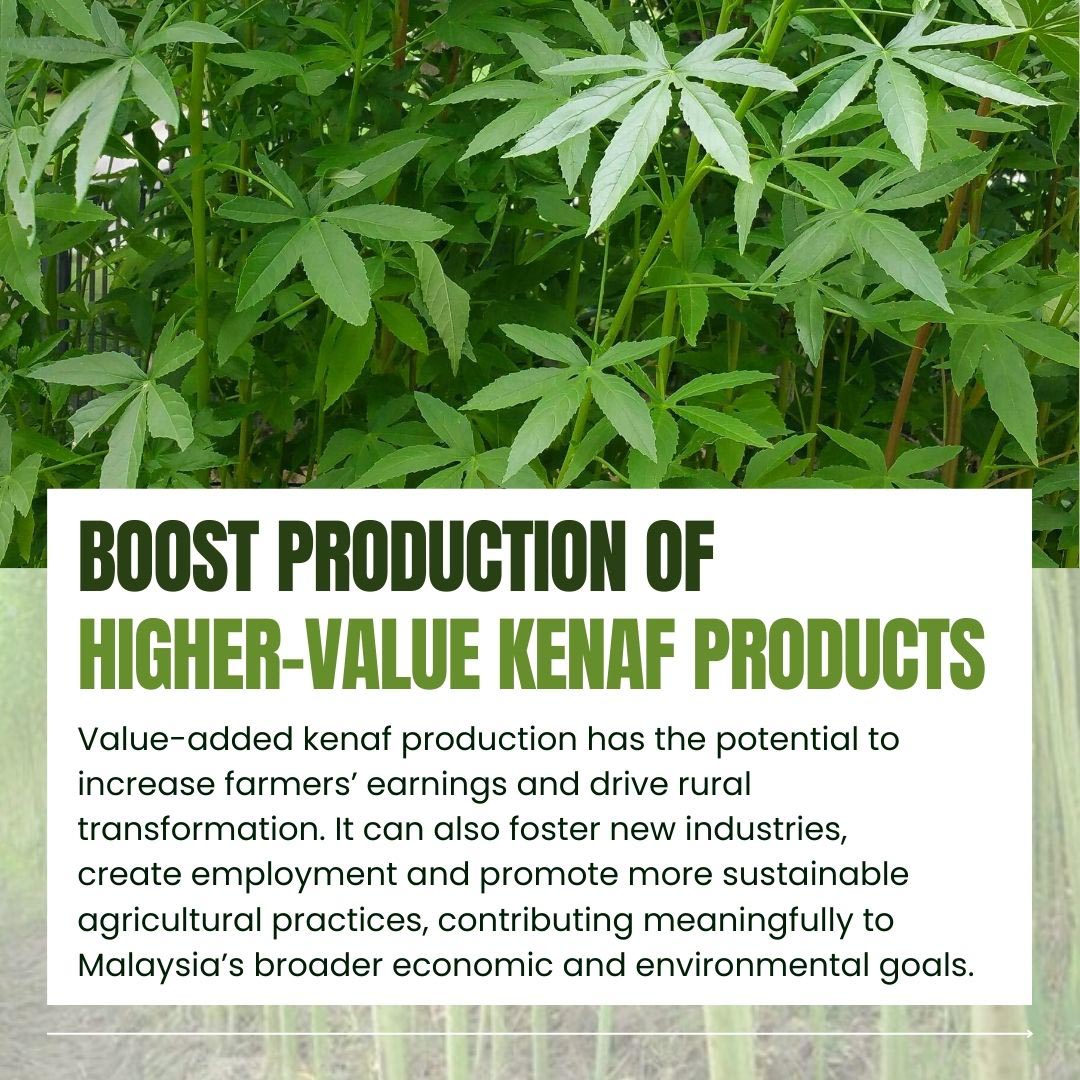
Taken together, these developments illustrate that value-added kenaf production has the potential not only to increase farmers’ earnings but also to drive rural transformation. By fostering new industries, creating employment and promoting more sustainable agricultural practices, the kenaf sector can contribute meaningfully to Malaysia’s broader economic and environmental goals.
Mohideen Abdul Kader
President
Consumers’ Association of Penang
Letter to the Editor, 9 December 2025