
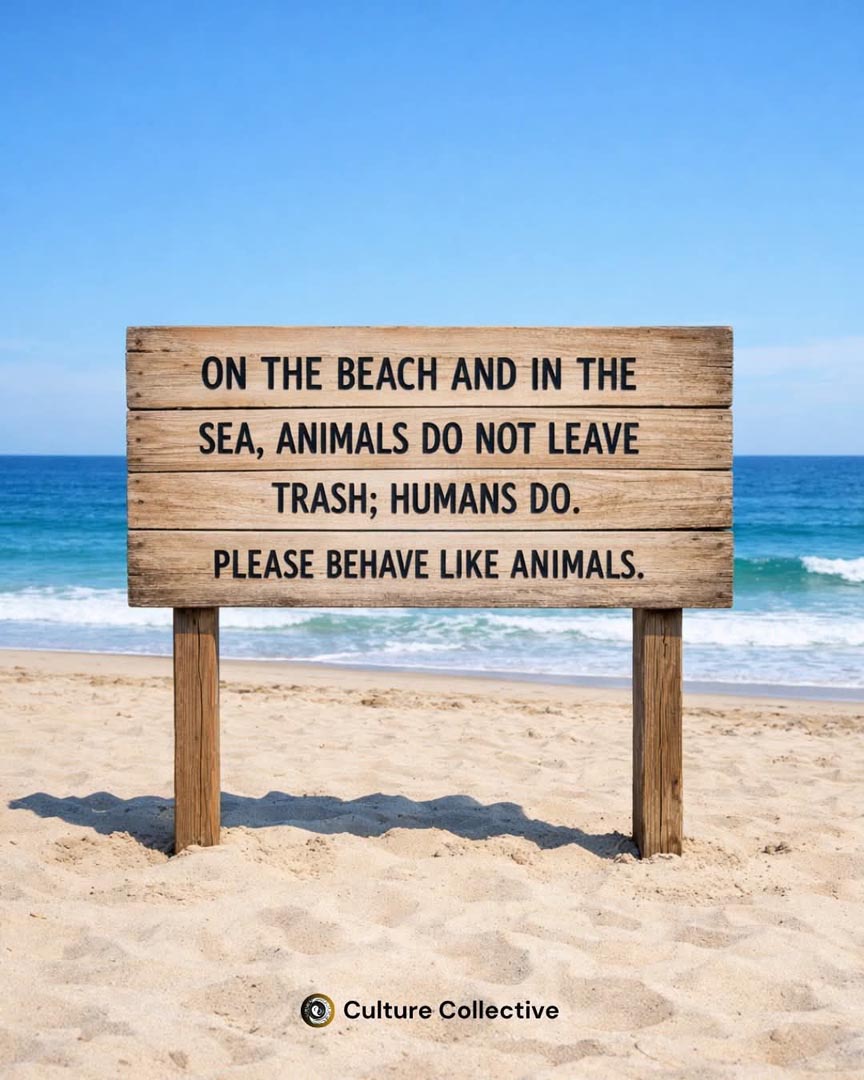
Humans Are Trashing The Planet
“Every year, humans produce 300 million tonnes of plastic waste, including 11 million tonnes that eventually wind up in the ocean. By 2050, there could be more plastic than fish in the ocean,” warns the United Nations.
Humanity has an enormous trash problem. According to reports, we produce 2 billion tons of trash a year. Nature produces zero.
In the natural world, waste doesn’t exist. When a tree falls, it feeds fungi. When an animal dies, it nourishes scavengers, bacteria, and eventually the soil itself. Every byproduct of life becomes the raw material for something else.
Nature leaves behind balance. Humans often leave behind plastic, pollution, and damage that can last for centuries.
The more we learn from nature, the more we realise it’s efficient, sophisticated, and self-sustaining. If we start designing our systems with the same logic – reuse, regeneration, balance – we can stop being the only species on Earth that turns life into waste.
Beaches and oceans were once places where ecosystems thrived naturally without the endless stream of waste washing onto shorelines every single day.
Marine animals do not create landfills in the sea. They do not dump chemicals into rivers or abandon trash after a weekend gathering. Yet wildlife constantly suffers the consequences of human convenience through entanglement, pollution, and destroyed habitats.
Our trash is killing the oceans – and destroying the planet. Reduce plastic pollution that harms oceans and marine life. Protecting oceans starts with personal responsibility, and that includes picking up trash.
Respecting natural spaces may seem small individually, but millions of small actions together can completely reshape the future of the planet.
Source: Culture Collective; From Quarks to Quasars