
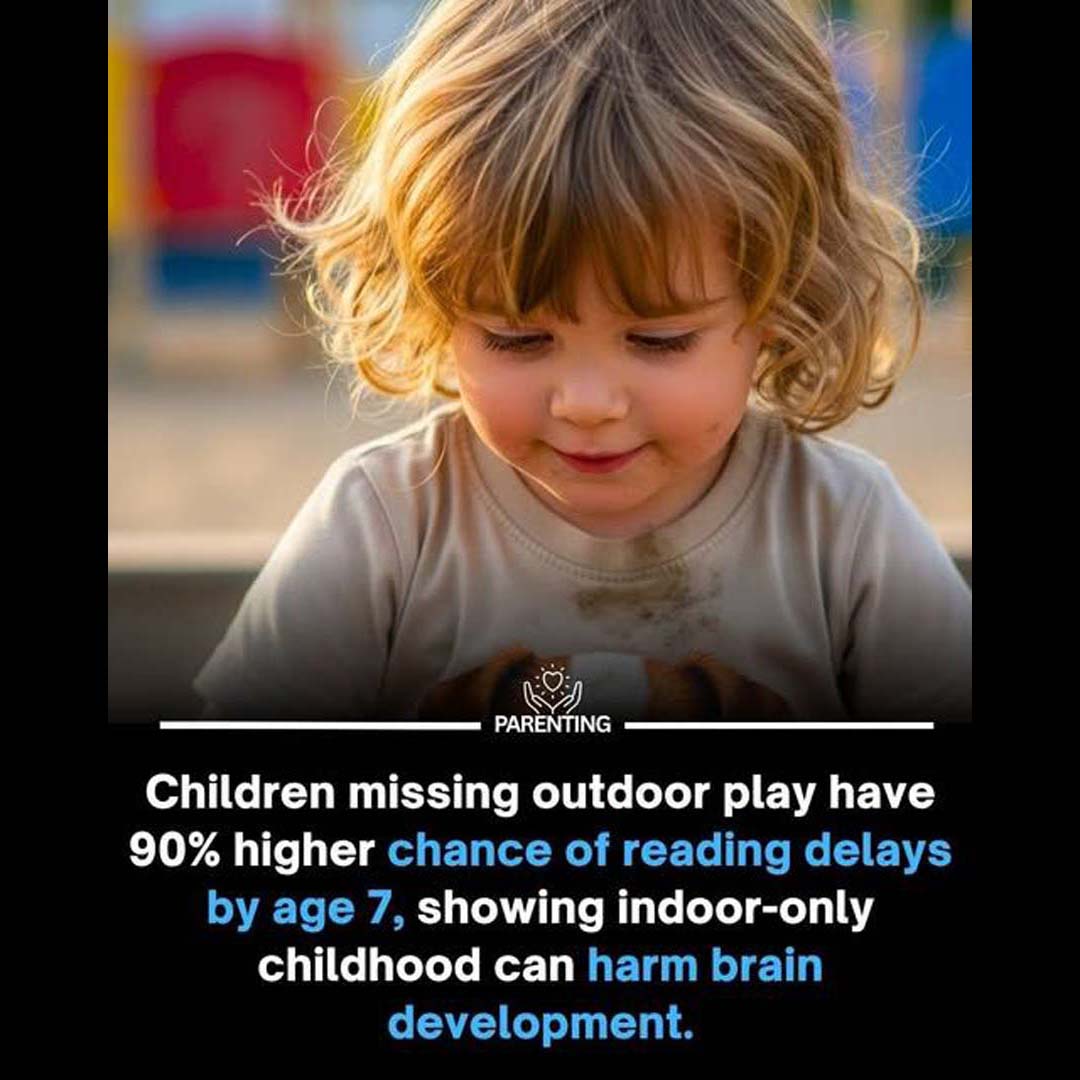
Indoor-Only Childhood Harms Brain Development

New research shows that children who miss out on outdoor play are at a 90% higher risk of experiencing reading delays by age 7.
Experts say that simply keeping kids indoors for safety or convenience can unintentionally hinder early brain development, particularly the skills needed to focus and process language.
Outdoor play offers a rich environment for learning. Moving, exploring, and interacting with nature helps children develop attention, memory, and executive function, all critical for reading and comprehension.
Fresh air, varied sensory experiences, and active engagement support neural growth that indoor activities alone often cannot provide.
The study followed thousands of children, comparing those who spent significant time playing outside with those who were mostly indoors.
Results consistently showed that outdoor activity was strongly linked to stronger reading skills, better concentration, and improved cognitive performance.
Children with limited exposure to nature and active play struggled more with early literacy.
Specialists warn that indoor childhood is not inherently “safe” for cognitive growth. While it may protect kids physically, it can starve the developing brain of the experiences it needs to strengthen attention, visual processing, and language networks.
Balance is key: supervised outdoor time is essential for healthy brain and reading development.
Parents and educators are encouraged to prioritise daily outdoor play, even in urban environments.
Simple activities like park visits, backyard games, or walks can significantly boost early reading readiness and overall cognitive growth, giving children the focus and mental stamina they need for lifelong learning.
Source: The Parenting