
MOVING TOWARDS ZERO WASTE
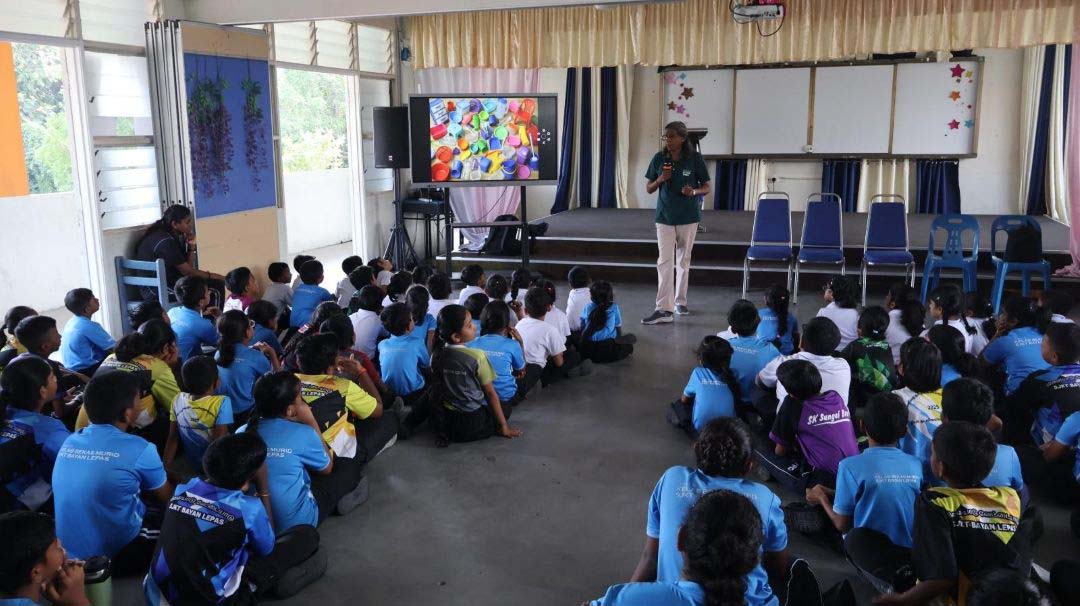
CAP’s programme at SJK (T) Bayan Lepas, Penang on 11 August 2026
SJK (T) Bayan Lepas, Penang is a sustainability-forward school with various ongoing impactful initiatives. For starters, the school implements a rainwater harvesting project as a measure against drought adaptation in collaboration with the Division of Industry & Community Network, Universiti Sains Malaysia and Water Watch Penang.
To foster the spirit of reduce, reuse and recycle, the school has recycling corners in every classroom so the students can learn how to segregate waste from a young age and every restroom in the school is equipped with self-closing taps to prevent water wastage.

SJK(T) Bayan Lepas also oversees a garden project where multiple types of plants and herbs are grown throughout the vacant space around the school. Besides, as a measure of promoting zero waste culture, used cooking oil is collected in drums at the school to be reused, and single-use plastic usage is widely discouraged.
All these green initiatives have borne fruit, with the school winning a five-star award in TASKAL (Pencapaian Program Transformasi Sekolah Ke Arah Lestari) in 2025.
To further promote a sustainable lifestyle among the students and teachers alike, two officers and one intern from the Consumers’ Association of Penang (CAP) conducted a zero waste programme at SJK(T) Bayan Lepas on 11 August 2026.
The programme was attended by 85 students from Year 1 to Year 6, comprising 47 males and 38 females. The teacher in-charge gave welcome remarks and invited CAP’s education officer, Ms Saraswathi Devi Odian, to the stage to kickstart the programme.

Saras introduced the topic at hand, “Moving Towards Zero Waste”, and gave brief information on what the day’s programme entailed. She began her talk by conveying the types of waste we produce daily, including plastic waste.
Saras stressed that the immense amount of waste we generate is harming our planet. She encouraged the students to do their part as individuals to reduce waste for a cleaner planet, particularly by reducing single-use plastic usage and opting for alternatives such as reusable containers, water bottles and bags. She explained compostable and non-compostable waste in preparation for the next section.
The students engaged enthusiastically in the talk and kept it interactive. Saras touched on the benefits of compost and how it helps divert waste from landfills, and how we can convert organic waste into fertilisers. At the end of the talk, she shared information about earthworms and their role, and the students took turns looking at live earthworms in a compost sample.
Twelve selected students participated in the subsequent hands-on activities. Saras asked the students to separate the medium for planting, which includes garden soil, red soil, sand and compost, and mentioned how to layer a plant pot starting with a pebble base, followed by half a ratio of garden soil, and filling the rest with an equal mix of red soil, sand, and compost.

She explained the function of each component and the ratio required for a healthy soil medium. CAP’s education officer, Mr Theeban Gunasekaran, then guided the students on how to mix the medium and demonstrated proper planting technique.
For the next session, the students were directed to the composting bin, where Saras described how to set up a composting bin, including the need for ventilation holes. She talked in depth about the layers of the compost bin and how to take care of it once it has been filled, as well as the types of waste that can be put in for compost, such as organic matter, food scraps and garden waste.
Theeban instructed the students to pitch in filling the bin, starting from a 1-inch pebble base layer for drainage, followed by a layer of sand and garden soil rich in beneficial microbes, and then moving on with organic and garden waste as the final layer.
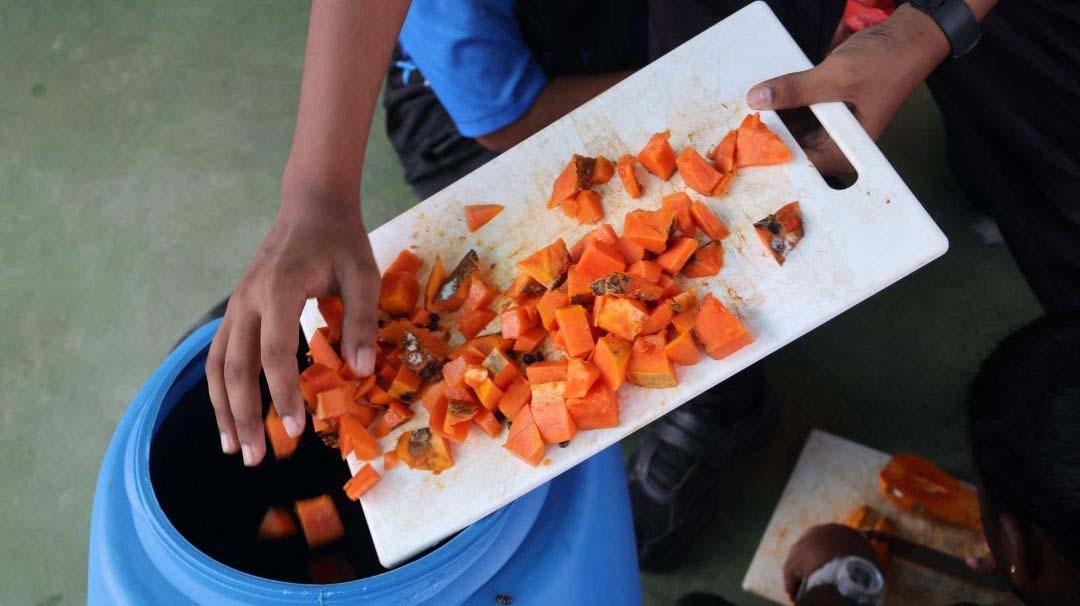
The programme concluded with a liquid fertiliser-making activity, also known as Farmer’s EM (Effective Microorganism). A thorough explanation was given of its constituent ratio and benefits.
The students were tasked with cutting the ingredients such as bananas, papayas and pumpkins and the cut fruits were then placed in a large bin together with eggs for the fermentation process.
Lastly, Theeban showed how to stir the mixture and taught the students the timeline for maintenance, and sealed it shut.
In a nutshell, this programme successfully raised awareness of zero waste and sustainable gardening practices among the students, and CAP hopes this awareness will not only elevate SJK (T) Bayan Lepas’ ongoing mission to sustainability but will spread to families and friends, creating a wider impact.