
OUR PLACE IN THE UNIVERSE: A Humbling Perspective
Humans are masters of Earth, but how do we measure up against the cosmos?
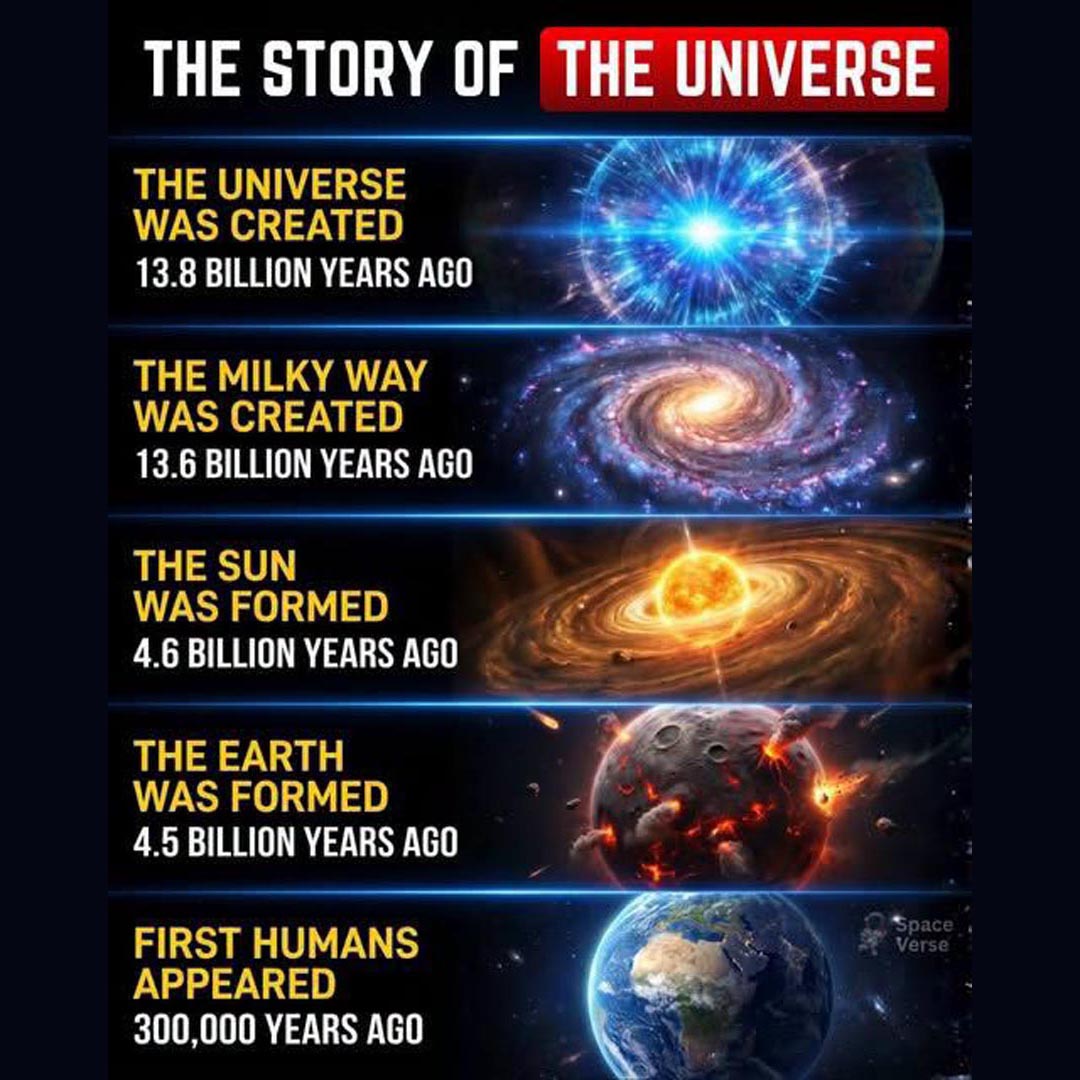
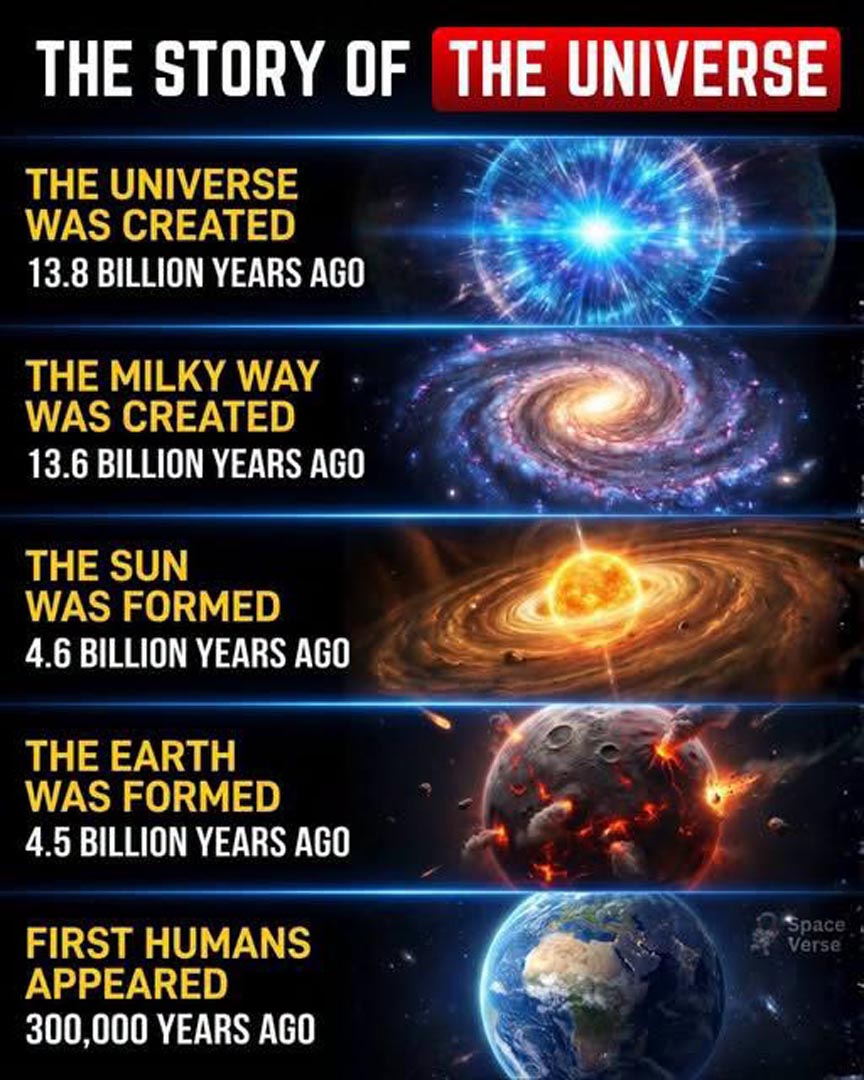
The Universe is approximately 13.8 billion years old. Earth formed about 4.54 billion years ago, and modern humans arrived only very recently on this cosmic timeline.
Long before any human existed, stars formed, galaxies evolved, and generations of stars created many of the elements that eventually became part of planets and living organisms.
The universe spent billions of years setting the stage before humans arrived. Modern humans appeared only about 300,000 years ago. That means humanity has existed for just 0.002% of the universe’s history.
In cosmic terms, we are incredibly new to the story. We are just a brief moment in the story of existence. Yet humans still think the universe is made just for them.
As a New Scientist article puts it, “For much of our existence on Earth, we humans thought of ourselves as a pretty big deal. Then along came science and taught us how utterly insignificant we are.
“We aren’t the centre of the universe. We aren’t special. We are just a species of ape living on a smallish planet orbiting an unremarkable star in one galaxy among billions in a universe that had been around for 13.8 billion years without us.”
The truth is, the cosmos was not made for us. Long after we are gone, the cosmos will continue to evolve.
Every human life exists for only a small moment in cosmic time. Our lives are brief compared with cosmic history, but brevity does not make an experience meaningless.
A moment can contain discovery, kindness, creativity, love, and the realization that we are part of something much larger than ourselves.
We may be temporary inhabitants of an ancient Universe, but we have the remarkable ability to wonder about its past and imagine its future.
– based on Cosmo Senerio and Space Verse posts