

PLASTIC-PACKAGED READY MEALS: Hidden Health Risks
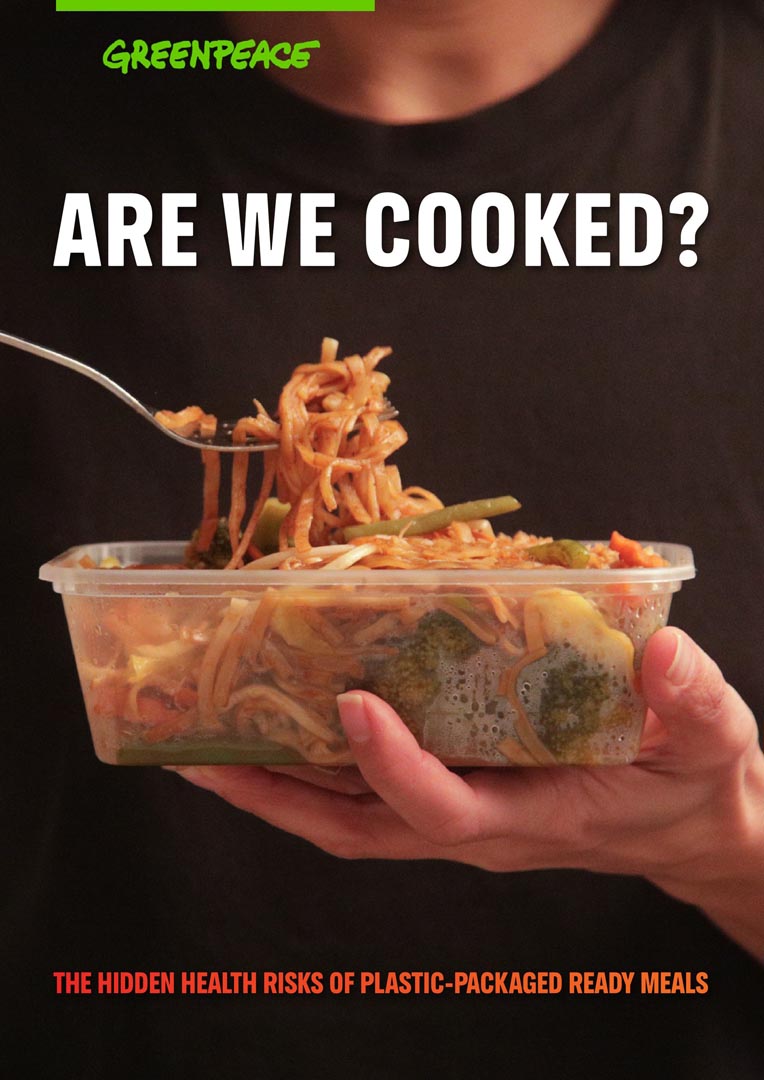
We live busy lives. Many people rely on the convenience of reheating plastic-packed ready meals or hot takeaways in plastic trays. But there could be a hidden cost behind this convenience – a potentially dangerous dose of microplastics and chemical additives.
Greenpeace International analysed 24 articles in peer-reviewed scientific journals and found that the plastics we use to package our food are directly risking our health – and none more so than heated ready meals and takeaways.
In just minutes of heating, plastic containers can release hundreds of thousands of microplastic & nanoplastic particles to your food! This is just one of the shocking findings in Greenpeace International’s report on plastic-packaged meals.
According to the report, each time you heat up a plastic takeaway or a frozen dinner, you could be consuming nanoplastics along with toxic chemicals.
The report, “Are We Cooked? The Hidden Health Risks of Plastic-Packaged Ready Meals”, reveals the following:
- Microwaving plastic containers can release hundreds of thousands of micro- and nanoplastics in minutes.One study found 326,000 to 534,000 particles leaching into food simulants after just 5 minutes of microwave heating, up to 7 times more than oven heating.
- Heating dramatically increases chemical contamination.Across multiple studies, every microwave test sample of common plastics such as polypropylene and polystyrene leached chemical additives into food or food simulants, including plasticisers and antioxidants.
- More than 4,200 hazardous chemicals are known to be used in or present in plastics, most are not regulated in food packaging.Some, like bisphenols, phthalates, PFAS “forever chemicals” and even toxic metals such as antimony, are linked to cancer, infertility, hormone disruption and metabolic disease.
- Plastic chemicals are already in our bodies.At least 1,396 plastic-related chemicals have been detected in human bodies, with growing evidence linking exposure to neurodevelopmental disorders, cardiovascular disease, obesity and type 2 diabetes.
- Old, scratched or reused containers are worse.Worn plastic releases nearly double the number of microplastic particles compared to new packaging.
Ultra-Processed and Packed in Plastic: A Nightmare Combination
Ultra-processed foods (UPFs) and plastic packaging are co-dependent. UPFs fail to nourish. UPFs rely on plastics for cheap, long-shelf-life packaging, while plastics rely on UPFs for mass-market expansion.
UPF ingredients such as emulsifiers, stabilisers, artificial colours, and sweeteners are typically made using a series of industrial techniques and processes. These ingredients are designed for shelf life and hyper palatability, and you’re unlikely to find such products in your kitchen cupboard.
The global expansion of UPFs is made possible by cheap lightweight plastic packaging. This toxic relationship fuels chronic disease, environmental destruction, and corporate profit.
The health cost is staggering:
- Heating plastic-packed UPFs adds migrating endocrine disruptors, oligomers, and microplastics to an
- already nutritionally empty meal.
- As well as their reliance on UPFs, ready meals are typically high in fat, salt or sugar. Over 75 cohort studies link UPFs to obesity, diabetes, cancer, cardiovascular disease, and mental health disorders.
- UPFs and plastics together drive chronic disease, fossil fuel dependence, and planetary harm.
We are paying a very high price for the sake of convenience, with our own health, and the health of planetary ecosystems, which are exploited, polluted and disrupted.
What You Can Do
You can reduce your exposure to chemicals in plastic by doing 3 easy things:
- Avoid plastic packaging when possible.
- Transfer food into glass or ceramic for heating.
- Sign the petition calling on world leaders to cut plastic production:
(https://www.greenpeace.org/PlasticsTreaty)
Learn more about the hidden health costs of cheap plastic packaging in the Greenpeace report:
https://www.greenpeace.org/international/publication/81532/the-hidden-health-risks-of-plastic-packaged-ready-meals/