
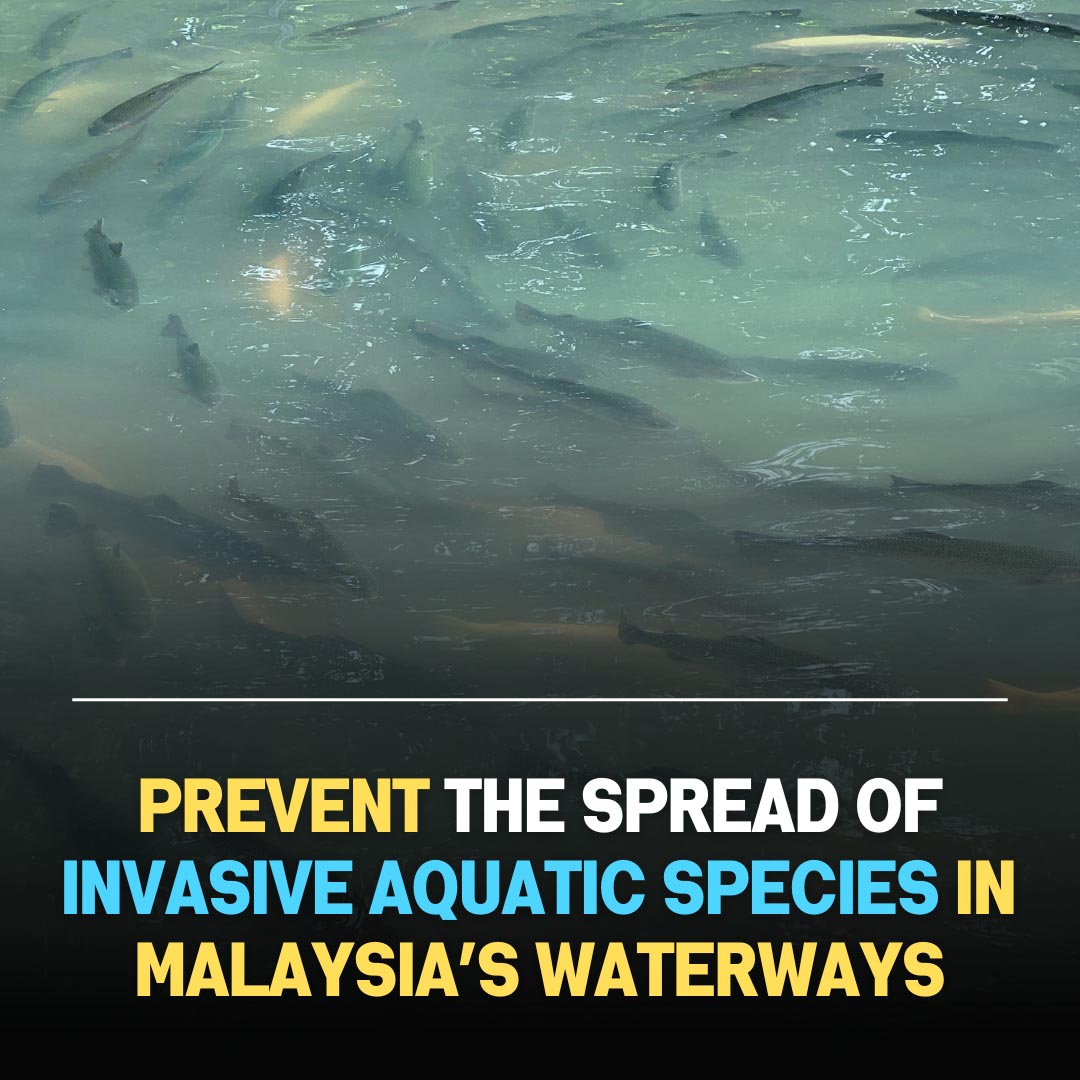
Prevent The Spread of Invasive Aquatic Species in Malaysia’s Waterways
The Consumers’ Association of Penang (CAP) would like to highlight the growing environmental concern posed by the irresponsible release of alien fish species, as well as invasive plants, snails, and mussels, into Malaysia’s rivers, lakes, dams, and coastal waters.
It is time to give far greater attention to the growing threat of human activities that has contribute significantly to the spread of invasive aquatic species, threatening native species and disrupting natural ecosystems.
One such invasive plant species is the water hyacinth otherwise known as Keladi bunting or bunga kiambang, a popular ornamental plant in aquaria and ponds. It is famous for its beautiful lavender-purple flowers and glossy green leaves attached to bulbous spongy stalks that contain air pockets. It is native to the Amazon Basin in South America but once released, it is capable of rapidly spreading and clogging waterways, leading to various environmental problems.
The Chinese pond mussel Sinanodonta woodiana species is non-native to Malaysia. It has become highly invasive due to their high growth and reproductive rate outcompeting our native mussels. The Handbook and National Red-List of the Freshwater Mussels of Malaysia revealed its presence in at least ten river basins in Peninsular Malaysia and six river basins in Malaysian Borneo.
The ongoing spread of S. woodiana across Malaysia is most likely due to purposeful introductions by people who use mussels for food and ornamentation. Their expansion is associated with commercial trade in freshwater fish, which, when infested with mussel larvae serve as vectors for their spread.
Invasive snails spreading across Malaysia are the giant African Land Snail and the golden apple snails, Pomacea canaliculata and Pomacea maculate. Collectively referred to as golden apple snails, they were introduced through the food and aquarium trade. When released, they spread rapidly into paddy fields, becoming serious agricultural and ecological pests.
There are several pathways through which alien fish species can enter into Malaysian waters. One such route is via aquaculture. Fish and other aquatic organisms introduced for farming may escape from ponds, cages or other facilities during flooding, storms, poor containment or through accidental releases. Once established in natural waterways, some species can reproduce rapidly and compete with native species for food and habitat, leading to various ecological problems such as the spread of diseases and parasites, genetic introgression due to interbreeding with wild or native counterparts, competition with native species for food resources and space, changes and disruptions in community structure and diversity.
Malaysia has already seen the introduction of a plethora of non-native fish species into local water bodies. Their presence demonstrates the need to be vigilant and prevent such species entering local water bodies.
CAP warns that the impacts of invasive alien species should not be underestimated. They can harm local fisheries and threaten the livelihoods of communities that depend on rivers, lakes, coastal waters and their resources. Therefore, prevention must remain the preferred approach in dealing with invasive alien species.
CAP thus urges the Department of Fisheries and the Malaysian Quarantine and Inspection Services Department (MAQIS) to tighten controls on the import, breeding, sale, possession and release of foreign aquatic species and plants. At the same time, aquaculture operators must keep their facilities secure, and the ornamental-fish traders must educate its customers.
Aquarium owners must be mindful on the effects of releasing unwanted exotic fish, plants and other organisms into rivers, drains, lakes, reservoirs and the sea. Furthermore, those who can no longer look after an exotic species should get in touch with the relevant authorities to work out the best course of action.
Malaysia’s rivers and coastal waters are rich in flora and fauna, which provide food and livelihoods for many people. Preventing exotic species from establishing themselves in local ecosystems is essential to their long-term survival.
CAP calls on the authorities, industry players and the public to do their part to ensure that invasive alien species do not take hold in local water bodies. Failure to act now could result in irreversible ecological damage, biodiversity loss and threats to livelihoods.
Mohideen Abdul Kader
President
Consumers’ Association of Penang
Letter to the Editor, 6 November 2026