

SMK Jalan Damai
‘Jom Jimat Tenaga’ – CULTIVATING ENERGY-SAVING HABITS
Haslina Hassan from the school has this to say: I was pleased and welcomed the initiative introduced by CAP to implement electricity-saving measures in schools. This effort not only helps reduce the school’s expenses but also raises awareness among the school community about the importance of conserving electricity.
The success of this campaign brings a sense of fulfilment, as it shows our collective effort in caring for the environment. At our school, we have carried out several awareness programmes. These include brief talks on the importance of saving electricity and presentations on renewable energy sources, which were conducted for both students and teachers.
We also introduced a programme called ‘Jom Jimat Tenaga’ (Let’s Save Energy), where students were assigned to monitor electricity usage in their respective classrooms, led by designated energy monitors. A warning and penalty system was implemented for classes that failed to switch off electrical appliances when not in use. If switches were left on after students moved to another classroom, a fine would be imposed.
One of the main challenges we faced was the large number of students in each class, often more than 30, which made it difficult for some to feel comfortable with the restrictions. For example, only three fans were allowed to be used before 8.30 am, but many classes did not follow this rule.
The school also had to prioritise the comfort of students, especially in light of the increasingly hot weather. A directive was issued to restrict the use of air conditioning in the teachers’ room before 8.30 am, but it could not be effectively enforced due to the heat. We implemented a “Smart Switch” programme where students were required to switch off all electrical appliances when not in use, especially before leaving the classroom.

Based on my observations, this programme was effective. Energy monitors submitted reports on noncompliant classes, although such cases were rare. Disciplinary action was taken where necessary. Overall, the programme was a success, except for the ‘three-fan rule before 8.30 am’, which could not be properly implemented due to the less-than-conducive environment.
Electricity-saving efforts bring significant long-term benefits. They help cultivate a generation that is more environmentally aware and individuals who use energy resources wisely. These students will be capable of making informed decisions about energy use in the future. Therefore, such values should be instilled from a young age.
Our school had already embraced the energy-saving initiative even before this project began. We regularly remind students to practise energy efficiency and we are committed to continuing these efforts as part of our school culture, be it in administration, teaching or co-curricular activities.
At home, my husband was the first to encourage us to save electricity, as he manages the household bills and noticed they were rising. He took the lead in promoting energy-saving habits and I supported him by switching to LED lighting and ensuring that switches were turned off when not in use. One issue I have noticed is the tendency to charge mobile phones excessively but overall, our family has taken clear steps to reduce electricity usage, especially in lighting.
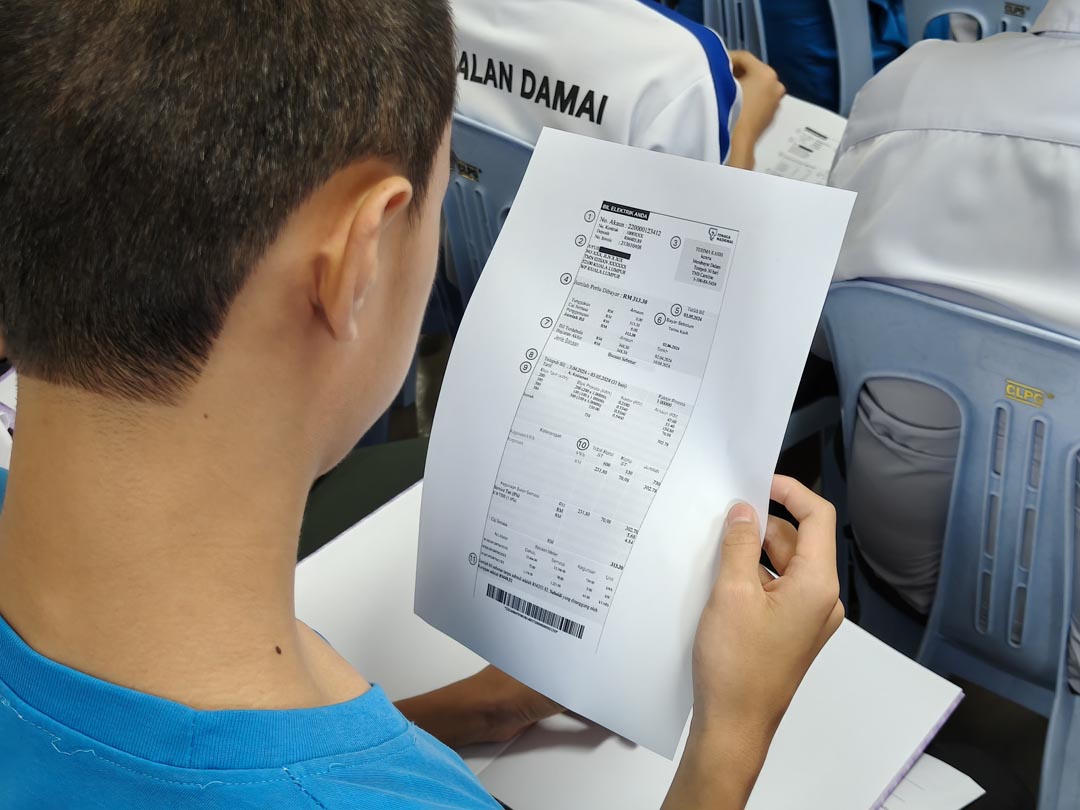
I also gathered feedback from students during classroom activities. During discussions, students shared that they turn off fans and lights when not needed and advise family members not to leave the TV or chargers plugged in unnecessarily. Some even said they maximise the use of natural daylight during the day to reduce dependence on artificial lighting.
At SMK Jalan Damai, the Parents and Teachers Association (PIBG) has shown strong support for this initiative. They contributed funds to purchase energy-saving equipment and helped spread awareness among parents during meetings and community events. Some parents even donated solar lights for school use. The PIBG has played a meaningful and effective role in supporting this programme.
This electricity-saving programme does more than just cut energy costs. It also nurtures positive values in students. They learn to be responsible, disciplined and environmentally conscious. By following electricity-use guidelines in class, students develop a sense of accountability and care for the environment.
Ultimately, they are taught to make wise decisions and to understand that their actions today can positively impact the future for generations to come.