

SMK (P) Methodist
ENERGY MONITORS AND THE PATH TO A SUSTAINABLE SCHOOL
SMK (P) Methodist proudly collaborated with CAP to implement electricity-saving measures, building on the school’s ongoing energy conservation practices.
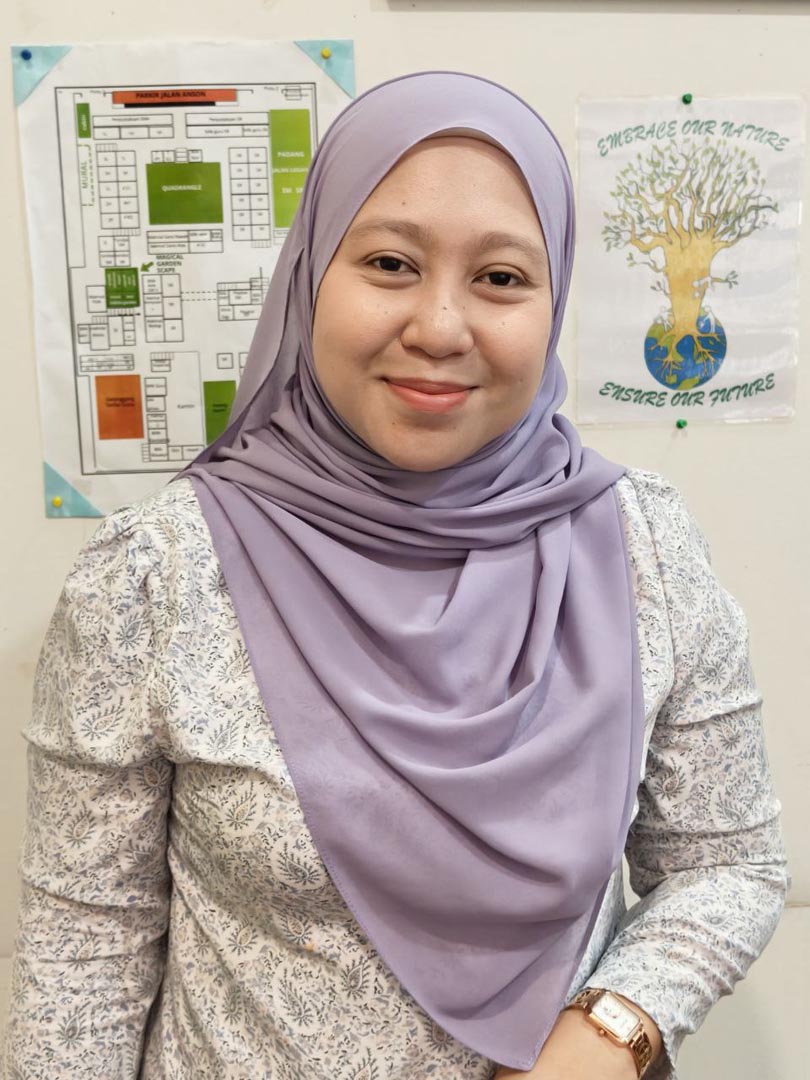
Teacher Puan Nur Nadia Zafirah binti Mohd Zamri provides the following encouraging update:
Our school was delighted to collaborate with CAP when the idea of implementing electricity-saving measures was introduced. Although we have always practised energy conservation, we felt honoured to work together with CAP and to be able to showcase and share the ways in which we save electricity.
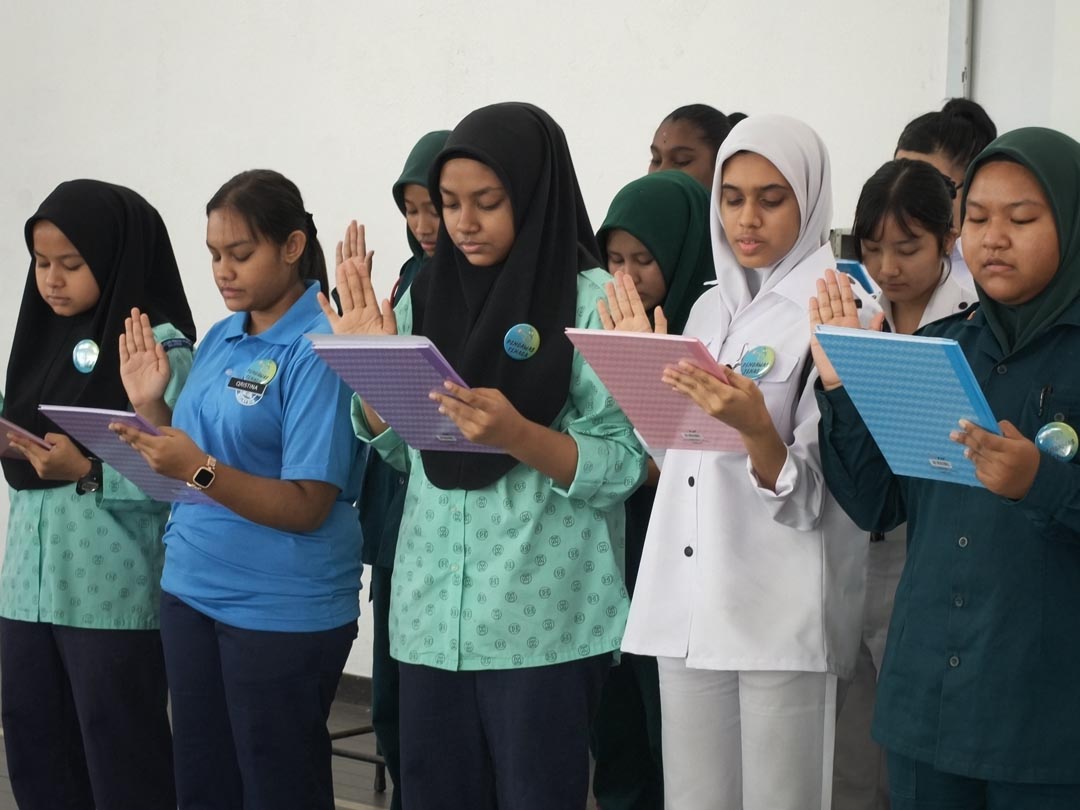
Several activities have been carried out in the school to encourage energy-saving awareness among pupils. Two energy monitors are appointed in each class and are given badges to mark their responsibility. Their duties include ensuring that fans and lights are switched off before leaving the classroom and that only one light is turned on after 9.00 am. This is possible because our classrooms are shaded by large trees, which reduce the need for artificial lighting until recess. Labels have also been placed on switches, plugs and appliances throughout the school as reminders.
Energy monitors are also responsible for unplugging the classroom TV box before the end of the school day. Before 7.00 am, when only a few students are present, they ensure that just one light and one fan are switched on. Spot checks are conducted by discipline and duty teachers, and demerit points are given to monitors if lights or fans are left on in empty classrooms.
As part of our school’s energy-saving plan, each class and form teacher will receive a certificate of good practice for demonstrating efficiency in electricity usage. Energy monitors too will be awarded certificates and PAJSK (co-curricular) points equivalent to prefects, recognising that their role carries a significant responsibility in reducing electricity consumption across the school.
To further promote sustainability, a plant has been placed in every classroom. The plants help stabilise the classroom temperature, reducing the need for fans to be used at high speed. At the end of the year, prizes are awarded to classes that take good care of their plants. This initiative instils responsibility and nurtures a love for nature, encouraging students to appreciate and protect the environment.
In special areas such as the office, staffroom and library where air-conditioners are used, the temperature is fixed at 24-25°C. Teachers on duty ensure that air-conditioners are only switched on when necessary and are turned off when no one is using the room. For example, in the library the air-conditioner is only switched on after 9.00 am and in the cyber centre and library, only one or two fans are used as students enter according to a set schedule.
The Environmental Club plays an important role in ensuring sustainability in the school. The club has placed labels on switches in classrooms, offices and teachers’ desks as reminders for everyone to switch off before leaving. Teachers are also encouraged to unplug devices, as electricity continues to flow through connected plugs even when not in use. Special attention is given to Form Five classrooms, the meeting room and the office where digital boards are installed. As these consume a significant amount of electricity, ‘energy monitors’ ensure that they are properly switched off and unplugged at the end of the day.
Electricity consumption is monitored closely by the assistant head of administration, who reviews the monthly bill. If usage is high, teachers are reminded to reduce consumption. Records of the electricity bill are presented during meetings and displayed on the office noticeboard to raise awareness. Teachers are also reminded that if electricity usage exceeds the school’s quota due to negligence, such as leaving air-conditioners, lights, or fans on, they may be asked to share the cost of the bill. This measure keeps everyone alert and responsible.
Teachers are regularly reminded via WhatsApp messages to switch off all appliances, especially when they are the last to leave a room. Energy monitors conduct patrols daily at 5.00 pm before the special rooms are locked, after which the security guard performs a final check. Any oversight is reported to the headteacher and assistant head, who then alerts staff through WhatsApp. This has made teachers more cautious and reduced repeated mistakes.
The computer lab is rarely used as it requires a high level of electricity consumption, with 20-50 computers running at once, along with lights, fans and air-conditioning. Instead, every classroom is equipped with a TV box and digital board, which require only a single power switch. This modern approach supports 21st-century learning while saving energy.
However, challenges remain. Digital boards, while more economical than whiteboards with costly markers, consume slightly more electricity. They are widely used as they capture students’ attention, especially in the library where the digital board is used almost continuously throughout the school day. Teachers are reminded to unplug the boards after use.
Another challenge is the increasing use of electronic devices such as laptops, printers, smartphones, tablets and speakers. These all require frequent charging, often at the same time, which increases electricity usage. For convenience, devices such as printers are often left plugged in as teachers are pressed for time.
Lighting is also a challenge as our classrooms are shaded by large trees, which block natural sunlight. As a result, lights are needed until after 10.00 am, depending on the weather. To save energy, we limit classrooms to using only one light after recess, although some students tend to switch on all the lights. This issue is managed by the energy monitors.
We are proud to have received a certificate of recognition from CAP for our discipline in conserving electricity. The energy monitors have carried out their duties responsibly, and there are now no reports from the security guard of lights or fans being left on in empty classrooms. Pupils too have become more disciplined, remembering to switch off appliances when they are the last to leave, and even reminding or scolding classmates who forget.
As for our electricity bills, one challenge is that our school shares meters with the nearby primary school. For instance, the library and staffroom are located next to the primary school, which causes fluctuations in the monthly bill. Nevertheless, overall consumption remains at a satisfactory and manageable level.
Through these initiatives, our school has not only succeeded in reducing electricity consumption but has also fostered a strong sense of responsibility among pupils, teachers and the wider school community.
By working together and embracing sustainable practices, we are creating a culture of care for the environment that will benefit both our school and future generations.