

The Correct Way to Use Kitchen Scraps in Your Garden
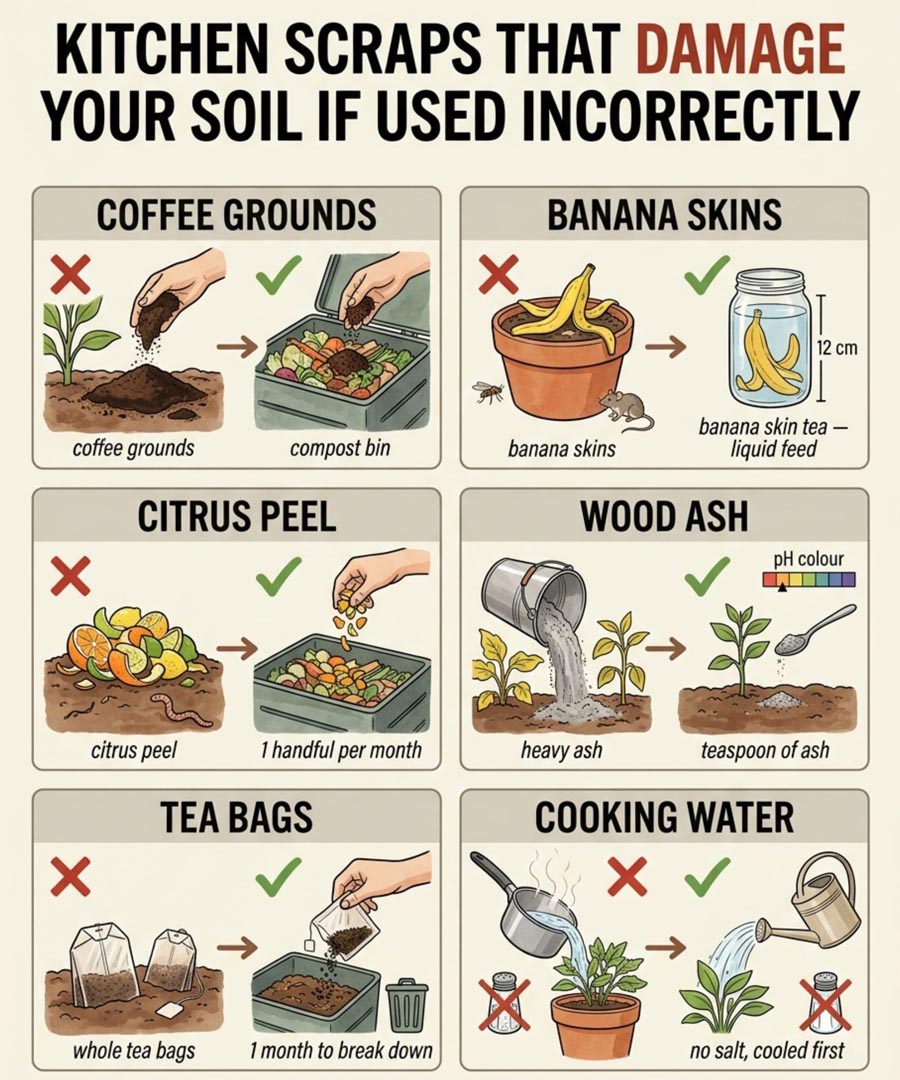
Kitchen scraps are useful in the garden, but the method matters as much as the material. The same ingredient that improves your soil used correctly can compact it or alter its pH dramatically if applied carelessly.
EGGSHELLS. Whole eggshells break down over several years and release almost no calcium in the meantime. Crushed to a fine powder in a pestle and mortar or a blender, they become available to plant roots within a few months. Worth the extra step.
TEA BAGS. Many commercial tea bags contain a plastic mesh that does not break down in compost. Open the bag, add the tea leaves to the compost heap, and bin the bag itself.
COFFEE GROUNDS. Mix into the compost heap only. Applied directly in a thick layer on the soil, they compact into a crust that repels water and locks out air. In excess, they over-acidify. A handful into the compost bin is fine.
BANANA SKINS. Laid directly in a pot or on the surface, they attract fungus gnats and grow mould. Soaked for a few days in water, the liquid makes a potassium-rich liquid feed for flowering and fruiting plants.
CITRUS PEEL. Only a small handful per month into the compost. In larger quantities they slow worm activity. Avoid on a worm bin.
WOOD ASH. Always check soil pH before applying. Ash raises pH quickly and can lock up iron in already-alkaline soils. Useful on acid soil, counterproductive on chalk or limestone ground.
COOKING WATER. Unsalted only, and fully cooled before use. Water from boiling vegetables or eggs carries useful trace elements and makes a free, gentle liquid feed.
Source: Garden Tips & Tricks