
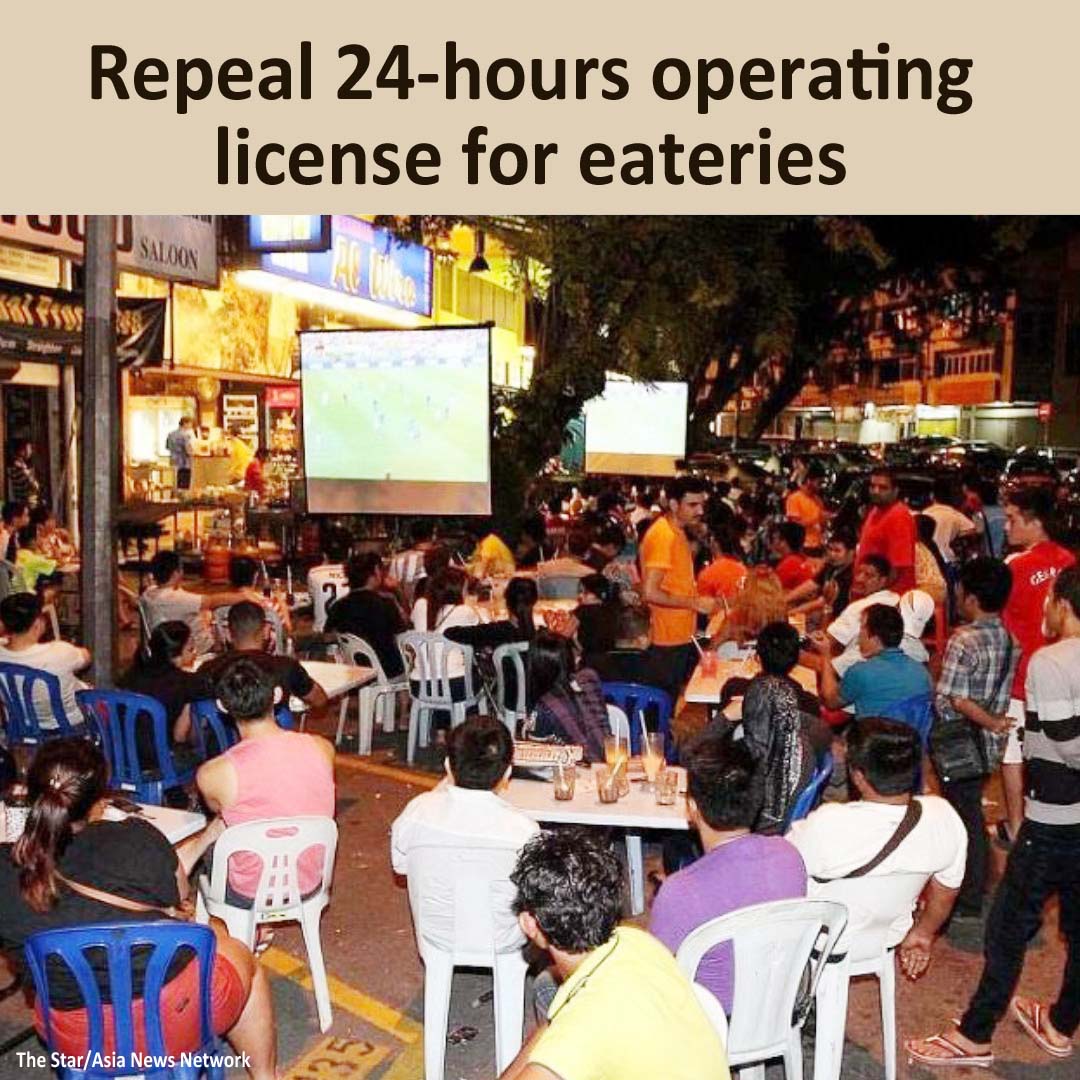
CAP: Repeal 24-hours operating license for eateries

The Consumers Association of Penang (CAP) supports the move taken by some eateries to shorten the operating hours however this should made mandatory as presently there are still restaurants operating for 24 hours.
The authorities should repeal the 24-hour, operating license given to eateries as studies have shown that there are negative effects of late-night meals such as weight gain, sleep disorders and digestive issues.
For years CAP has been calling on the government to prohibit eateries from operating for 24 hours as limited access to late-night eating will be healthier for Malaysians.
Presently Malaysians are in an unhealthy situation as we have the highest prevalence of obesity among adults in South East Asia. In the 2019 National Health and Morbidity Survey, 50.1% of our adult population were reported to be overweight (30.4%) or obese (19.7%).
Compared with normal-weight individuals, obesity increases the risks of type 2 diabetes by seven-fold in men and a 12-fold increase in women. A local study found that 30% of our type 2 diabetes patients were clinically obese.
Obesity is a risk factor for non-communicable diseases (NCDs) like type 2 diabetes, cardiovascular disease and cancer. Given the situation and the high number of Malaysians affected it was revealed that RM 9.65 billion was spent annually to deal with (NCDs) in the country.
Even though shortening the operating hours for eateries would not completely solve the obesity issue in Malaysia, it would help reduce late-night eating among Malaysians. This, in turn, has the potential to foster healthier eating habits and promote better sleeping habits.
Research has shown that individuals who eat late at night exceed 40% of their daily energy requirements which poses a significant risk factor for obesity. Unhealthy eating habits, paired with unbalanced nutrition which consists of food which is high in fat and salt content (typical of Malaysian food) during post-dinner snacks, were also linked with the risk of cardiovascular disease.
The widespread availability of food and drinks for 24 hours has significant implications on oral health. The easy access to sugary snacks and drinks delivered at any time poses an ongoing threat to dental enamel which greatly increases the risk of cavities and infections.
According to the National Oral Health Survey, it was found that 94.6% of Malaysian adults need some form of dental treatment, with tooth decay being a top problem. In fact, six in 10 adults require care due to tooth decay, based on the survey conducted in 2022.
Additionally, the health consequences are worsened by nutritional imbalances resulting from the consumption of processed and fast foods. The British Dental Journal (BDJ) emphasizes the link between poor nutrition and weakened immune response, making individuals more susceptible to numerous oral infections and gum diseases.
Although the move taken by some eateries to shorten their operating hours is due to economical reasons, however, the authorities should mandate all eateries to close early for the sake of the health of Malaysians.
In order to address obesity the Government should make bold steps in withdrawing unhealthy foods and raising taxes on all types of sweetened drinks and food besides coming up with incentives and a long-term plan.
In view of the situation, the CAP calls on the authorities to repeal the 24-hour operating license given to eateries.
The government should be more serious in controlling the environment that encourages obesity, by mandating that all food outlets be closed by midnight rather than be allowed to operate 24 hours a day.
Meanwhile, Malaysians need to practice healthy lifestyles voluntarily and increase awareness to create a healthy nation.
Mohideen Abdul Kader
President
Consumers Association of Penang
Letter to the Editor, 22 April 2024