
Nurturing Young Environmental Stewards
On 5 June 2026, in conjunction with World Environment Day, the Soroptimist International Pearl of the Orient, in collaboration with the Consumers’ Association of Penang (CAP), organised an environmental programme at Tenby International School Penang for young children aged 5-6 years old.
A total of 38 students participated in the programme, comprising 23 boys and 15 girls. They were accompanied by four teachers, six members of Soroptimist International Pearl of the Orient, while the programme was facilitated by five CAP officers. The main aim of this programme is to cultivate environmental consciousness among young children who are largely accustomed to urban lifestyles by introducing them to composting, responsible food waste management and sustainable living practices.
The programme commenced with an interactive sound activity conducted by Ms Kumuthasshri, CAP’s Research Officer, and Ms Orked, CAP’s intern. Students were asked to close their eyes and listen attentively to a series of sounds, including those of a busy city and a thriving jungle ecosystem. They were then encouraged to compare the two environments and identify which sounded healthier, calmer and more conducive to well-being. Additional sounds of animals, insects, birds and natural weather elements were also played for the students to identify.
The children displayed remarkable enthusiasm and sharp observation skills by correctly recognising many of the sounds and eagerly mimicking them. This engaging activity encouraged them to appreciate the richness and diversity of nature while reflecting on the importance of preserving natural ecosystems.
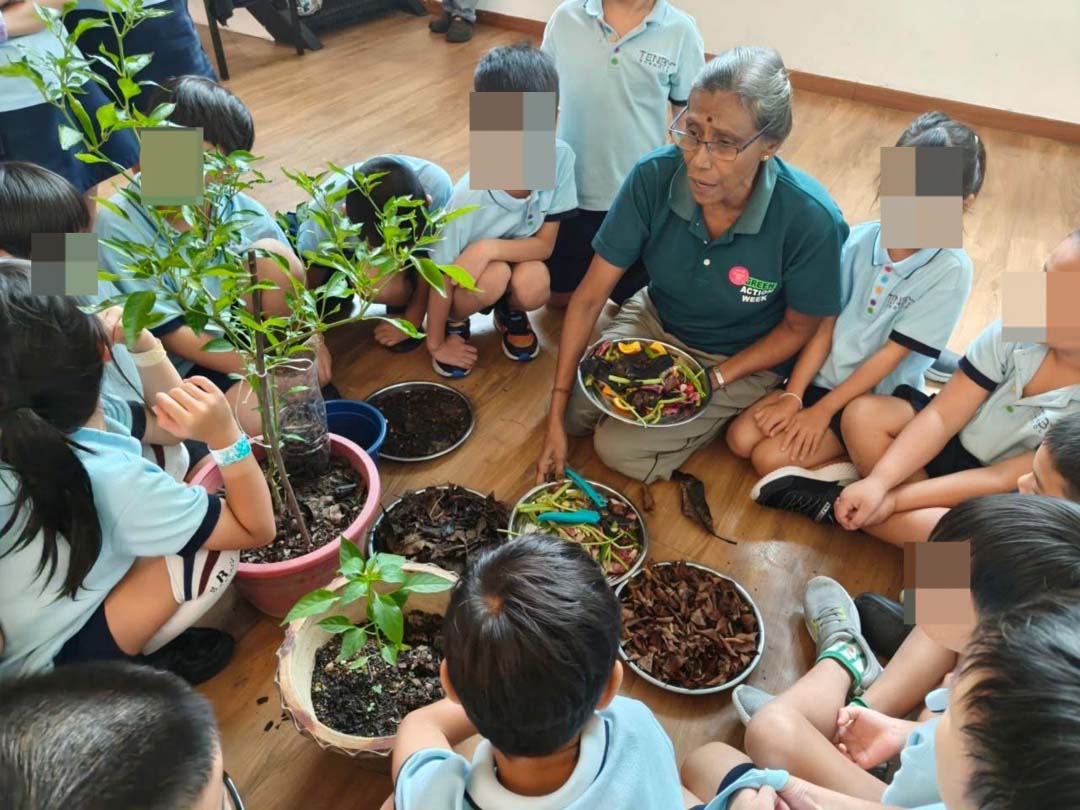
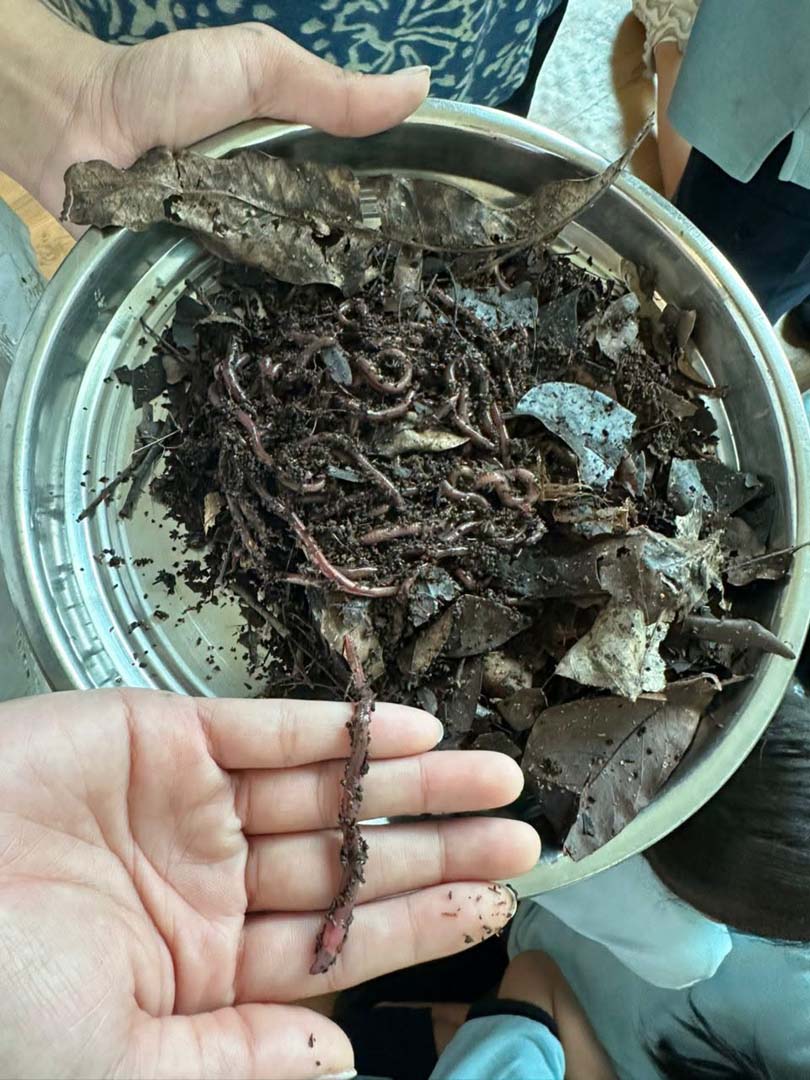
The second activity was conducted by Ms Saraswathi Devi Odian, CAP’s Education Officer, with the assistance of Mr Theeban, CAP’s Education Officer, and Mr Wong, CAP’s gardener. This hands-on session transformed the children into young environmental scientists where each participant was provided with a sample of compost and a magnifying glass to investigate the fascinating world hidden beneath the soil surface. They observed various insects and beneficial organisms that thrive in healthy compost and learned about their crucial role in nutrient recycling and ecosystem balance. The students were also given the opportunity to closely observe and gently handle earthworms, helping them develop a deeper appreciation for these important decomposers and the hidden ecosystem beneath our feet.
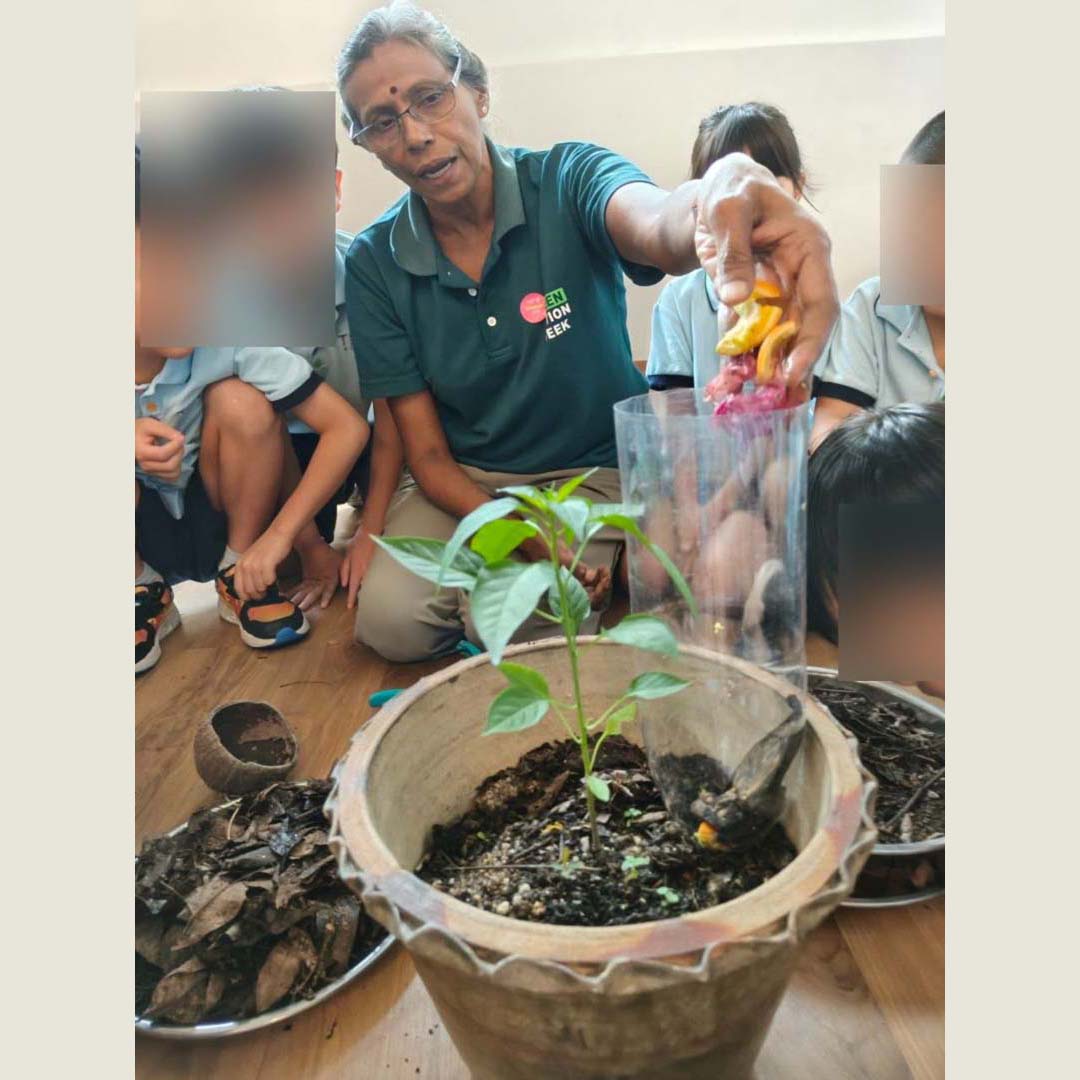
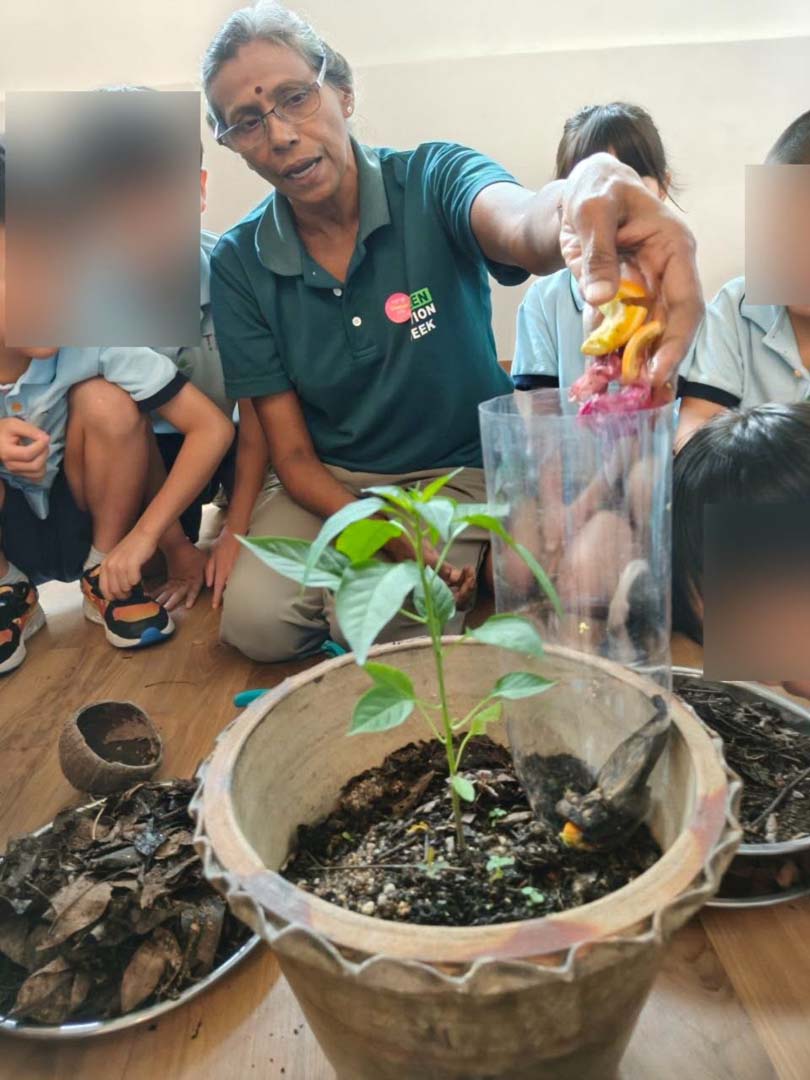
The final activity focused on practical composting techniques that children could easily adopt at home. Ms Saraswathi Devi Odian demonstrated a simple method of converting everyday food waste into compost using a recycled plastic bottle placed inside a plant pot. Through this demonstration, students learned how organic waste naturally decomposes into nutrient-rich compost that nourishes plants and supports healthy growth. The activity highlighted the importance of reducing food waste and showed how simple actions can contribute to environmental sustainability.
Overall, the programme successfully combined education with hands-on learning, allowing young students to experience environmental concepts in an engaging and memorable manner. By exposing children to the wonders of nature, composting and sustainable waste management, the programme reinforced the message that every individual, regardless of age, has a role to play in protecting the environment.
The enthusiastic participation and positive response from the students demonstrated the effectiveness of experiential learning in nurturing future environmental stewards and fostering a greater sense of responsibility towards the planet.