
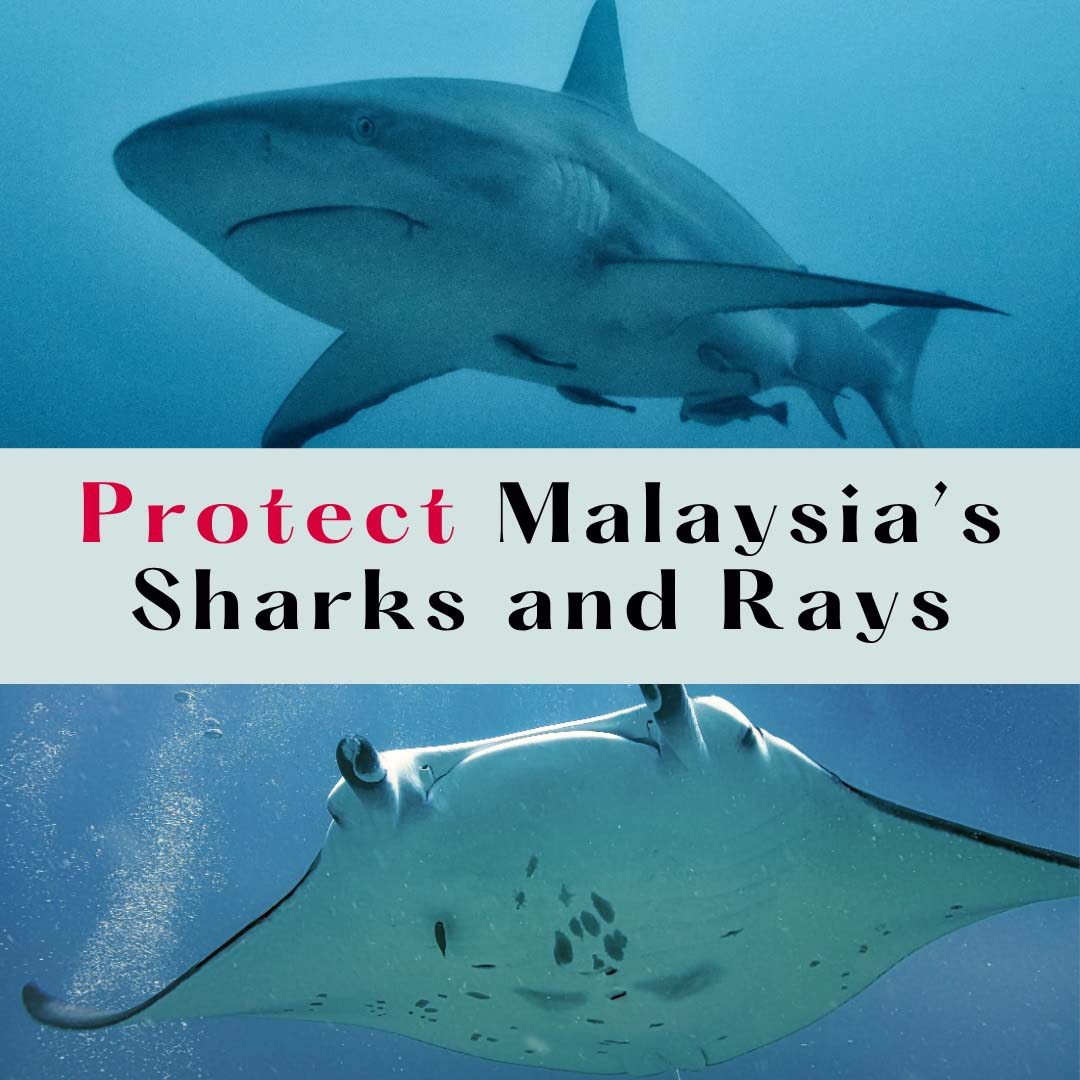
Protecting Malaysia’s Sharks and Rays is Protecting Our Oceans
As the world observes Shark Awareness Day on 14 July 2026, the Consumers’ Association of Penang (CAP) draws attention to the plight of sharks and rays. They are among the ocean’s oldest and most ecologically vital species, as they face an increasingly uncertain future. In Malaysian waters, many species continue to experience intense pressure from overfishing, bycatch, habitat degradation, and illegal or unsustainable trade.
Sharks and rays play a critical role in maintaining healthy marine ecosystems. As predators, they help regulate marine food webs, contributing to resilient coral reefs, productive fisheries, and healthy coastal ecosystems that support food security and livelihoods.
Malaysia is recognised as one of the world’s marine biodiversity hotspots, and home to 69 shark species representing 18 families and 81 ray species representing 16 families, based on statistics obtained from the National Plan of Action for the Conservation and Management of Sharks (NPOA-Sharks) 2024–2030 implemented by the Department of Fisheries Malaysia (DOFM).
Several elasmobranch species protected under the Malaysian Fisheries (Control of Endangered Species of Fish) (Amendment) Regulations 2019 include the whale shark, oceanic whitetip shark, smooth hammerhead, great hammerhead, winghead shark, as well as the reef manta ray, oceanic manta ray, and all protected sawfish species. These species are afforded legal protection against capture, possession, trade, transport, and export without authorization from the Director-General of Fisheries. But vast majority remain unprotected.
Several shark species occurring in Malaysian waters are listed as Vulnerable (VU), Endangered (EN), or Critically Endangered (CR) on the IUCN Red List due to declining populations driven primarily by fishing pressure.
One of the biggest challenges is that many sharks and rays are caught before they have a chance to reproduce. Unlike many fish species, sharks and rays grow slowly, mature late and produce relatively few young and this means their populations recover much more slowly from fishing pressure. And once depleted they may take decades to rebound, if they recover at all.
Unchecked commercial bycatch and lucrative online trade driven by both meat consumption and fin sales have caused significant population declines.
Scientific evidence also shows that critical habitats for elasmobranch species across Asia remain significantly under protected. These habitats serve as nurseries, breeding grounds and feeding areas that are essential for population recovery. However rising sea temperatures are degrading critical nursery and feeding habitats. Therefore protecting these areas should become a national conservation priority. Conserving sharks and rays is not simply about protecting wildlife.
On this World Shark Awareness Day, CAP calls upon government agencies to strengthen science-based fisheries management, expand protection for important shark and ray areas (ISRAs) and enhance enforcement against illegal fishing and wildlife trade.
Greater investment is needed in scientific research, catch monitoring and enforcement. Critical habitats, such as nursery and breeding grounds should be identified and protected.
Conservation groups and researchers must work with fishing communities to adopt responsible fishing practices that minimise bycatch and improve the safe release of live sharks and rays.
Conservation measures must be developed in partnership with fishing communities ensuring that conservation and sustainable fisheries can coexist for the benefit of both people and marine biodiversity.
The future of sharks and rays in Malaysian waters depends on the decisions we make today. By valuing and protecting these species, we are also safeguarding the oceans that sustain us all.
Mohideen Abdul Kader
President
Consumers’ Association of Penang
Press Statement, 14 July 2026