
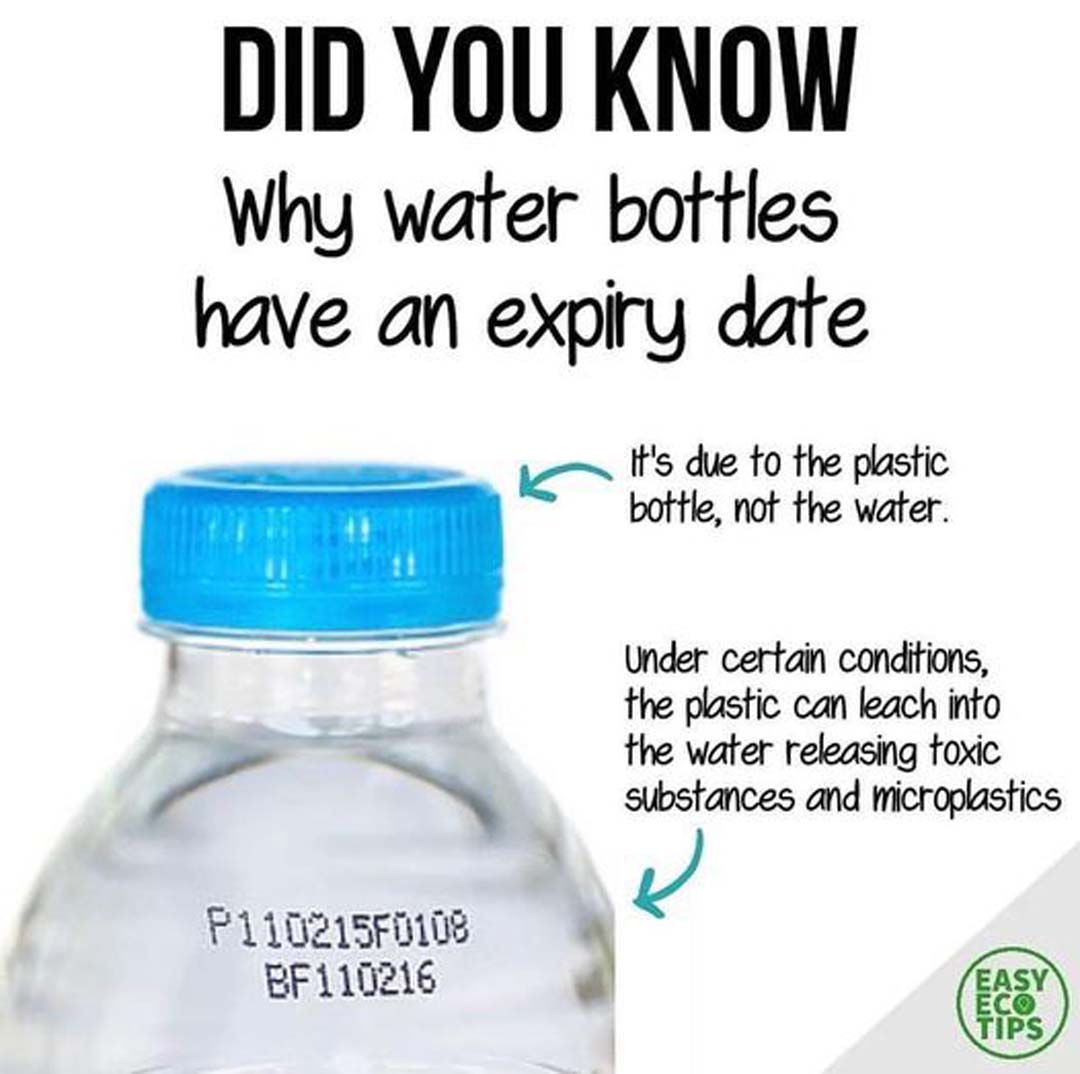
Why Plastic Bottled Water Has An Expiry Date
Ever noticed that plastic bottled drinking water carries an expiry date? Pure water does not go bad. Why state a shelf life, you may wonder. Here’s what you should know.
The expiration date on bottled water is mainly about the plastic bottle, not the water itself. Over time the plastic can slowly break down and allow small amounts of chemicals to leach into the water. This is especially so when the packaged bottle is stored or exposed to sunlight or heat.
The kind of plastic used in many water bottles, can leach toxic things such as antimony, bisphenols, phthalates, and microplastics into the water or beverages inside, which is hazardous for health. This can also affect the taste, smell, or quality of the water.
Most single-use plastic water bottles are made from polyethylene terephthalate (PET or plastic #1). Although considered a “safer” plastic, compared to, for example, vinyl (plastic #3), it’s still constantly shedding small pieces of plastic (micro- and nanoplastics) into drinking water.
Scientists have cautioned that drinking water in plastic bottles contains countless plastic particles too small to see. A one-liter (33-ounce) bottle of water contains some 240,000 plastic fragments on average, according to a study. Research shows that people who drink water from plastic bottles on a daily basis ingest far more microplastics than those who don’t – i.e. 90,000 more microplastic particles each year.
Ingested microplastics accumulate in the organs including the liver, kidneys, lungs – even the brain, the most powerful organ in our body. Researchers looked for plastic during autopsies from 91 people and found their brains had stored up to 20 times as much microplastic as other organs. Those who had died from Alzheimer’s were carrying more plastic in their brains than those who were healthy but died from accidents or violence.
While many microplastic particles ingested are excreted, others can cross the intestinal barrier and persist, causing potential inflammation, disrupting the gut microbiome, and acting as carriers for toxic chemicals.
Choose safety and health over convenience. Drink water stored in stainless steel or glass bottles instead of water from a plastic bottle.