
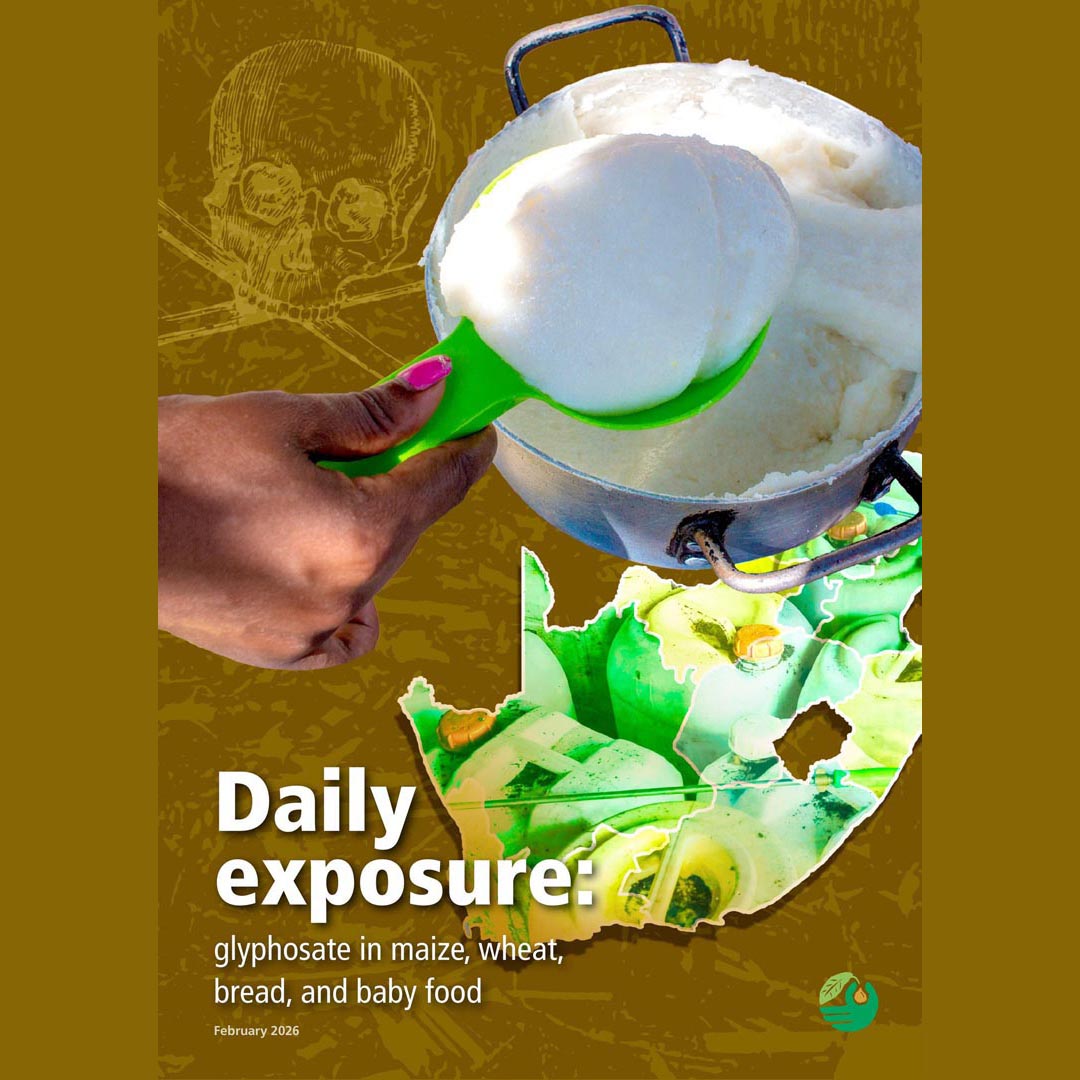
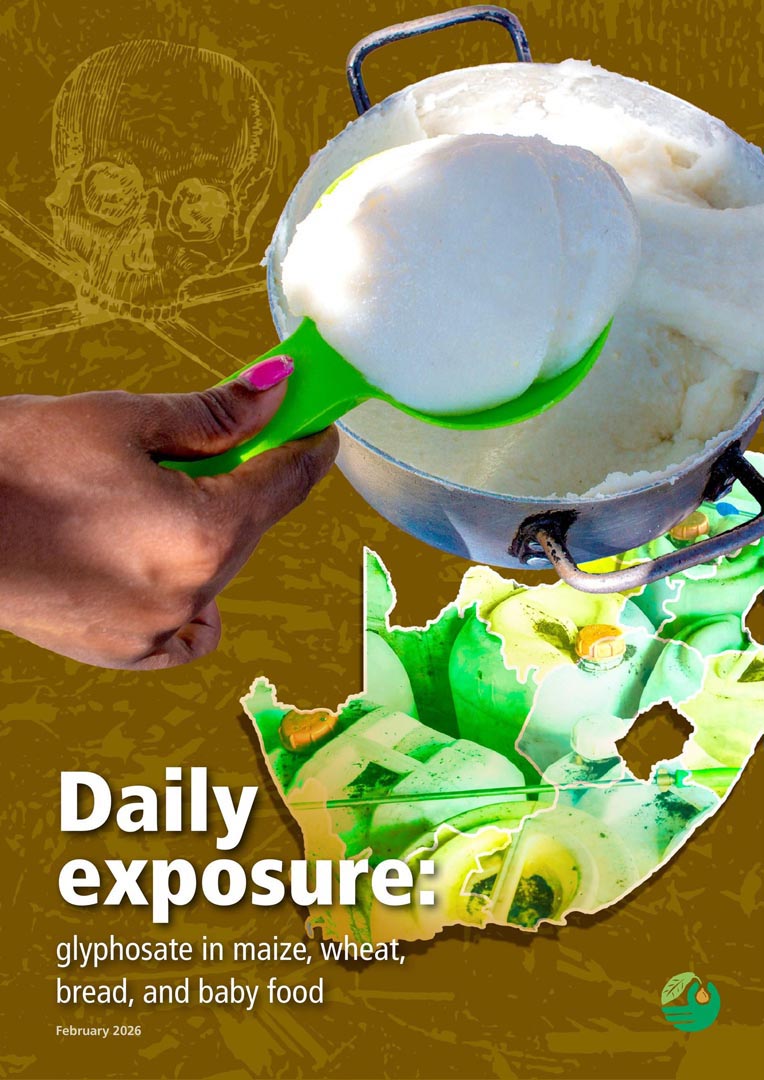
Glyphosate Found in South Africa’s Staple Foods
 National Ban Demanded after Shocking New Test Results
Glyphosate and its toxic metabolite, aminomethylphosphonic acid (AMPA), have been detected in staple foods consumed daily by millions of South Africans.
New laboratory results show glyphosate contamination in maize meal, wheat flour, bread, and baby cereal, with two products exceeding the legal default limit.
The African Centre for Biodiversity (ACB) has requested the Minister of Agriculture to deregister and ban glyphosate in South Africa following the findings.
The GM Connection: From Field to Plate
In the lab test, one Impala Maize Meal sample that tested positive for both glyphosate and AMPA is labelled as genetically modified (GM). This is not coincidental – it is causal. It is a direct consequence of the agricultural system that produced the grain.
GM maize varieties marketed in South Africa are primarily engineered for herbicide tolerance, specifically glyphosate tolerance. These crops, often referred to as “Roundup Ready”, are designed to withstand direct application of glyphosate-based herbicides (GBHs) during the growing season.
The presence of AMPA confirms that glyphosate was applied, began to degrade, and that both the parent compound and its persistent metabolite remain in the final food product consumed by South African families.
Why Does Wheat Contain Glyphosate?
Unlike maize, wheat grown in South Africa is not typically genetically modified for herbicide tolerance. So why does wheat flour contain glyphosate residues?
The detection of glyphosate in Snowflake Wheat Flour, Sasko Bread, and Cerelac baby cereal
requires explanation. The exceedance highlights a regulatory gap: glyphosate is entering wheat-based foods through agricultural practices that are neither transparently monitored nor publicly documented.
While the specific practice cannot be confirmed, ACB suspects that it may be attributed to pre-harvest desiccation. Pre-harvest desiccation involves spraying a crop shortly before harvest to evenly dry it, speed up harvesting, and control late-season weeds.
Glyphosate is used for this purpose in several major wheat-producing countries, including Brazil and parts of Europe (where the practice is now restricted).
The precise practice that enables glyphosate to enter wheat-based food products demands immediate inquiry. Regardless, the presence of glyphosate residues in South African wheat products – including a baby cereal – demonstrates that consumers are being exposed to this chemical through staple foods, and the regulatory framework is failing to prevent this exposure.
Glyphosate is Toxic
Glyphosate is a chemical increasingly associated with metabolic, developmental, and immune disruption.
The historically-relied-upon Williams, Kroes, & Munro (2000) industry-aligned paper defending glyphosate’s safety has formally been retracted on grounds of ghost-writing and undisclosed conflicts. The study has been used extensively by regulators to justify glyphosate’s safety, and its removal vitiates a cornerstone of global regulatory reliance.
More than 192,000 lawsuits have been filed in the US, with US$6 billion in jury awards and over US$10-11 billion in settlements already paid. In February 2026, Bayer agreed to a US$7.25 billion national settlement to resolve current and future claims.
This global legal fallout confirms that glyphosate-linked harms are being recognised and compensated in courts – and can no longer be dismissed as speculative.
Children: Vulnerable Population at Risk
The detection of glyphosate in Cerelac Regular Wheat – a product specifically formulated for
infants and young children – demands urgent attention. Children are not simply “small adults”.
They face unique vulnerabilities due to developing organs, higher food intake relative to body weight, differences in metabolism, and a longer lifetime over which chronic diseases can develop:
- Developmental immaturity: Organ systems (liver, kidneys, nervous system, immune system) are still developing and are more susceptible to disruption by toxicants.
- Higher relative exposure: Children consume more food and water per kilogram of body weight than adults, thereby increasing their exposure to contaminants.
- Different metabolism: Detoxification pathways are immature, meaning children may metabolise and excrete pesticides less efficiently.
- Longer future lifespan: Early exposures have more time to contribute to chronic diseases that manifest later in life.
Chronic Exposure Through Staple Foods
The products that tested positive in the study – maize meal, wheat flour, baby cereal, and bread – are not occasional or luxury items. They are daily staples for millions of South Africans.
For low-income households, maize meal in particular forms the caloric foundation of the diet. This means:
- Exposure is chronic, not intermittent: Consumers are exposed to glyphosate and AMPA at every meal, day after day, year after year.
- Detoxification systems face continuous challenge: the body’s metabolic pathways for handling xenobiotics are under constant demand.
- The “cocktail effect” with other pesticides is unstudied and unregulated: glyphosate does not appear in isolation; it joins other pesticide residues in the diet, yet regulators assess each chemical individually.
Glyphosate’s Impact on Food Quality
A critical concern, often overlooked in discussions of pesticide residues, is the impact of glyphosate on the nutritional quality of the food itself. Recent assessments have highlighted glyphosate’s role in contributing to nutrient deficiencies in crops.
Plants treated with glyphosate may show reduced uptake of micronutrients, including manganese, zinc, iron, calcium, and magnesium.
Consequently, foods derived from glyphosate-treated plants may have lower mineral content than their untreated counterparts. This effect compounds existing nutritional challenges in a country like South Africa, where micronutrient deficiencies are already prevalent.
Even the quality of the food grown with glyphosate is compromised, meaning that consumers are receiving both less nutrition and a dose of the chemical itself.
Read the full report by the African Centre for Biodiversity here:
https://acbio.org.za/wp-content/uploads/2026/02/Glyphosate-testing-briefing-paper_fin.pdf