
New global report finds top Malaysian banks score high on sustainability policy; but severe haze is prompting calls for regulation to level the playing field
KUALA LUMPUR October 15, 2026 — Forty years of empty promises since 1982 have culminated in today’s transboundary haze crisis, exposing how voluntary frameworks merely shield poor enforcement while fueling the destructive expansion of large monoculture plantations. This ecological emergency requires a systemic response. Yet, the financial sector, as revealed by a new global Forests & Finance coalition report, continues to bankroll the very factors driving the Southeast Asian crisis — clearing of forests, degradation of peatlands and violation of community rights — highlighting the critical need for strict financial regulations.
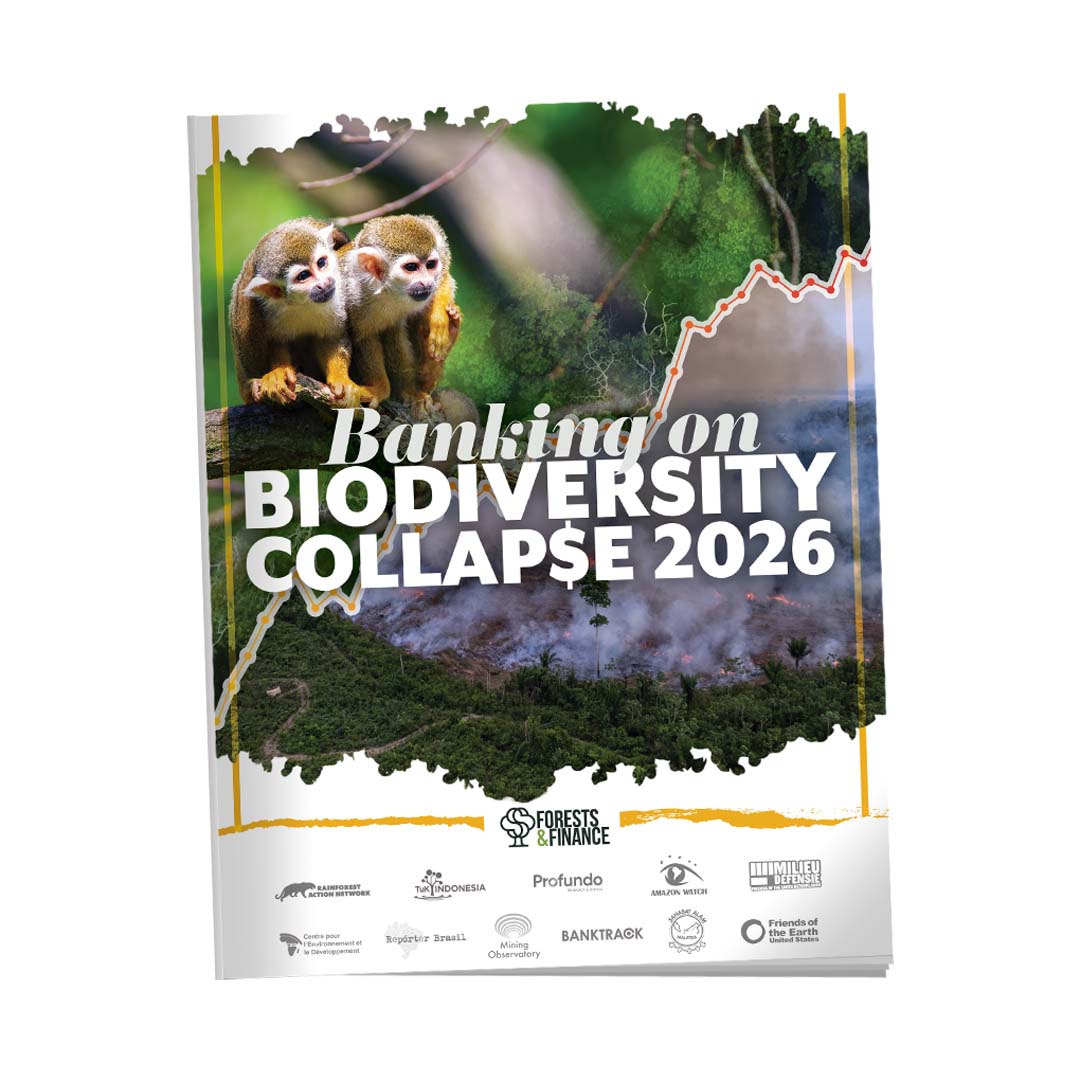
Published just days before governments gather in Armenia for the UN Biodiversity Conference (COP17), Banking on Biodiversity Collapse 2026 is the largest global analysis of harmful biodiversity finance to date. The report examines financing for companies operating across the world’s tropical forest regions — Southeast Asia, South America, Central and West Africa — with the goal of connecting financing decisions to real-world impacts and closing the accountability gap which enables banks to continue to finance harm.
Globally, banks issued US$531 billion in credit to companies operating in high-risk tropical agro-commodity sectors since 2016. Top Malaysian banks CIMB and Maybank are among the largest creditors to agro-commodities in Southeast Asia, together lending close to US$12 billion over the last decade.
The average score for bank policies covering financing for forest-risk agro-commodities is just 25%, indicating that most banks have minimal safeguards, with vague public commitments and significant gaps in implementation. Given such poor standards and no regulatory enforcement, it is not surprising that banks continue to finance companies operating in sectors linked to deforestation, peatland destruction, fires, haze and abuses of indigenous peoples’ rights.
While Malaysia’s largest financial institutions score above average in sustainability policy assessments, with CIMB scoring 45% and Maybank 32%, their commitments remain non-binding. Current conditions risk triggering a ‘race to the bottom’ where companies actively seek out financiers with the most lenient environmental standards. Only mandatory regulation will level the playing field for financial institutions.
The Forests and Finance coalition, therefore, urges financial regulators, including Bank Negara Malaysia and the Securities Commission, to strengthen policies by requiring financial institutions to conduct robust biodiversity and human rights due diligence, improve transparency around financing for high-risk sectors, and hold financial institutions accountable when their financing contributes to environmental destruction or rights abuses.
Similar to climate, community rights and biodiversity ought to be treated through a more rules-based approach. Voluntary corporate initiatives like the Taskforce on Nature-related Financial Disclosures (TNFD) are insufficient for reporting forest and community risks and impacts, nor do they ensure proper due diligence or enforcement. Any future initiatives to reform the financial regulations should actively involve civil society organisations advocating for indigenous rights and forests.
The coalition also calls on banks to strengthen no-deforestation or conversion, no peatland development and no exploitation (NDPE) requirements, independently verify client compliance, and end financing relationships with companies that repeatedly violate those standards.
The report was produced by the Forests & Finance coalition, an initiative of Rainforest Action Network, TuK Indonesia, Profundo, Amazon Watch, Milieudefensie, CED Cameroon, Repórter Brasil, Observatório da Mineração, BankTrack, Sahabat Alam Malaysia and Friends of the Earth US.
Meenakshi Raman
President
Sahabat Alam Malaysia
Press Release, 15 October 2026
Links:
1. Banking on Biodiversity Collapse 2026 is available at www.forestsandfinance.org/bobc2026
2. Global press release is available at https://docs.google.com/document/d/1-z9KsTPtO5kmi6Fuqx_boL5U0bq5Q6CAQsB1JGyyEL8/edit?tab=t.0