No products in the cart.

Category: Featured Article English

How We Are Exposed To Lead

Lead is everywhere and affects all of us. Construction workers are exposed to lead during the removal, renovation, or demolition of structures painted with lead pigments. Workers also come in contact with lead in solder, plumbing fixtures, rechargeable batteries, lead bullets, leaded glass, brass or bronze objects and radiators. Lead exposure can occur in repair (e.g. radiator repair) and...
Read More

CAP Urges Standards for Lead in Paints

CAP calls for lead in paint regulations. In conjunction with the International Lead Poisoning Prevention Week, the Consumers Association of Penang (CAP) reiterates our call to the Malaysian government to eliminate lead in paint through regulatory action. The World Health Organization (WHO) has recognized 25–31 October 2020, as International Lead Poisoning Prevention Week to raise awareness...
Read More

No Safe Level Of Lead Exposure

Lead can be dangerous for men, women and children — especially young children and pregnant or breastfeeding women. And there is no safe level of lead exposure. Our exposures to lead should be ZERO. Lead is toxic to the reproductive system in both men and women. In men it can reduce the sperm count and produce abnormal sperm. Young boys who are heavily exposed to lead during childhood will have...
Read More

Eliminate Lead in Paints Globally

The eighth International LEAD POISONING PREVENTION WEEK (ILPPW) takes place on 25–31 October 2020. This week of action is an initiative of the Global Alliance to Eliminate Lead Paint (the Lead Paint Alliance), which is jointly led by the UN Environment Programme and WHO. The manufacture and sale of lead paint is still permitted in over 60% of countries, presenting a continuing and future...
Read More

EARLY MENSTRUATION from HORMONE-RAISED MEAT?

16% of girls in the U.S. now experience breast development by the age of 7, and 30% by the age of 8. A hundred years ago, the average age when a girl got her first period was 16-17. Girls with early maturation are at risk of lower self-esteem and higher rates of depression. The biological impact includes greater risk of several cancers (breast, ovarian, and endometrial), obesity,...
Read More

Fast Fashion, Fast Destruction

Trendy, fast and changing, “fast fashion” is destroying planet earth. In Europe, fashion companies offer an average of 2 collections per year. Now some brands like Zara offers 24 collections per year, while H&M offers 12-16. Fast fashion encourages a throwaway clothing culture. Lots of them end up in the dump. About one garbage truck full of clothes is dumped every second. In total, up...
Read More

Spraying of body with disinfectant is not recommended by WHO

Consumers’ Association of Penang (CAP) is shocked to see a photograph in a print media showing a lady spraying disinfectant from a spray bottle onto a group of children in a childcare centre (taska). We are sure that the Malaysian Health Ministry (MoH) and parents would be equally concerned with such practice. As an immediate response, we would like to call upon all childcare centres which...
Read More

Drains at Batu Maung polluted by residual waste – SAM

Sahabat Alam Malaysia (SAM) urges the Penang Island City Council (MBPP), Department of Environment (DOE) and Department of Irrigation and Drainage (JPS) to investigate and take immediate action to overcome residual waste pollution problem in drains near Batu Maung here.  Investigations made by SAM shows that the condition of the area is very disgusting and has foul smell. Drains here are not...
Read More

Penang’s Car-Centrism Sacrificing our Trees

The Consumers’ Association of Penang (CAP) is infuriated with the Penang Island City Council (MBPP)’s road-widening projects that involve relocating 16 roadside trees in Green Lane.  We reiterate our objections to the “sentence” akin to “death knell” imposed on these trees. Trees are one of the most natural valuable assets of any streetscape. An iconic image of Penang is its...
Read More
mosquitoes

10 things you should know about GM mosquitoes

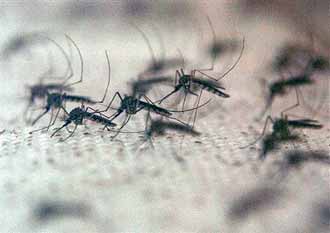
The National Biosafety Board (NBB) has recently approved an application from the Institute for Medical Research (IMR) to release genetically modified (GM) male Aedes aegypti mosquitoes. IMR wants to conduct field experiments in Bentong and Alor Gajah to see how far the males fly and how long they live for. The aim of this GM technology is for the GM male mosquitoes to mate with wild female...
Read More